CM Vishnu Deo Sai Meets UNICEF India Chief on Maternal, Child Health
Synopsis
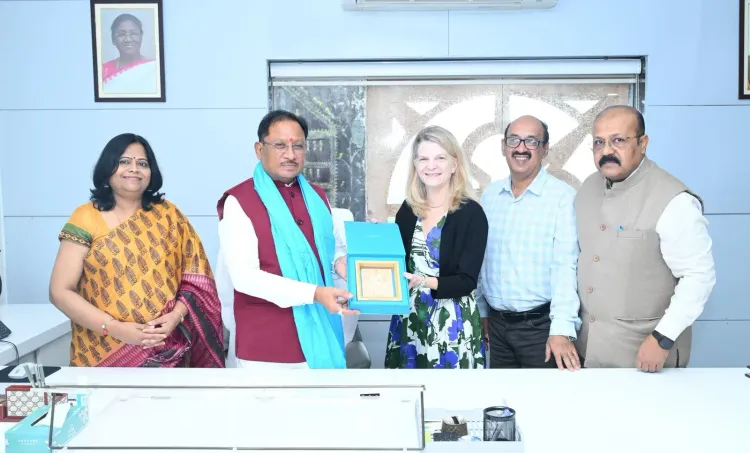
Chhattisgarh Chief Minister Vishnu Deo Sai met UNICEF India Representative Cynthia McCaffrey on 22 July 2026 to discuss maternal health, child nutrition, and infant mortality. State departments will jointly prepare a UNICEF-backed, results-oriented action plan to reduce MMR, IMR, and malnutrition across the state.
Key Takeaways
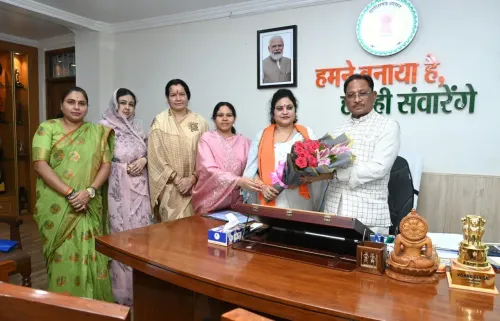
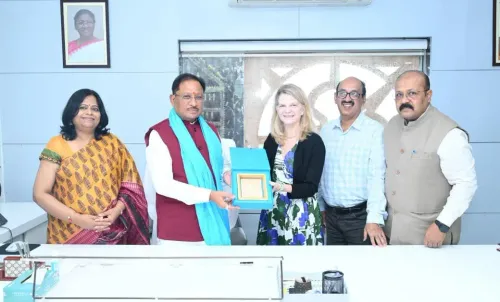
CM Vishnu Deo Sai held a meeting with UNICEF India Representative Cynthia McCaffrey on 22 July 2026 in Chhattisgarh.
All relevant state departments will prepare a coordinated, results-oriented action plan with UNICEF's technical support .
The plan targets effective reductions in Maternal Mortality Rate (MMR) , Infant Mortality Rate (IMR) , and malnutrition.
Chhattisgarh has historically high malnutrition and maternal-infant mortality rates, especially in tribal and rural areas.
The initiative builds on existing central schemes including National Health Mission and POSHAN Abhiyaan .
The CM expressed the goal of making Chhattisgarh a leading state on every human development indicator.
Chhattisgarh Chief Minister Vishnu Deo Sai met UNICEF India Representative Cynthia McCaffrey on Wednesday, 22 July 2026, to discuss maternal health, infant nutrition, and child development priorities for the state. The Chief Minister announced that all relevant state departments would jointly prepare a coordinated, results-oriented action plan with UNICEF's technical support to bring down maternal mortality, infant mortality, and malnutrition rates in Chhattisgarh.
Context
Posting in Hindi on X, CM Sai described the meeting as 'sarthak charcha' (meaningful discussion) and underscored that maternal and child health, adequate nutrition, and holistic child development are among his government's 'highest priorities.' He expressed the resolve that every child in the state should grow up healthy, well-nourished, and with better opportunities, and that Chhattisgarh should rank among the leading states on every human development index.
The Chief Minister tagged @UNICEF in the post, signalling an intent to formalise the partnership at the state level. The meeting follows a broader pattern of Indian states engaging UNICEF for district-level technical assistance aligned with national and global development targets.
Policy Backdrop
Chhattisgarh, a central Indian state with a large tribal population, has historically recorded elevated rates of malnutrition and maternal-infant mortality, particularly in its rural and forested districts. The state's health and nutrition departments operate within the framework of two major central government programmes: the National Health Mission, launched in 2005 to strengthen rural health infrastructure, and POSHAN Abhiyaan, launched in 2018 as India's flagship scheme to improve nutritional outcomes for children, pregnant women, and lactating mothers.
UNICEF has a long-standing role in providing technical support to Indian states on immunisation, maternal care, and nutrition interventions, helping translate national scheme targets into implementable district-level plans. The proposed joint action plan for Chhattisgarh fits within this established model of state-UN agency collaboration.
Stakeholders and Impact
The primary beneficiaries of the proposed action plan are mothers and infants across Chhattisgarh, with a particular focus on tribal and rural communities where access to healthcare and nutrition services remains uneven. Multiple state departments — including health, women and child development, and tribal welfare — are expected to participate in the coordinated planning process under UNICEF's technical guidance.
A results-oriented framework, as described by CM Sai, would mean departments are held to measurable outcomes on indicators such as the Maternal Mortality Rate (MMR), Infant Mortality Rate (IMR), and stunting and wasting prevalence. Such inter-departmental convergence is considered critical in states where malnutrition is driven by overlapping factors including poverty, early marriage, and inadequate antenatal care.
What's Next
The immediate next step is the preparation of the joint, coordinated action plan by all concerned departments with UNICEF's technical support, as announced by the Chief Minister. The plan's scope, timelines, and measurable targets are yet to be made public. State-level reviews measuring changes in malnutrition and mortality indicators will be a key signal of whether the partnership translates into on-ground outcomes.
If implemented effectively, the initiative could position Chhattisgarh as a model for state-UNICEF collaboration on human development, potentially influencing how other states with similar demographic challenges structure their own health and nutrition partnerships.
Point of View
Outcome-driven health governance model by anchoring state planning to UNICEF's technical framework. For a state like Chhattisgarh — where tribal geography and socioeconomic vulnerability have long complicated health delivery — inter-departmental convergence backed by UN technical support is a meaningful institutional step. The emphasis on measurable indicators such as MMR and IMR suggests the government is aware of the scrutiny its human development record will face ahead of the next electoral cycle. Whether the announced action plan produces verifiable results will determine if this partnership becomes a replicable model or remains a high-profile announcement.
NationPress
21 Oct 2026
Frequently Asked Questions
Why did Chhattisgarh CM Vishnu Deo Sai meet UNICEF's India representative?
CM Vishnu Deo Sai met UNICEF India Representative Cynthia McCaffrey on 22 July 2026 to discuss maternal health, child nutrition, and infant mortality, and to plan a joint, coordinated action plan to reduce these indicators in Chhattisgarh.
What is the joint action plan between Chhattisgarh and UNICEF about?
The joint action plan will be prepared by all relevant Chhattisgarh state departments with UNICEF's technical support, aiming to bring down Maternal Mortality Rate, Infant Mortality Rate, and malnutrition levels across the state.
Who is Cynthia McCaffrey and what is her role in India?
Cynthia McCaffrey is the UNICEF Representative for India, responsible for overseeing child rights, nutrition, and health programmes in partnership with state and central government agencies.
What is Chhattisgarh's malnutrition and child health situation?
Chhattisgarh has historically elevated rates of malnutrition, maternal mortality, and infant mortality, particularly in its large tribal and rural populations, making it a priority focus for national schemes like POSHAN Abhiyaan and the National Health Mission.
How does UNICEF support Indian states on maternal and child health?
UNICEF provides technical assistance to Indian states by helping prepare district-level action plans on maternal care, immunisation, and nutrition, aligned with national targets and Sustainable Development Goals.