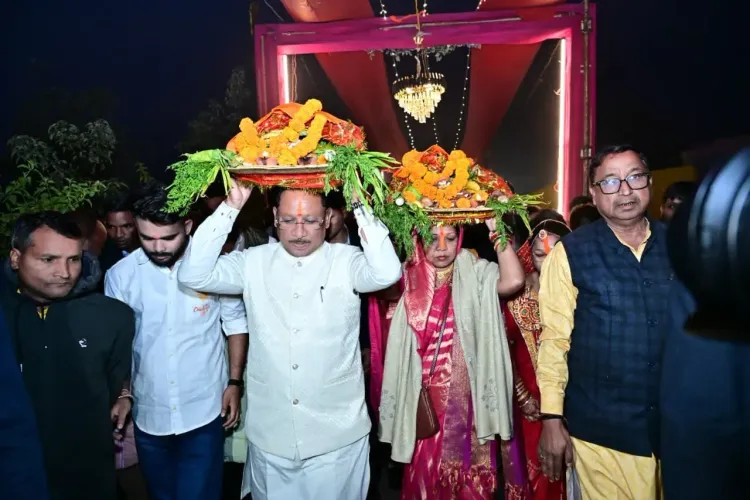
CM Vishnu Deo Sai offers Usha Arghya at Jashpur Chhath Ghat
Synopsis
Chhattisgarh Chief Minister Vishnu Deo Sai offered Usha Arghya at the Jashpur Chhath Ghat on the morning of 16 November 2026, participating in the sunrise ritual of Chhath Mahaparv alongside his wife and praying for the prosperity and health of all state residents.
Key Takeaways
CM Vishnu Deo Sai offered Usha Arghya at the Chhath Ghat, Jashpur on the morning of 16 November 2026 .
He was accompanied by his wife for the sunrise ritual of Chhath Mahaparv .
The Chief Minister prayed for the happiness, peace, prosperity, good health, and well-being of all Chhattisgarh residents.
He described Chhath as 'an incomparable folk tradition of Sanatan culture' rooted in gratitude toward nature and reverence for solar energy.
Jashpur , in northeast Chhattisgarh, hosted the event — signalling the administration's reach beyond the state capital Raipur.
Chhath Mahaparv, traditionally centred in Bihar and eastern UP, has a significant observance base in Chhattisgarh.
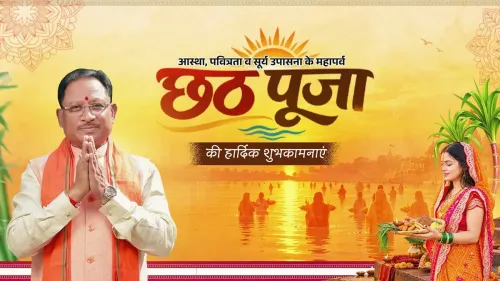
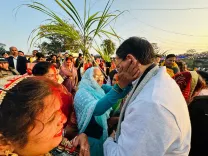
At the break of dawn on Monday, 16 November 2026, Chhattisgarh Chief Minister Vishnu Deo Sai stood at the Chhath Ghat in Jashpur alongside his wife and offered Usha Arghya — the sacred morning salutation to the rising sun — marking the culminating ritual of Chhath Mahaparv and praying for the peace, health, and prosperity of every resident of the state.
Sharing the moment on X, CM Sai wrote: 'Lok aastha, atoot shraddha aur Suryopasana ke Mahaparv Chhath ke pavan avsar par aaj Jashpur sthit Chhath Ghat par sapatnik udayman Bhagwan Bhaskar ko Usha Arghya arpit kar samast pradeshvasiyon ke sukh, shanti, samriddhi, aarogya evam mangalmay jeevan ki kamna ki.' — ('On the auspicious occasion of Chhath Mahaparv, the great festival of folk faith, unshakeable devotion and sun worship, I offered Usha Arghya to the rising Lord Bhaskar at the Chhath Ghat in Jashpur, accompanied by my wife, and prayed for the happiness, peace, prosperity, good health and blessed life of all residents of the state.')
What Chhath Mahaparv means — and why it reaches Chhattisgarh
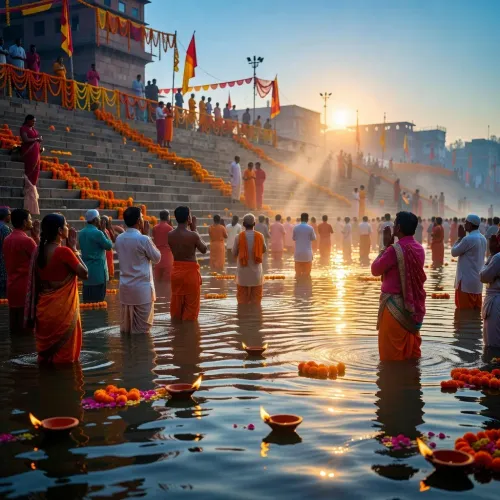
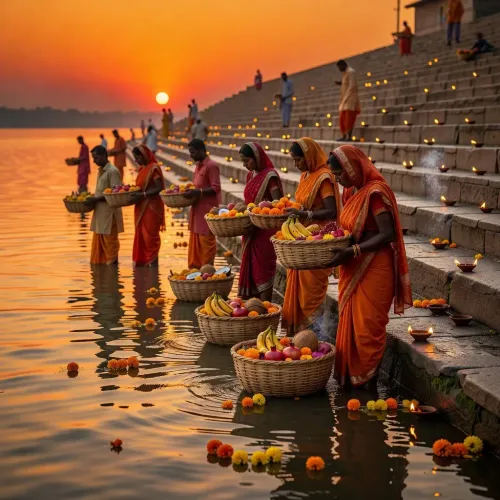
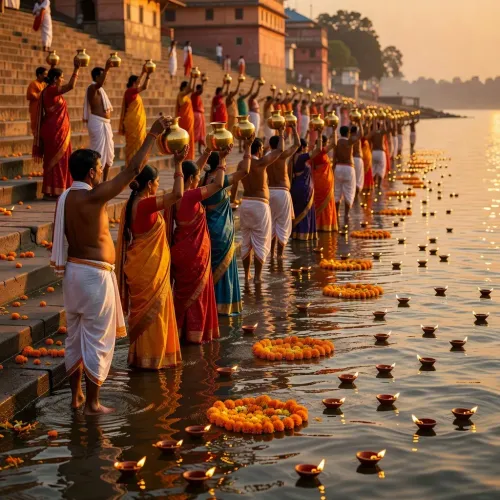
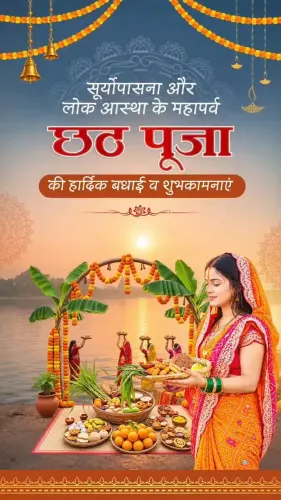
Chhath Mahaparv is a four-day Hindu festival centred on the worship of the Sun god and Chhathi Maiya — the folk deity believed to bless families with health and long life. Its riverbank rituals, rigorous fasts, and offerings at dawn and dusk make it among the most physically demanding of India's major festivals. Rooted traditionally in Bihar and eastern Uttar Pradesh, the festival has spread across the subcontinent wherever communities from those regions have settled — including significant pockets of Chhattisgarh.
CM Sai described Chhath as 'hamari Sanatan Sanskriti ki anupam lok-parampara' — ('an incomparable folk tradition of our Sanatan culture') — one that expresses gratitude toward nature, reverence for the life-giving energy of the sun, self-discipline, purity, and the spirit of public welfare. The framing situates the festival not merely as a regional custom but as a living philosophical tradition.
Jashpur: where faith meets the forest heartland
Jashpur, tucked in the northeast of Chhattisgarh, is known for its forested landscapes and tribal heritage. The Chief Minister's choice to observe Chhath here — rather than in the state capital Raipur — carries a quiet signal: that the administration is present and participatory across the state's diverse geographies, not just its urban centres. State leaders joining major festivals at district ghats has become a recurring practice in Indian politics, bridging administrative identity with local cultural life.
CM Sai closed his post with a prayer: 'Chhathi Maiya ki aseem kripa aur Bhagwan Surya Narayan ka divya aashirvaad pratyek parivaar ke jeevan mein sukh-samriddhi, uttam swasthya aur khushhali ka nav-prakash lekar aaye.' — ('May the boundless grace of Chhathi Maiya and the divine blessings of Lord Surya Narayan bring fresh light of happiness, prosperity, good health and well-being into the life of every family.')
As ghats across Chhattisgarh filled with devotees completing their sunrise rituals, the Chief Minister's presence added an official dimension to a festival that has always belonged, first and foremost, to the people.
Point of View
Particularly in its northern districts, making Chhath observance politically as well as culturally resonant. By framing the festival in terms of Sanatan civilisational values — gratitude to nature, self-discipline, public welfare — rather than purely regional identity, Sai signals a universalising cultural pitch. The choice of Jashpur, a tribal-heritage district, over Raipur adds a grassroots dimension to what could otherwise read as a routine ceremonial gesture.
NationPress
16 Nov 2026
Frequently Asked Questions
What is Chhath Mahaparv and when is it celebrated?
Chhath Mahaparv is a four-day Hindu festival dedicated to the Sun god and Chhathi Maiya. It is observed in October or November, culminating with Usha Arghya — an offering to the rising sun on the final morning.
Where did CM Vishnu Deo Sai celebrate Chhath in 2026?
CM Vishnu Deo Sai offered Usha Arghya at the Chhath Ghat in Jashpur, a district in northeast Chhattisgarh, on the morning of 16 November 2026.
What is Usha Arghya in the Chhath festival?
Usha Arghya is the ritual offering of water and fruits to the rising sun at dawn, performed on the final day of Chhath Mahaparv. It is considered the most sacred moment of the four-day observance.
Is Chhath Puja celebrated in Chhattisgarh?
Yes. While Chhath Mahaparv is rooted in Bihar and eastern Uttar Pradesh, it is widely observed in Chhattisgarh, particularly among communities that have migrated from those states.
Who is Vishnu Deo Sai?
Vishnu Deo Sai is the Chief Minister of Chhattisgarh and a senior BJP leader. He assumed the office of Chief Minister following the BJP's victory in the 2023 Chhattisgarh assembly elections.