CM Vishnu Deo Sai Reaffirms Farmer Welfare as Top Priority
Synopsis
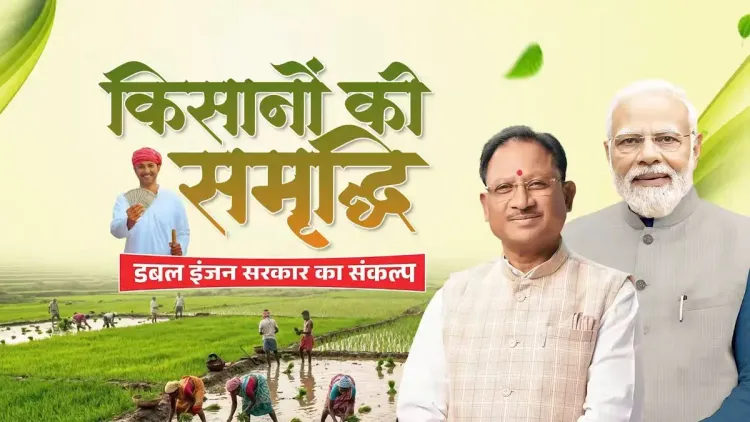
Chhattisgarh Chief Minister Vishnu Deo Sai on 21 July 2026 declared farmer prosperity the government's supreme priority, citing the 'double-engine' BJP alignment, better MSP, modern farm facilities, and timely financial aid as tools to make agriculture more profitable in the state.
Key Takeaways
CM Vishnu Deo Sai declared farmer prosperity as Chhattisgarh 's highest government priority on 21 July 2026 .
The 'double-engine government' framework — aligned BJP administrations in Raipur and New Delhi — was cited as the delivery mechanism for farm support.
Key policy pillars mentioned include better Minimum Support Price (MSP) , farmer-friendly schemes, modern agricultural infrastructure, and time-bound financial assistance.
The statement coincides with the kharif sowing season, when paddy procurement and input-support decisions have the most immediate impact on farmers.
CM Sai's stated resolution — 'prosperous farmer, empowered agriculture, and a developed Chhattisgarh' — frames agricultural growth as central to the state's overall development agenda.
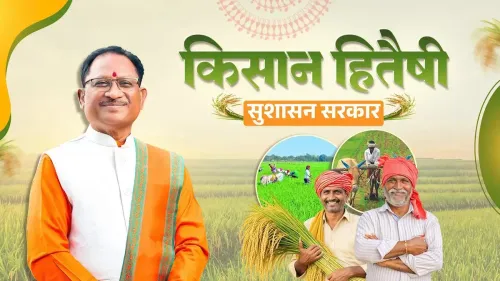
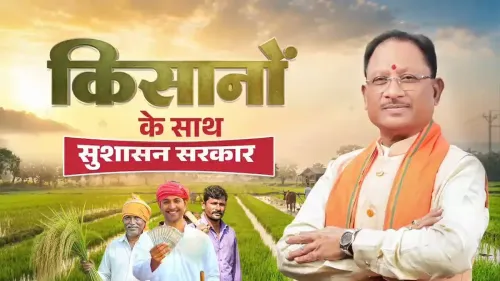
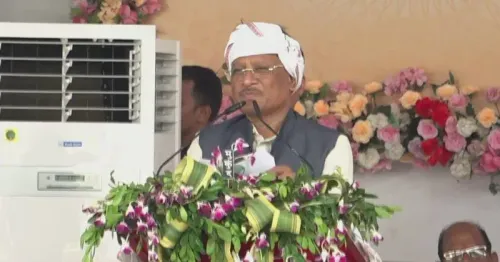
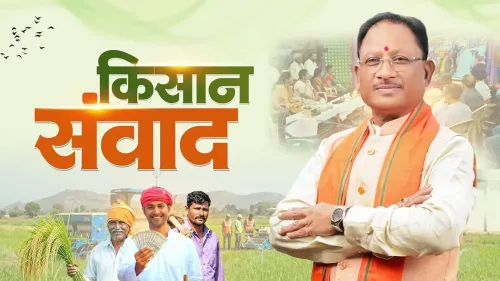
Chhattisgarh Chief Minister Vishnu Deo Sai on Tuesday, 21 July 2026, reaffirmed that farmer prosperity is the state government's highest priority, outlining a multi-pronged approach that includes better minimum support prices, modern agricultural infrastructure, and timely financial assistance to cultivators across the state.
Context
Posting on X, CM Sai wrote: 'अन्नदाता की समृद्धि ही हमारी सर्वोच्च प्राथमिकता है' — 'The prosperity of the food-giver [farmer] is our highest priority.' He credited the 'double-engine government' — a term the Bharatiya Janata Party (BJP) uses to describe aligned BJP administrations at both the state and central levels — for continuously working to honour farmers' hard work and ensure they receive fair returns.
The Chief Minister's statement comes amid ongoing national conversations about agricultural income, rural distress, and the effectiveness of central and state-level farm support schemes. Chhattisgarh, a predominantly agrarian state in central India, has a large share of its workforce engaged in farming, making farm-welfare messaging politically and economically significant.
Policy Backdrop
The post references several pillars of farm support: better Minimum Support Price (MSP), farmer-friendly schemes, modern agricultural facilities, and time-bound financial cooperation. These broadly align with the central government's existing frameworks, including the PM-KISAN income-support scheme and state-level paddy procurement drives, for which Chhattisgarh has historically been among the more active procuring states.
The 'double-engine government' framing has been a consistent BJP narrative since the party came to power in Chhattisgarh in December 2023, when Vishnu Deo Sai was sworn in as Chief Minister. The argument is that policy alignment between Raipur and New Delhi accelerates fund disbursement and scheme implementation, particularly for agriculture and rural development.
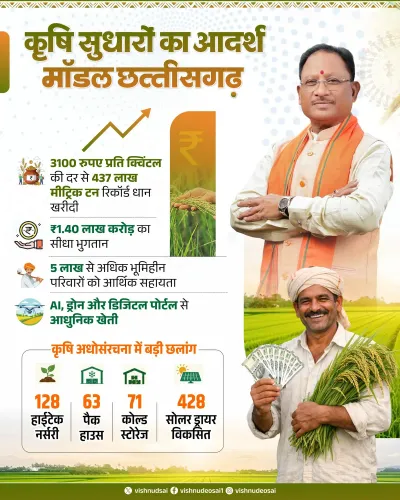
Chhattisgarh's farm economy is anchored in paddy cultivation, and the state government has in recent years expanded its MSP-linked procurement network. Initiatives targeting soil health, irrigation expansion, and crop-loan waivers have also been part of the state's stated agricultural agenda.
Stakeholders and Impact
The primary beneficiaries of the policies referenced are the state's estimated 3.5 million-plus farming households, many of whom belong to tribal and Other Backward Class communities in districts such as Bastar, Raipur, Bilaspur, and Rajnandgaon. Timely MSP procurement and direct benefit transfers are particularly consequential for small and marginal farmers who lack access to private markets.
CM Sai closed his post with a three-part resolution: 'समृद्ध किसान, सशक्त कृषि और विकसित छत्तीसगढ़' — 'Prosperous farmer, empowered agriculture, and a developed Chhattisgarh' — framing agricultural growth as central to the state's broader development vision.
What's Next
The statement is likely a prelude to further policy announcements or scheme-related events, given that July marks the onset of the kharif sowing season — the period when paddy and other monsoon crops are planted across Chhattisgarh. Decisions on MSP rates, input subsidies, and procurement timelines made in this window directly shape farmer incomes for the year.
Whether the government follows through with concrete scheme launches or budget allocations will be the measure by which these commitments are assessed by farm groups and the rural electorate ahead of future electoral cycles.
Point of View
When farmer-facing announcements carry maximum political and economic weight. The 'double-engine government' framing is designed to credit both state and central leadership simultaneously, reinforcing the party's unified governance narrative ahead of any future electoral contest. The three-part resolution — prosperous farmer, empowered agriculture, developed Chhattisgarh — mirrors the language of the BJP's 'Viksit Bharat' vision, anchoring a state-level commitment within a national development arc. The real test will be whether procurement targets, MSP disbursements, and scheme coverage data in the coming months validate the rhetoric.
NationPress
20 Oct 2026
Frequently Asked Questions
What did Chhattisgarh CM Vishnu Deo Sai say about farmers on 21 July 2026?
CM Vishnu Deo Sai declared that farmer prosperity is the state's highest priority, citing better MSP, modern agricultural facilities, farmer-friendly schemes, and timely financial support as the key tools being deployed by the 'double-engine government'.
What is the 'double-engine government' in the context of Chhattisgarh?
The 'double-engine government' is a BJP term referring to aligned BJP administrations at both the state level in Raipur and the central level in New Delhi, which the party argues accelerates fund disbursement and policy implementation for sectors like agriculture.
Which farmers benefit from Chhattisgarh's agricultural schemes?
The primary beneficiaries are the state's estimated 3.5 million-plus farming households, including small and marginal farmers from tribal and OBC communities in districts such as Bastar, Raipur, Bilaspur, and Rajnandgaon.
Why is July important for farmers in Chhattisgarh?
July marks the start of the kharif sowing season in Chhattisgarh, when paddy and monsoon crops are planted. MSP rates, input subsidies, and procurement decisions made during this period directly determine farmer incomes for the year.
What is Vishnu Deo Sai's vision for Chhattisgarh's agriculture?
CM Sai has articulated a three-part resolution: a prosperous farmer, empowered agriculture, and a developed Chhattisgarh — positioning agricultural growth as the foundation of the state's broader development goals.