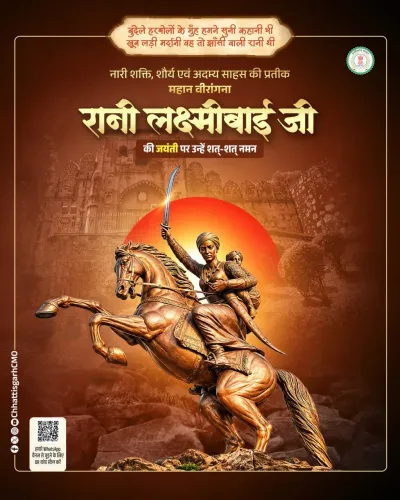
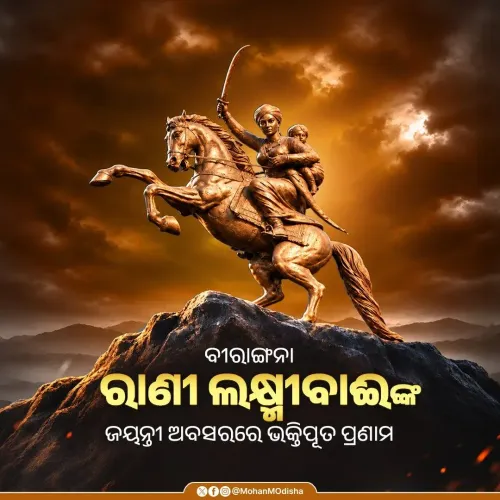
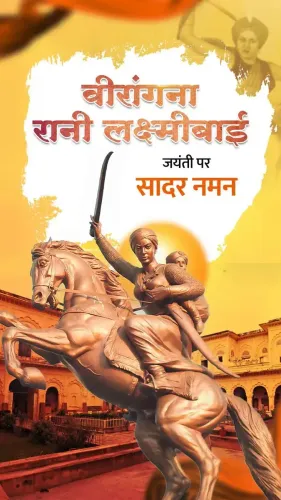
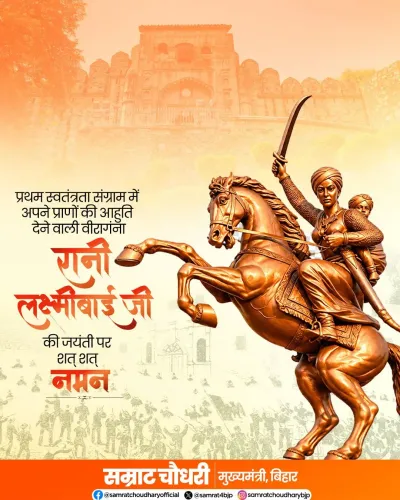
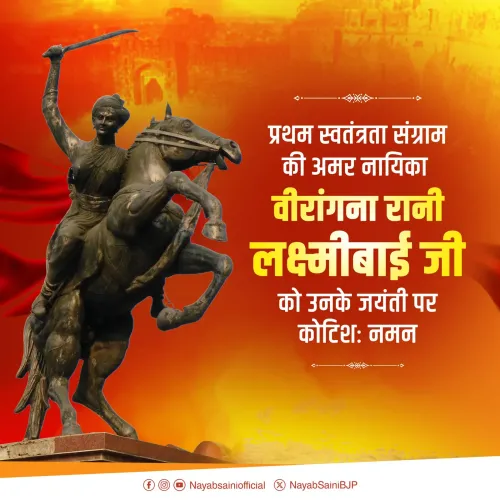
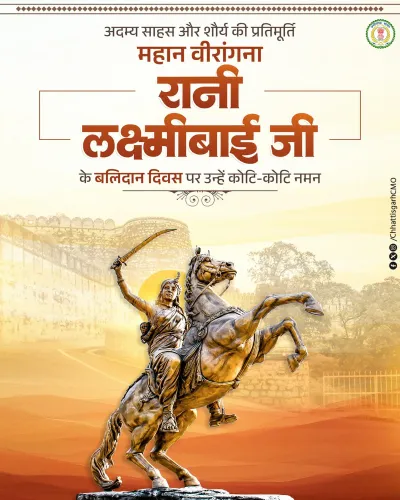
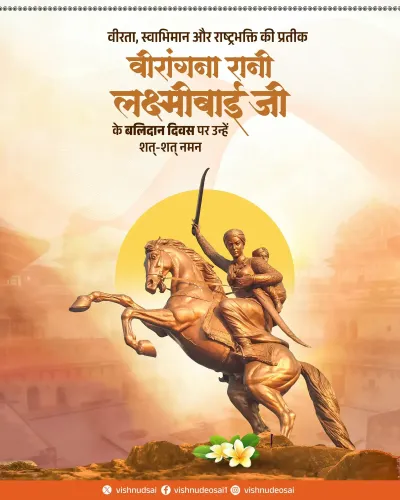
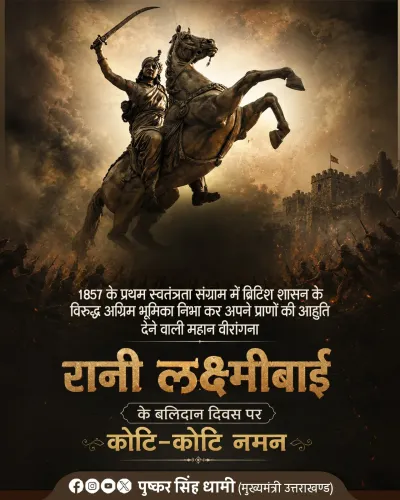
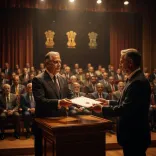
CM Vishnu Deo Sai pays tribute to Rani Lakshmibai on her Jayanti
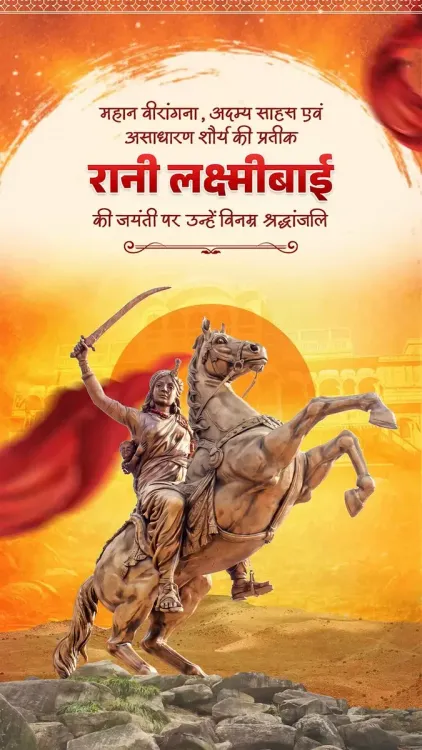
Synopsis
Chhattisgarh Chief Minister Vishnu Deo Sai marked Rani Lakshmibai's Jayanti on 19 November with a heartfelt tribute, calling the Queen of Jhansi the finest symbol of the 1857 First War of Independence and urging citizens to draw inspiration from her sacrifice.
Key Takeaways
Chhattisgarh CM Vishnu Deo Sai posted a tribute to Rani Lakshmibai on her birth anniversary, 19 November .
He described her as the supreme embodiment of courage, valour, and dedication to the motherland during the First War of Independence .
Rani Lakshmibai was born on 19 November 1828 and led troops against the East India Company in the 1857 uprising .
Her death on the battlefield made her one of India's most enduring symbols of patriotic sacrifice.
Annual tributes to Rani Lakshmibai on 19 November are a consistent feature of official messaging from state governments across India.
She rode into battle against one of history's most powerful empires and never rode back. On her birth anniversary, Chhattisgarh Chief Minister Vishnu Deo Sai offered reverential tribute to Rani Lakshmibai of Jhansi, honouring her as the embodiment of fearless courage, valour, and undying devotion to the motherland.
Posting on 19 November, CM Sai wrote in Hindi: 'कोटि-कोटि नमन' — a crore-fold salutation — to the warrior queen, calling her the supreme exemplar of the First War of Independence. He added that her 'unparalleled valour, struggle and sacrifice will forever inspire the countrymen to love the nation and defend the motherland.'
The queen who became a symbol of 1857
Rani Lakshmibai, born on 19 November 1828, was the Queen of Jhansi who took up arms against the East India Company during the great uprising of 1857 — an event India commemorates as the first organised assertion of independence. Her defiance, her command of troops, and her death on the battlefield cemented her place not merely in history books but in the national imagination.
India's freedom movement later drew heavily on her image — a woman in armour, sword in hand — as proof that the resistance to colonial rule was total, cutting across gender and region. She remains one of the most invoked figures in Indian patriotic discourse, from school textbooks to state ceremonies.
A ritual of remembrance across BJP-governed states
CM Sai's message is part of a well-established annual tradition: state leaders across the political spectrum issue formal tributes on 19 November, with BJP-governed states in particular framing the 1857 revolt prominently in their official commemorations. For Sai, who regularly uses public platforms to highlight national historical figures, the tribute also signals the administration's intent to keep the memory of India's pre-independence struggle alive in civic discourse in Chhattisgarh.
The broader pattern points to something worth noting: in an era when political messaging is relentlessly present-tense, the annual return to Rani Lakshmibai is one of the few moments when leaders deliberately anchor the present in a 170-year-old act of defiance — a reminder that the state considers her legacy not archival, but active.
Rani Lakshmibai did not live to see independence. The nation she died defending took another ninety years to achieve it. That gap — between sacrifice and outcome — is precisely what her Jayanti asks every generation to sit with.
Point of View
Particularly those associated with the 1857 revolt. By framing Rani Lakshmibai's sacrifice as an ongoing inspiration — not a closed chapter — leaders like Sai signal that nationalist historical memory remains a live political and cultural project, not mere ceremonial obligation. The choice of language, 'koti-koti naman' and 'undying inspiration', reflects a conscious effort to personalise an institutional tribute. What is worth watching is whether such commemorations translate into concrete educational or cultural programming at the state level in Chhattisgarh.
NationPress
19 Nov 2026
Frequently Asked Questions
When is Rani Lakshmibai Jayanti celebrated?
Rani Lakshmibai Jayanti is celebrated on 19 November each year, marking the birth anniversary of the Queen of Jhansi, who was born on 19 November 1828 .
Why is Rani Lakshmibai important in Indian history?
Rani Lakshmibai was the Queen of Jhansi who led armed resistance against the East India Company during the First War of Independence in 1857 . She became a lasting symbol of patriotism and sacrifice in India's freedom struggle.
What did Chhattisgarh CM Vishnu Deo Sai say on Rani Lakshmibai Jayanti?
CM Vishnu Deo Sai offered a 'crore-fold salutation' to Rani Lakshmibai, calling her the embodiment of the First War of Independence and stating that her valour and sacrifice would forever inspire Indians to love and defend their motherland.
What was the First War of Independence in 1857?
The First War of Independence of 1857 was a widespread uprising against the administration of the East India Company . It is widely regarded in India as the first organised mass resistance against British colonial rule, with Rani Lakshmibai of Jhansi among its most celebrated figures.
Who is Vishnu Deo Sai?
Vishnu Deo Sai is the Chief Minister of Chhattisgarh and a senior leader of the Bharatiya Janata Party (BJP) . He regularly issues public messages honouring national historical figures on their birth and death anniversaries.