Chhattisgarh CMO pays tribute to Rani Lakshmibai on Balidan Diwas
Synopsis
The Chief Minister's Office of Chhattisgarh marked Rani Lakshmibai's Balidan Diwas on 18 June 2026, saluting the queen of Jhansi as an immortal symbol of India's first war of independence and a beacon of courage and sacrifice.
Key Takeaways
The Chief Minister's Office of Chhattisgarh posted a formal tribute to Rani Lakshmibai on 18 June 2026 , her Balidan Diwas .
Rani Lakshmibai died in battle on 18 June 1858 near Gwalior while fighting British forces during the 1857 uprising .
The office described her as the 'immortal warrior-woman of the first freedom struggle' and a symbol of 'indomitable courage and valour.' Annual tributes to 1857 heroes on 18 June have been a cross-party tradition in Indian public life since at least the 1950s .
Such commemorations are closely tied to school curricula and often precede broader Independence Day observances in August .
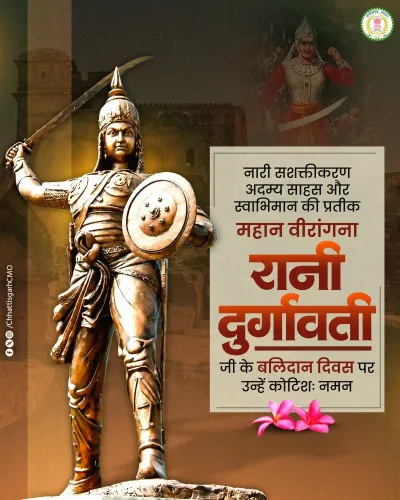
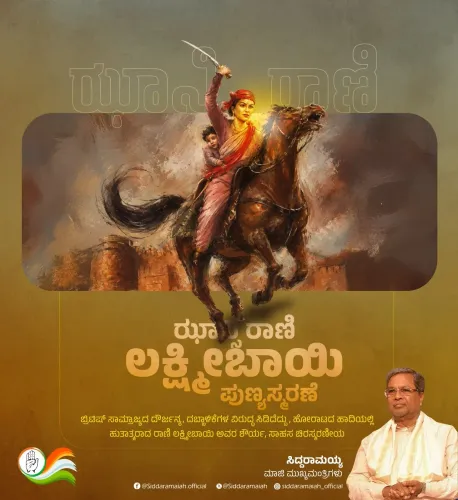
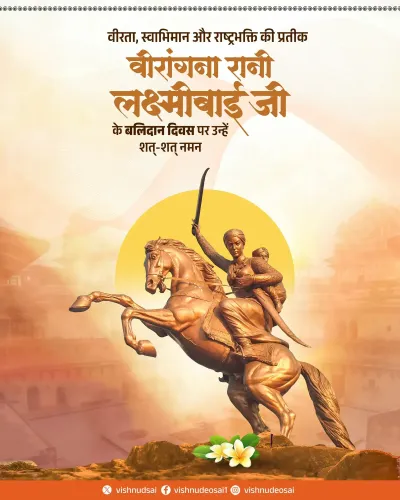
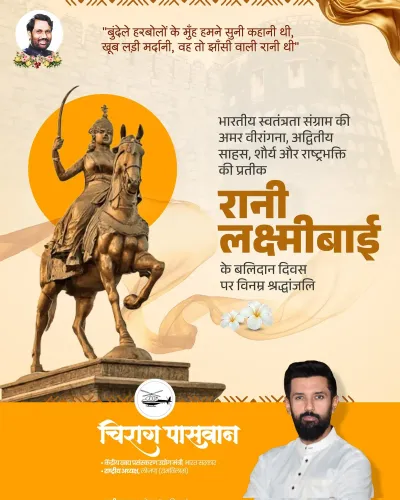
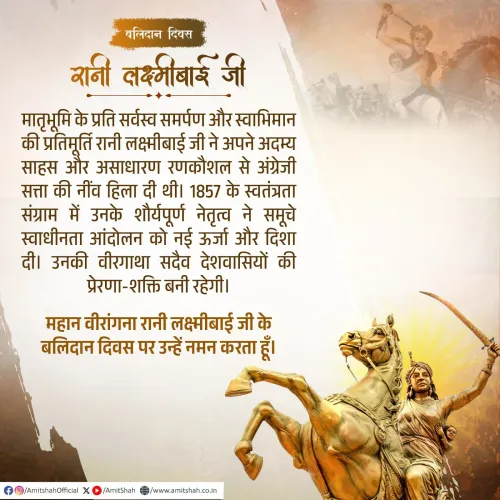
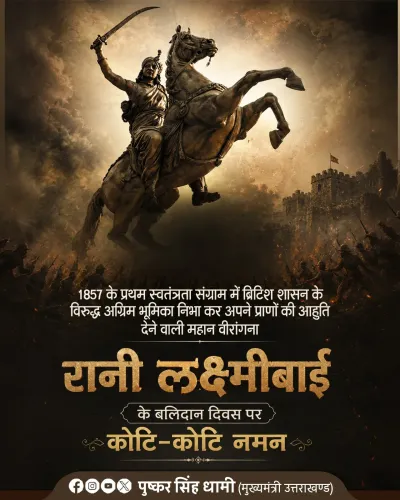
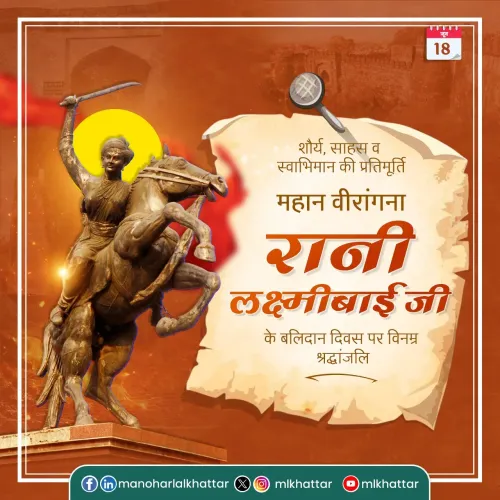
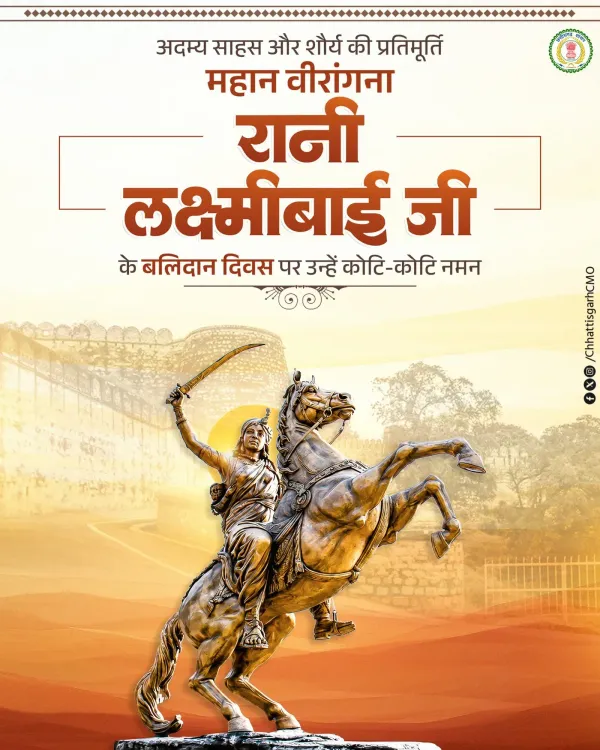
The Chief Minister's Office of Chhattisgarh paid homage to Rani Lakshmibai of Jhansi on Thursday, 18 June 2026, marking her sacrifice day — Balidan Diwas — with a tribute post on X. The office hailed her as an immortal heroine of India's first war of independence and a symbol of indomitable courage and valour.
The post, written in Hindi, offered koti koti naman (countless salutations) to the queen, describing her as 'pratham swatantrata sangram ki amar virangana, adamya sahas aur parakram ki prateek' — the immortal warrior-woman of the first freedom struggle and an emblem of undaunted bravery.
Context
Rani Lakshmibai was the queen of the princely state of Jhansi in present-day Uttar Pradesh. She became one of the foremost leaders of the 1857 uprising against the East India Company, commanding troops in battle after the British sought to annex her kingdom under the Doctrine of Lapse. She died in battle on 18 June 1858 near Gwalior, at around 29 years of age, and has since been enshrined in Indian national memory as a defining symbol of resistance and sacrifice. The 1857 revolt — also called the First War of Independence — began in Meerut and spread rapidly across northern and central India. It remains a foundational chapter in India's anti-colonial history and a cornerstone of school curricula nationwide.Policy Backdrop
Indian state governments and political leaders have observed 18 June as Rani Lakshmibai's Balidan Diwas with formal tributes since at least the 1950s, as part of the broader national effort to commemorate the heroes of 1857. Such tributes appear consistently across party lines, reflecting the cross-ideological reverence the queen commands in Indian public life. Chief ministers' offices routinely use official social media channels to issue these remembrances, reinforcing nationalist historical narratives and connecting state identity to the wider freedom movement. These posts frequently coincide with school-level memorial events or state-organised commemorative programmes, particularly in the weeks leading up to Independence Day on 15 August.Stakeholders and Impact
The tribute is addressed to the general public and resonates especially with students, for whom Rani Lakshmibai is a central figure in history textbooks. Her story is taught as part of the standard curriculum across Indian states, making annual commemorations a point of civic and educational reinforcement. For Chhattisgarh, a state carved out of Madhya Pradesh in 2000, public acknowledgement of 1857 figures connects the region's identity to the national freedom narrative, even as the revolt's epicentres lay in neighbouring territories. Such official gestures signal the state government's alignment with mainstream commemorative traditions observed across India.What's Next
State-level commemorative programmes, school assemblies, or cultural events in Chhattisgarh marking Rani Lakshmibai's Balidan Diwas may follow in the days ahead. As the country moves toward Independence Day in August, tributes to 1857 figures typically intensify, with state governments often announcing educational initiatives or heritage events that highlight the freedom movement's regional connections. Whether the Chhattisgarh government follows up with any formal programme will be worth watching.Point of View
Reinforcing the state's alignment with mainstream nationalist historical memory. Such gestures, consistent across party lines for decades, serve a dual purpose: they affirm civic identity and keep the 1857 narrative alive in public consciousness ahead of Independence Day. For a relatively young state like Chhattisgarh, invoking pan-Indian freedom movement icons also helps weave the region into a broader national story. The pattern suggests that digital platforms have become the primary vehicle for this kind of state-led historical remembrance.
NationPress
18 Sept 2026
Frequently Asked Questions
When is Rani Lakshmibai's Balidan Diwas observed?
Rani Lakshmibai's Balidan Diwas is observed on 18 June every year, marking the anniversary of her death in battle near Gwalior on 18 June 1858 .
How did Rani Lakshmibai die?
Rani Lakshmibai died on 18 June 1858 while fighting British forces near Gwalior during the 1857 uprising . She was around 29 years old at the time of her death.
Why is Rani Lakshmibai called a hero of the First War of Independence?
Rani Lakshmibai led her forces against the East India Company after the British sought to annex Jhansi under the Doctrine of Lapse. Her armed resistance during the 1857 revolt made her one of its most iconic leaders.
Why did the Chhattisgarh CMO post a tribute to Rani Lakshmibai?
The Chief Minister's Office of Chhattisgarh posted the tribute on 18 June 2026 to mark Balidan Diwas , continuing a long-standing tradition of official commemoration of 1857 freedom fighters observed by Indian state governments across party lines.
What does koti koti naman mean?
Koti koti naman is a Hindi phrase meaning 'salutations from crores' or 'countless bows of respect,' commonly used in Indian official tributes to express deep, collective reverence for a historical figure.