Siddaramaiah Pays Tribute to Rani Lakshmibai on Death Anniversary
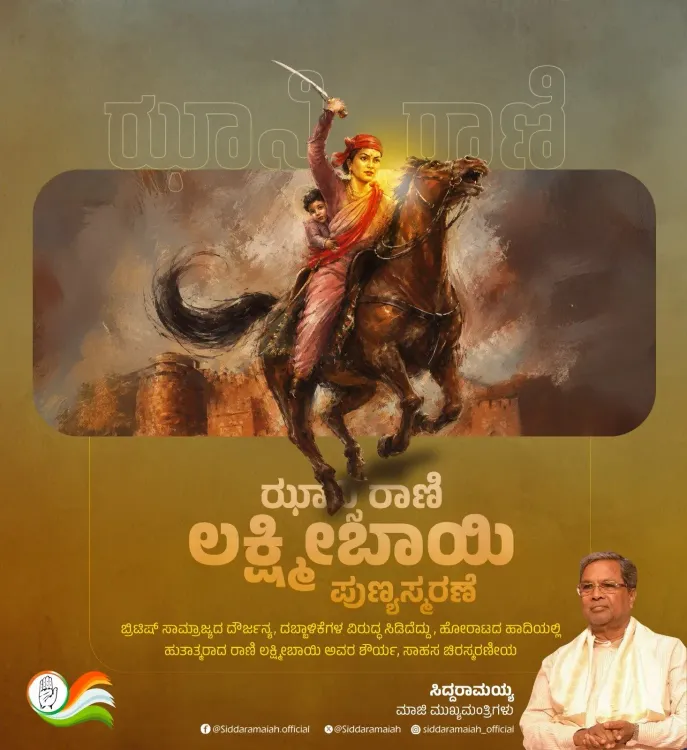
Synopsis
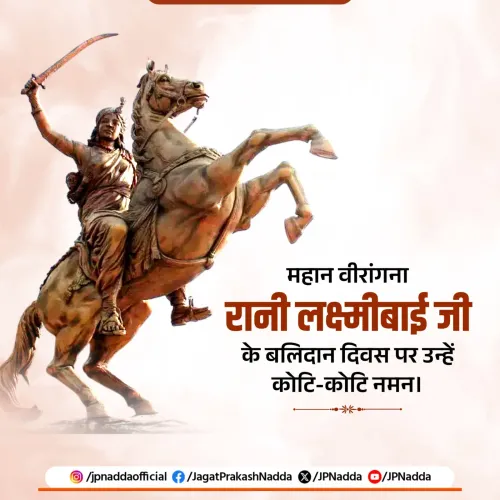
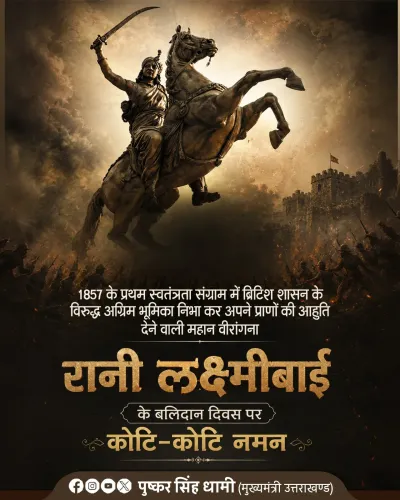
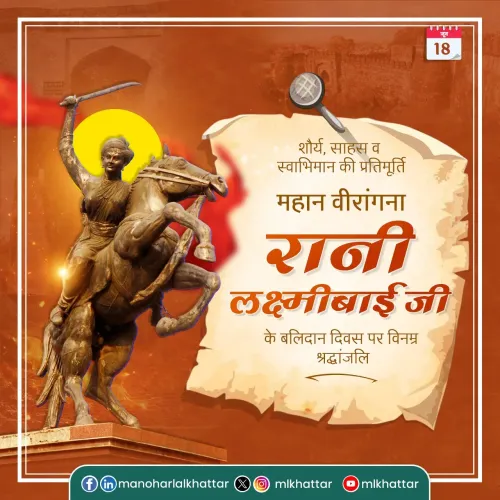
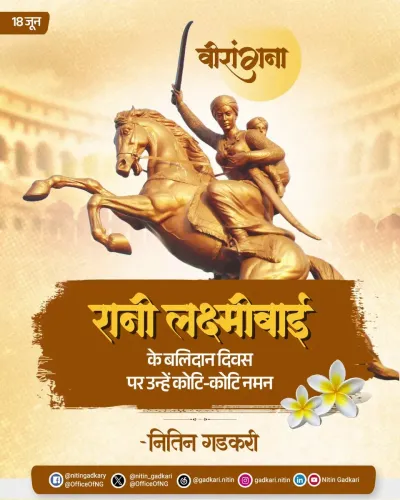
Karnataka Chief Minister Siddaramaiah on 18 June 2026 honoured Rani Lakshmibai on her death anniversary, calling her a fearless revolutionary who rose against British colonial rule and lives on through her valour and sacrifice.
Key Takeaways
Karnataka CM Siddaramaiah posted a tribute to Rani Lakshmibai on her death anniversary, 18 June 2026 .
The tribute was written in Kannada and posted on X, praising Lakshmibai as a brave woman who sounded the trumpet of revolution against British rule.
Rani Lakshmibai died in battle on 18 June 1858 near Gwalior , aged approximately 29, during the 1857 Revolt .
Siddaramaiah described her as living on 'even today through her valour and bravery' and honoured her as a soul who sacrificed her life for the country.
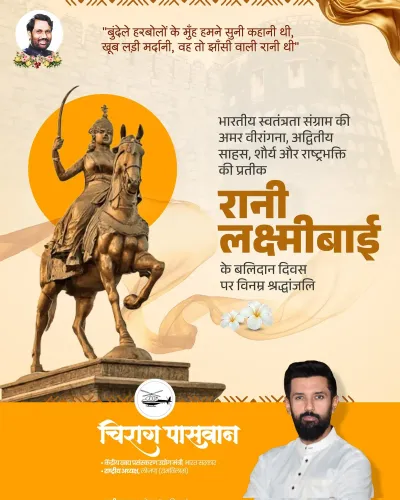
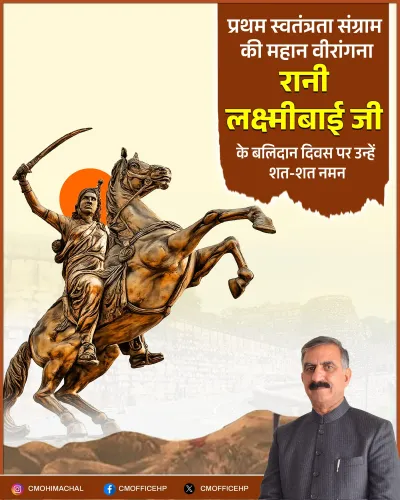
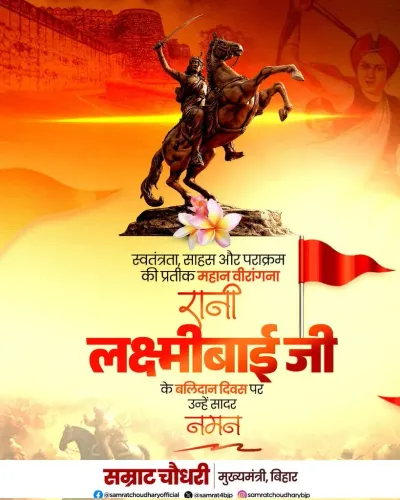
The tribute reflects a broader pattern of Congress leaders invoking 1857 figures to underscore the party's historical association with India's independence movement.
With Independence Day 2026 approaching, commemorations of 1857 Revolt figures are expected to intensify across political platforms.
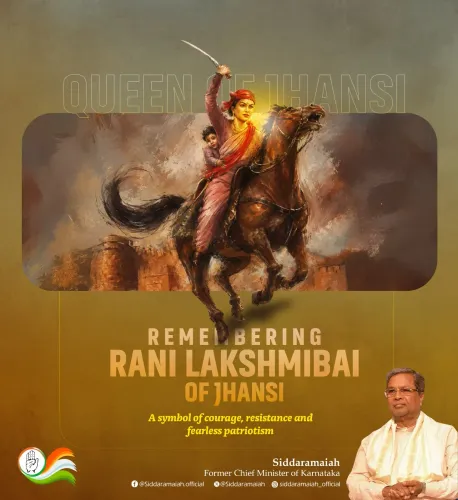
Karnataka Chief Minister Siddaramaiah on Thursday, 18 June 2026 paid tribute to Rani Lakshmibai of Jhansi, honouring the 19th-century warrior queen on her death anniversary as a fearless symbol of India's anti-colonial resistance. The Chief Minister posted his tribute in Kannada on X, saluting her sacrifice and courage in the fight against British rule.
In his post, Siddaramaiah described Lakshmibai as a 'dhira mahile' (brave woman) who 'sounded the trumpet of revolution in the country' by rising against the British authoritarian empire that 'was suppressing the cry of freedom of crores of people through lathis and guns, and looting the nation.' He added that 'Rani Lakshmibai lives among us even today through her valour and bravery,' offering his reverential remembrance to 'the great soul who sacrificed and laid down her life for the country.'
Context
Rani Lakshmibai, born Manikarnika Tambe in 1828, was the Queen of the princely state of Jhansi in present-day Uttar Pradesh. She became one of the most prominent leaders of the 1857 Revolt — widely regarded as India's First War of Independence — after refusing to accept the British annexation of Jhansi under the Doctrine of Lapse. She died in battle on 18 June 1858 near Gwalior, aged approximately 29, and has since been immortalised as an enduring symbol of Indian nationalism and women's courage.
Policy Backdrop
The 1857 Revolt remains a foundational event in India's national memory. Post-independence governments have formally commemorated its legacy through centenary observances in 1957 and sesquicentennial programmes in 2007, reinforcing the revolt's place in the country's official historical narrative. Figures such as Rani Lakshmibai occupy a cross-party space of reverence, with leaders from across the political spectrum invoking her legacy on key anniversaries.
Congress leaders have historically emphasised the party's association with the independence movement, and tributes to 1857 figures form a recurring part of that broader political and cultural messaging. Chief Minister Siddaramaiah, a senior Indian National Congress leader, has consistently invoked historical nationalist figures in his public communications.
Stakeholders and Impact
Such tributes resonate widely with Indian citizens across generations, for whom Rani Lakshmibai represents both anti-colonial resistance and the role of women in shaping the nation's history. Her legacy is embedded in school curricula, literature, and popular culture across India, making annual commemorations a moment of shared national reflection. For Karnataka, whose Chief Minister issued this tribute, the message underscores the state government's engagement with pan-Indian historical memory beyond regional boundaries.
What's Next
With Independence Day 2026 approaching in August, tributes to figures of the 1857 Revolt are likely to feature more prominently in official and political discourse at both state and central levels. State governments, including Karnataka, may announce or participate in programmes commemorating the revolt's anniversaries as part of broader nationalist observances. Siddaramaiah's tribute signals continued political engagement with India's anti-colonial heritage as the country approaches the 80th Independence Day.
Point of View
The Chief Minister speaks simultaneously to a regional audience and a pan-Indian historical consciousness. The timing — weeks before Independence Day — positions such tributes as part of a predictable but politically meaningful seasonal cycle of nationalist messaging. Across party lines, Lakshmibai remains one of the few historical figures whose commemoration carries near-universal resonance, making her a safe and powerful rhetorical touchstone.
NationPress
18 Sept 2026
Frequently Asked Questions
Why did Siddaramaiah post a tribute to Rani Lakshmibai on 18 June 2026?
18 June marks the death anniversary of Rani Lakshmibai, who fell in battle near Gwalior on 18 June 1858. Karnataka CM Siddaramaiah posted the tribute to honour her courage and sacrifice during the 1857 Revolt against British rule.
Who was Rani Lakshmibai and why is she important in Indian history?
Rani Lakshmibai was the Queen of Jhansi who led resistance against British annexation during the 1857 Revolt, widely regarded as India's First War of Independence. She is celebrated as a symbol of bravery, patriotism, and women's strength in the national freedom struggle.
What did Siddaramaiah say about Rani Lakshmibai in his post?
Siddaramaiah called her a brave woman who 'sounded the trumpet of revolution' against the British empire that suppressed freedom with lathis and guns and looted the nation. He said she lives on through her valour and offered his reverential remembrance to her great soul.
When did Rani Lakshmibai die and how?
Rani Lakshmibai died on 18 June 1858 during battle near Gwalior while fighting British forces, aged approximately 29. She had refused to surrender Jhansi after the British sought to annex it under the Doctrine of Lapse.
Is Rani Lakshmibai's death anniversary officially commemorated in India?
While there is no single national holiday, her death anniversary is widely observed through tributes by political leaders, cultural programmes, and educational institutions across India. Post-independence governments have also held centenary and sesquicentennial commemorations of the broader 1857 Revolt.