CM Sai Shares Amit Shah's Words on Tribal Representation
Synopsis
Chhattisgarh CM Vishnu Deo Sai amplified Union Home Minister Amit Shah's statement crediting PM Modi and the BJP with securing historic tribal representation — from the creation of Chhattisgarh and Jharkhand in 2000 to Draupadi Murmu's election as President in 2022.
Key Takeaways
Chhattisgarh CM Vishnu Deo Sai shared Amit Shah 's remarks on tribal political representation on 25 May 2026 .
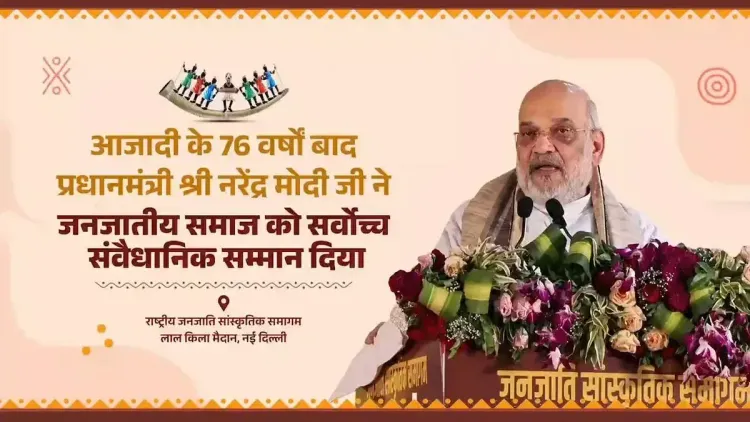
Amit Shah stated that for 76 years after independence, no tribal representative reached the presidency.
Draupadi Murmu , from a Santhal family in Odisha, became India's first tribal President in July 2022 .
The states of Chhattisgarh and Jharkhand were created in November 2000 under PM Atal Bihari Vajpayee to address tribal aspirations.
Both Odisha and Chhattisgarh are currently led by Chief Ministers from tribal communities, according to Shah's remarks.
The BJP frames these milestones as evidence of a consistent policy commitment to Scheduled Tribe advancement.
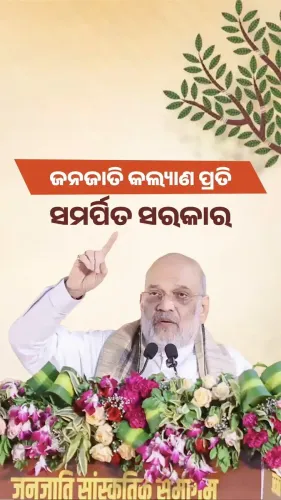
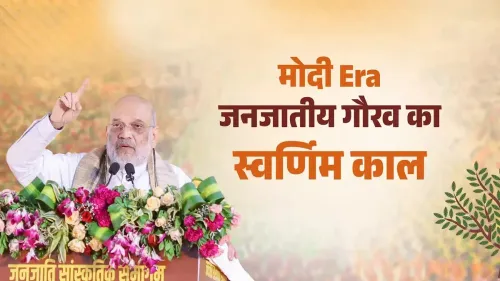
Chhattisgarh Chief Minister Vishnu Deo Sai on Sunday, 25 May 2026, shared remarks by Union Home Minister Amit Shah on tribal political representation in India, highlighting the elevation of Draupadi Murmu to the presidency and the creation of tribal-majority states as milestones of BJP governance.
Context
The post quotes Amit Shah as stating: 'देश की आज़ादी के 76 वर्षों तक देश के सर्वोच्च पद राष्ट्रपति पद पर जनजातीय समाज का कोई प्रतिनिधि नहीं पहुंचा था' — 'For 76 years after the country's independence, no representative of the tribal community reached the highest office of President.' Shah credited Prime Minister Narendra Modi with nominating Smt. Draupadi Murmu, who comes from a Santhal family in Odisha, to the office of President, calling it an act of 'honour and welfare for the entire tribal community.'
Shah also invoked the legacy of former Prime Minister Atal Bihari Vajpayee, noting that tribal-majority states Jharkhand and Chhattisgarh were carved out during his tenure, and that today both Odisha and Chhattisgarh are led by Chief Ministers from tribal communities.
Policy Backdrop
In November 2000, the BJP-led central government under Vajpayee created Chhattisgarh and Jharkhand as separate states, responding to decades-long demands from Adivasi and tribal populations for dedicated administrative units that would better reflect their demographic and cultural identity.
In July 2022, Draupadi Murmu was elected the 15th President of India, becoming the first person from a Scheduled Tribe to hold the constitutional office. Her election was widely seen as a significant symbolic step for tribal communities across central and eastern India.
Stakeholders and Impact
The remarks are directed at Adivasi and Scheduled Tribe communities concentrated in states such as Chhattisgarh, Jharkhand, Odisha, and Madhya Pradesh. These communities have historically been underrepresented in top constitutional positions despite comprising a significant share of India's population.
By amplifying Shah's statement, CM Sai — himself a tribal leader heading Chhattisgarh — reinforces the BJP's outreach narrative in scheduled areas ahead of continued political mobilisation in tribal belts. The framing positions the party as a consistent champion of Scheduled Tribe advancement, drawing a direct line from the 2000 state bifurcations to the 2022 presidential appointment.
What's Next
Attention will now turn to substantive policy follow-through, including the state-level implementation of tribal rights legislation and the allocation for tribal sub-plans in the next Union Budget session. How the BJP translates this symbolic messaging into legislative and administrative outcomes will determine its reception among tribal electorates across central India.
Point of View
As a tribal leader himself, is uniquely positioned to amplify. By quoting Shah rather than speaking in his own voice, Sai lends the message institutional weight while keeping it rooted in the national party's framing. This kind of coordinated amplification signals active ground-level mobilisation in tribal constituencies ahead of future electoral cycles. The real test, however, will be whether symbolic representation translates into measurable gains in forest rights, land tenure security, and tribal sub-plan spending.
NationPress
26 Sept 2026
Frequently Asked Questions
Who was India's first tribal President?
Draupadi Murmu became India's first President from a Scheduled Tribe community when she was elected in July 2022 . She comes from the Santhal community in Odisha and was nominated by the BJP -led NDA.
When were Chhattisgarh and Jharkhand created and why?
Chhattisgarh and Jharkhand were created in November 2000 under Prime Minister Atal Bihari Vajpayee to address long-standing demands from tribal and Adivasi communities for separate states that better represented their identity and interests.
What did Amit Shah say about tribal representation in India?
Amit Shah stated that for 76 years after independence, no representative of the tribal community occupied the presidency, and credited PM Narendra Modi with correcting this by nominating Draupadi Murmu to the highest constitutional office.
Why did Chhattisgarh CM Vishnu Deo Sai share this post?
CM Vishnu Deo Sai , himself a leader from a tribal community, shared Amit Shah 's remarks to highlight the BJP 's record on tribal political representation, reinforcing the party's outreach to Scheduled Tribe voters in Chhattisgarh and neighbouring states.
Which states currently have tribal Chief Ministers according to Amit Shah?
According to Amit Shah 's statement shared by CM Sai , both Odisha and Chhattisgarh are currently led by Chief Ministers who come from tribal communities.