CM Nayab Saini Pitches Haryana as Rising Startup Hub
Synopsis
Haryana Chief Minister Nayab Singh Saini on 4 July 2026 declared the state a rising startup hub, pledging government action to ease business conditions — aligning with central Startup India goals and Haryana's own industrial policy push.
Key Takeaways
CM Nayab Singh Saini declared on 4 July 2026 that Haryana is becoming a major hub for new business startups.
He pledged that the government is taking 'every possible step' to make trade and business easier in the state.
Haryana borders Delhi and hosts major industrial centres including Gurugram and Faridabad .
The statement aligns with the Central government's Startup India programme launched in 2016 and DPIIT's Business Reforms Action Plan from 2015 .
Haryana's Industrial and Investment Policy (2019) laid earlier groundwork for attracting investment and simplifying regulations.
Concrete policy details are expected in the Haryana state budget 2026-27 or a follow-up investment summit.
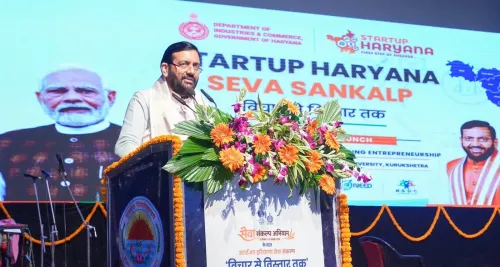
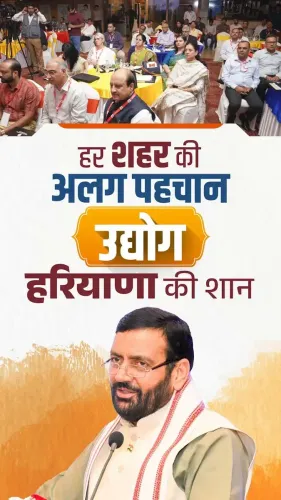
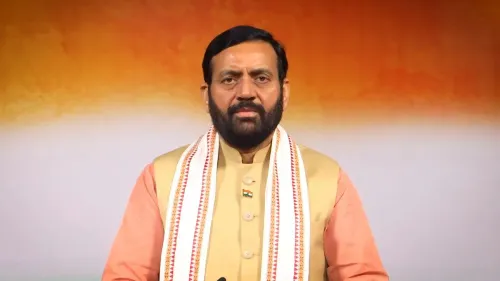
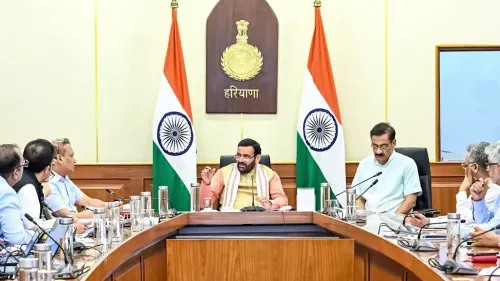
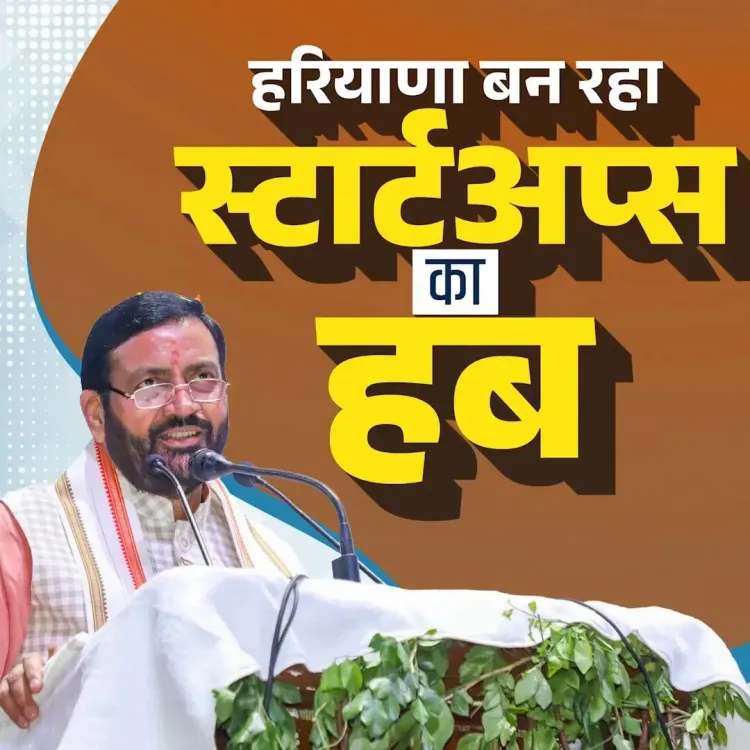
Haryana Chief Minister Nayab Singh Saini on Saturday, 4 July 2026, declared that Haryana is emerging as a major destination for new business startups, reaffirming his government's commitment to easing the conditions under which trade and enterprise operate in the state.
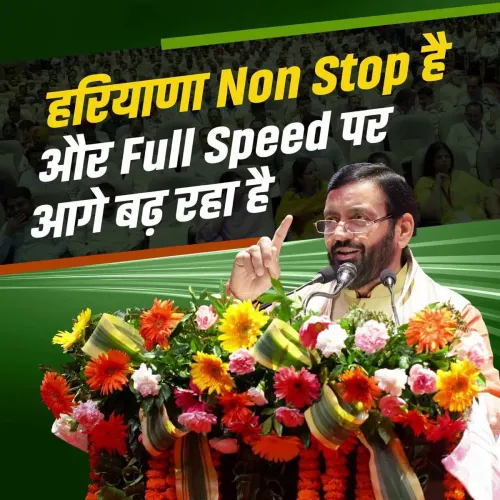
Posting in Hindi on X, CM Saini said: 'Haryana aaj naye business startups ka bada hub ban raha hai' ['Haryana is today becoming a big hub for new business startups']. He added that his government is 'taking every possible step to make business easier.'
Context
Nayab Singh Saini assumed office as Haryana Chief Minister in March 2024, succeeding Manohar Lal Khattar as the BJP's choice to lead the state. His post arrives at a moment when Indian state governments are actively competing to attract investment and position themselves as enterprise-friendly destinations. Haryana, which borders Delhi and hosts major industrial centres including Gurugram and Faridabad, has long been seen as a natural draw for businesses seeking proximity to the capital.
Policy Backdrop
The push aligns with a broader national policy architecture. The Central government's Startup India programme, launched in 2016, was designed to build a nationwide entrepreneurship ecosystem, and states have since been ranked by the Department for Promotion of Industry and Internal Trade (DPIIT) under its Business Reforms Action Plan — a framework introduced in 2015 to benchmark ease-of-doing-business improvements. Haryana released its own Industrial and Investment Policy in 2019 to attract investment and simplify regulatory processes.
State governments across India have competed since the mid-2010s to climb these rankings, align with central incentive schemes such as production-linked incentives, and develop dedicated startup policies. CM Saini's statement fits squarely within this pattern of decentralised economic signalling.
Stakeholders and Impact
The primary beneficiaries of any ease-of-doing-business improvements would be startup founders and the broader MSME sector in the state. Gurugram already functions as one of India's most active startup corridors, hosting a dense cluster of technology and services firms. Simplified regulations and faster approvals would have direct implications for entrepreneurs at the early stages of venture formation, as well as for larger companies looking to establish or expand operations in the state.
For the BJP government in Haryana, projecting an investor-friendly image also carries political weight, particularly as the state seeks to diversify its economic base beyond traditional agriculture and legacy manufacturing.
What's Next
Concrete measures will be watched for in the Haryana state budget for 2026-27 and in any follow-up investment summit the government may convene. Observers will look for specific announcements — such as new single-window clearance mechanisms, startup fund allocations, or regulatory reforms — that translate the Chief Minister's stated intent into actionable policy. Until such details emerge, the post is best read as a public positioning statement reinforcing the state's economic ambitions.
Point of View
Consistent with the BJP's broader narrative of governance-driven growth at both the Centre and in states it controls. By framing Haryana as a startup destination, the government is attempting to shift the state's economic identity away from its agrarian and heavy-industry image toward a services and innovation economy — a transition that carries electoral as well as developmental stakes. The statement echoes a well-established pattern among Indian chief ministers of using social media to project investor confidence ahead of budget cycles or investment summits. The real test will be whether the rhetoric is followed by measurable policy action, particularly on regulatory simplification and public funding for early-stage ventures.
NationPress
3 Oct 2026
Frequently Asked Questions
Is Haryana a good state for startups in India?
Haryana, particularly Gurugram , is already one of India's most active startup corridors due to its proximity to Delhi and strong infrastructure. CM Nayab Singh Saini on 4 July 2026 reaffirmed the state government's intent to further develop this ecosystem by easing business conditions.
What is the Startup India programme and how does it relate to Haryana?
Startup India is a Central government programme launched in 2016 to foster entrepreneurship and innovation across the country. Haryana's state-level startup and investment policies are designed to complement this national framework, and the state is ranked under the DPIIT Business Reforms Action Plan .
What has Nayab Singh Saini done for business in Haryana?
Nayab Singh Saini became Haryana Chief Minister in March 2024 and has positioned his government as pro-business. His administration has publicly committed to easing trade regulations, building on Haryana's Industrial and Investment Policy of 2019 .
What is Haryana's ease of doing business ranking?
Haryana has participated in the DPIIT Business Reforms Action Plan rankings since 2015 , which assess states on regulatory simplification and investor facilitation. Specific current rankings for 2026 have not yet been officially published.
What sectors are driving Haryana's startup growth?
Gurugram and Faridabad are the primary startup and industrial hubs in Haryana , with technology, services, and manufacturing sectors leading activity. The state's proximity to Delhi and existing infrastructure make it attractive for both early-stage ventures and established enterprises.