CM Saini Congratulates India's IChO Gold Medallists
Synopsis
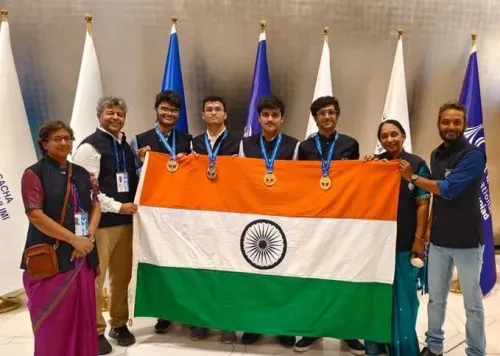
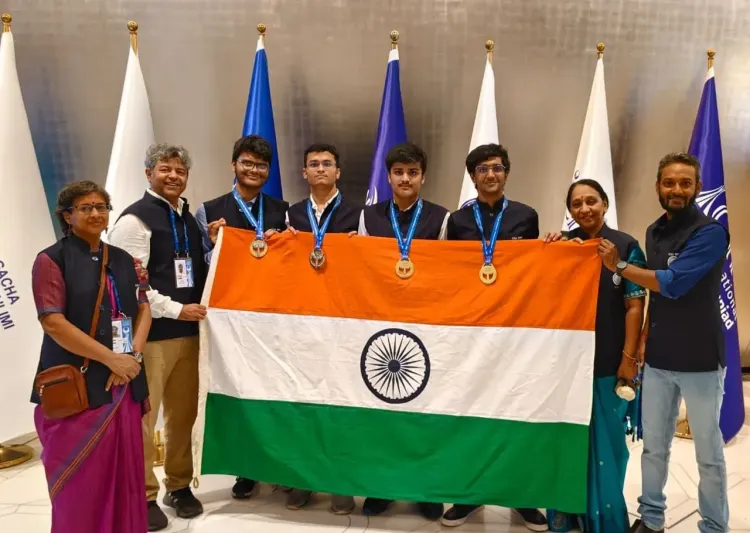
Haryana Chief Minister Nayab Singh Saini congratulated four Indian students who won gold medals at the 58th International Chemistry Olympiad, calling it India's best-ever performance at the competition and expressing hope it will inspire youth toward science and research.
Key Takeaways
Haryana Chief Minister Nayab Singh Saini congratulated four Indian gold medallists at the 58th International Chemistry Olympiad on 19 July 2026 .
The four medallists are Debdatta Priyadarshi , Harshit Singhal , Kabir Chhillar , and Sandeep Kuchi .
Saini described the result as India's best-ever performance at the International Chemistry Olympiad.
The Homi Bhabha Centre for Science Education (HBCSE) selects and trains India's olympiad teams through a multi-stage national process.
The achievement aligns with the goals of the National Education Policy 2020 and the INSPIRE scheme , both of which promote STEM excellence among Indian youth.
Kabir Chhillar is from Haryana , giving the state a direct stake in the national gold-medal haul.
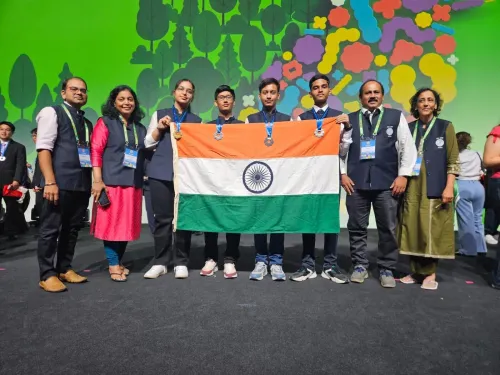
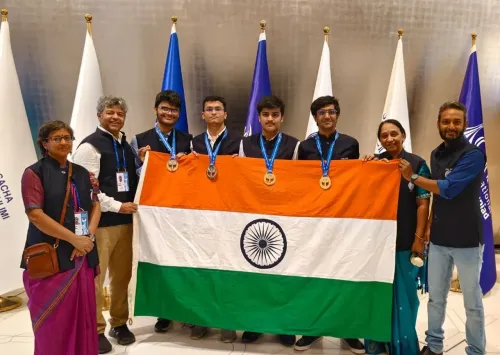
Haryana Chief Minister Nayab Singh Saini on Sunday, 19 July 2026 extended congratulations to four Indian students — Debdatta Priyadarshi, Harshit Singhal, Kabir Chhillar, and Sandeep Kuchi — who won gold medals at the 58th International Chemistry Olympiad (IChO), describing the achievement as India's best-ever performance at the prestigious competition.
In his post on X, Saini wrote: 'भारत की युवा शक्ति आज विश्व मंच पर अपनी प्रतिभा का परचम लहरा रही है' ('India's youth power is today hoisting the flag of its talent on the world stage'). He called the result 'a symbol of the talent, hard work, and innovation of our youth' and expressed confidence that the 'historic success will inspire young people across the country to achieve excellence in science and research.'
Context
The International Chemistry Olympiad is an annual global competition for secondary-school students, first held in 1968, that tests both theoretical chemistry knowledge and practical laboratory skills. India has been a regular participant and has progressively strengthened its medal tally through structured national training programmes. The four gold medals claimed at the 58th edition represent what Saini described as India's best-ever result at the event.
Policy Backdrop
The Homi Bhabha Centre for Science Education (HBCSE), a unit of the Tata Institute of Fundamental Research, is the nodal body responsible for selecting and training Indian teams for international science olympiads, including chemistry. Students undergo a rigorous multi-stage national selection process before representing the country. The National Education Policy 2020 explicitly prioritised the promotion of scientific temper and competitive excellence in STEM disciplines, lending institutional weight to olympiad participation.
The INSPIRE scheme, launched by the Department of Science and Technology in 2008, provides scholarships and mentorship to high-performing science students, forming part of the broader pipeline that feeds talent into such competitions. Political leaders across administrations have treated strong olympiad performances as visible markers of progress in science education and talent identification.
Stakeholders and Impact
The four medallists — Debdatta Priyadarshi, Harshit Singhal, Kabir Chhillar, and Sandeep Kuchi — join a small cohort of Indian students who have brought home gold from the IChO. Their achievement is likely to draw attention from university admissions bodies, research institutions, and scholarship programmes looking to identify early-stage scientific talent. Kabir Chhillar hails from Haryana, lending particular resonance to Saini's message as the state's chief minister.
For science students preparing for olympiad cycles, high-profile recognition from state and central leaders can amplify motivation and draw more aspirants into structured training programmes. Educators and coaching institutions that prepare students for national-level selection are also stakeholders in the broader ecosystem that produced this result.
What's Next
Attention will now turn to whether the Ministry of Education or the Department of Science and Technology announces expanded funding, felicitation events, or enhanced mentorship tracks for the medallists and future olympiad cohorts. The HBCSE will begin its selection cycle for the next IChO edition, and this result is expected to generate a surge in enrolments for the preliminary National Standard Examination in Chemistry. India's record showing at the 58th IChO sets a new benchmark that future teams will be measured against, intensifying both institutional investment and student ambition in the years ahead.
Point of View
Kabir Chhillar, is from Haryana — to a national moment of scientific pride. It also aligns with the BJP's broader narrative of youth empowerment and India's rising global stature under its governance. The invocation of 'talent, hard work, and innovation' echoes the language of the National Education Policy 2020 and signals continuity with the Centre's STEM-promotion agenda. Such messaging from state leaders ahead of potential policy announcements on olympiad funding suggests these achievements are being consciously leveraged to build momentum for expanded science education investment.
NationPress
20 Jul 2026
Frequently Asked Questions
Who won gold medals at the 58th International Chemistry Olympiad for India?
Four Indian students — Debdatta Priyadarshi, Harshit Singhal, Kabir Chhillar, and Sandeep Kuchi — won gold medals at the 58th International Chemistry Olympiad, as acknowledged in Haryana Chief Minister Nayab Singh Saini's post on 19 July 2026.
What is the International Chemistry Olympiad?
The International Chemistry Olympiad is an annual global competition for secondary-school students, first held in 1968, that tests theoretical and practical chemistry skills. India is a regular participant and is trained through the Homi Bhabha Centre for Science Education.
Why did Haryana CM Nayab Singh Saini post about the chemistry olympiad?
CM Saini congratulated the four gold medallists to celebrate India's best-ever performance at the 58th IChO and to encourage young people across the country to pursue excellence in science and research.
Which organisation trains India's team for the International Chemistry Olympiad?
The Homi Bhabha Centre for Science Education (HBCSE), a unit of the Tata Institute of Fundamental Research, is responsible for selecting and training India's team for the International Chemistry Olympiad.
How does the government support students who participate in science olympiads?
The INSPIRE scheme, launched by the Department of Science and Technology in 2008, provides scholarships and mentorship to high-performing science students, forming part of the talent pipeline for international olympiads. The National Education Policy 2020 also prioritised STEM excellence.