CM Saini Backs E20 Fuel, Says Facts Answer Every Question
Synopsis
Haryana Chief Minister Nayab Singh Saini publicly backed India's E20 ethanol-blending programme on 28 July 2026, arguing that facts resolve every question about major change — framing the policy as a data-backed national priority.
Key Takeaways
CM Nayab Singh Saini posted in support of the #E20 programme on 28 July 2026 , stating that facts answer questions about major change.
India's E20 programme targets blending 20% ethanol with petrol, with a roadmap drawn up by NITI Aayog in 2021 aiming for completion by 2025 .
Ethanol blending has been rising progressively since 2018 , when India first pushed past the 10% blending threshold .
The policy supports sugarcane farmers , reduces crude oil import dependence, and cuts vehicular emissions simultaneously.
Haryana , as a major agricultural and automotive-fuel-consuming state, is a key arena for state-level E20 pump rollout and vehicle compatibility advisories.
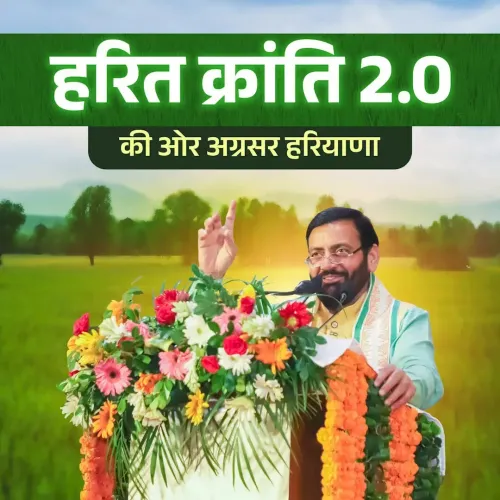
When a nation rewires its energy habits, scepticism is part of the journey. Haryana Chief Minister Nayab Singh Saini stepped into that debate on Tuesday, 28 July 2026, posting a pointed defence of India's E20 fuel programme — the national push to blend 20% ethanol with petrol — reminding critics that facts, not noise, settle big questions.
Writing in Hindi, CM Saini said: 'किसी भी बड़े बदलाव पर सवाल उठना स्वाभाविक है... लेकिन उन सवालों के जवाब सदैव तथ्यों से ही मिलते हैं.' ('It is natural to question any major change... but the answers to those questions always come from facts.') The post, tagged #E20, signals the Haryana government's active alignment with a central energy policy that has been years in the making.
A Decade of Blending, One Big Target
India's ethanol blending journey did not begin overnight. Since 2018, the country steadily pushed blending ratios upward, crossing the 10% threshold progressively before the central government released an E20 roadmap in 2021 — prepared by NITI Aayog — targeting 20% blending by 2025. The policy sits at the intersection of three national priorities: cutting dependence on crude oil imports, supporting sugarcane farmers with a guaranteed off-take for their produce, and trimming vehicular emissions.
The logic is straightforward. Ethanol, derived largely from surplus sugarcane and damaged food grain, is a domestic resource. Every litre of ethanol blended into petrol is a litre of crude India does not need to import — and foreign exchange it does not need to spend. For a country that imports roughly 85% of its crude oil needs, that arithmetic matters enormously.
Why Haryana's Voice Matters in This Debate
Haryana is both a significant agricultural state and a major consumer of automotive fuel, making it a natural focal point for E20 rollout. The state-level deployment of E20-compatible pumps, vehicle compatibility advisories for consumers, and pricing mechanisms for blended fuel are the ground-level levers that determine whether a national policy actually reaches the petrol station. CM Saini's public framing — that questions are welcome, but answers live in the data — is as much a message to vehicle owners anxious about engine compatibility as it is a signal to oil marketing companies and fuel retailers.
Critics of E20 have raised legitimate concerns: older vehicles may not be optimised for higher ethanol blends, and mileage variations have been reported anecdotally. The government's counter has consistently been that the transition is phased, that automakers have been given time to build E20-ready engines, and that the environmental and economic gains outweigh the adjustment costs.
Facts, as CM Saini put it, are where the argument ends — and where the policy must be held to account.
Point of View
Given that ethanol blending directly benefits the sugarcane economy. Whether the state's ground-level rollout of E20 infrastructure matches the rhetorical confidence is the question that will define this policy's legacy.
NationPress
28 Jul 2026
Frequently Asked Questions
What is the E20 fuel programme in India?
The E20 programme is India's national initiative to blend 20% ethanol with petrol. It aims to reduce crude oil imports, lower vehicular emissions, and support sugarcane farmers by providing a domestic market for ethanol. The NITI Aayog released the E20 roadmap in 2021 with a target of achieving 20% blending by 2025.
Is E20 fuel safe for all vehicles in India?
Not all older vehicles are optimised for E20 fuel . The government has worked with automakers to produce E20-compatible engines, and the transition has been phased to allow vehicle manufacturers and consumers time to adapt. Vehicle owners with older models are advised to check manufacturer compatibility guidelines.
Why did Haryana CM Nayab Singh Saini post about E20?
CM Nayab Singh Saini posted on 28 July 2026 backing the #E20 programme, stating that facts answer every question about major change. The post signals Haryana's alignment with the central government's ethanol blending policy as state-level rollout of E20 pumps and consumer advisories continue.
What are the benefits of ethanol blending in petrol?
Ethanol blending reduces India's dependence on crude oil imports — significant given that India imports roughly 85% of its crude needs — while also cutting vehicular emissions and providing an additional income stream for sugarcane farmers whose surplus produce is used to manufacture ethanol.
When did India start ethanol blending in petrol?
India began progressively raising ethanol blending percentages from 2018 onwards, crossing the 10% blending threshold before the NITI Aayog published the E20 roadmap in 2021 , which set a target of 20% blending by 2025 .