CM Nayab Saini backs maize-to-ethanol push under E20 plan

Synopsis
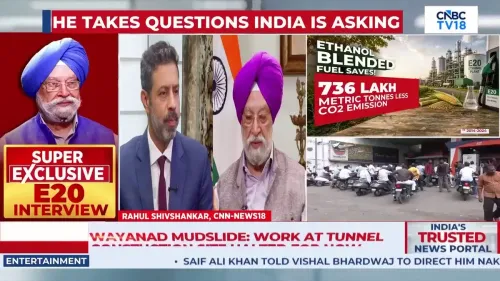
Haryana CM Nayab Singh Saini has spotlighted India's maize-to-ethanol push under the E20 programme, arguing it gives farmers a reliable additional market and strengthens the rural economy — part of a broader national biofuel strategy dating to the 2018 National Policy on Biofuels.
Key Takeaways
Haryana CM Nayab Singh Saini on 29 July 2026 highlighted maize-based ethanol production as a new market for farmers under the E20 initiative.
India's National Policy on Biofuels, 2018 first permitted surplus food grains including maize as ethanol feedstock.
The E20 target — blending 20% ethanol with petrol — was formally adopted and maize approved as feedstock by 2021-22 .
The programme aims to reduce crude oil import dependence while providing farmers a price-stable offtake channel.
Haryana, a significant maize-producing state, is directly positioned to benefit from expanded distillery procurement.
State-level plant rollouts and oil marketing company blending data will be the key indicators of on-ground progress.
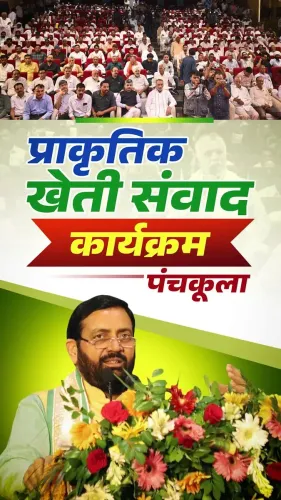
Maize, long a staple crop of Indian fields, is now feeding something else entirely — the nation's petrol tanks. Haryana Chief Minister Nayab Singh Saini on Wednesday, 29 July 2026 highlighted India's expanding ethanol programme, pointing out that agricultural produce such as maize is now being converted into ethanol for use under the E20 fuel-blending initiative — and that farmers are gaining a guaranteed new market in the process.
Saini wrote that maize-based ethanol production is giving farmers 'an additional and reliable market for their produce,' adding that this is lending 'new strength to the rural economy.' The post, shared in Hindi, reflects the ruling BJP's sustained effort to frame the biofuel push as an agrarian welfare measure — not merely an energy policy.
From sugarcane to maize: how India widened the ethanol net
India's ethanol programme was for decades almost entirely dependent on sugarcane molasses. That changed with the National Policy on Biofuels, 2018, which permitted the use of surplus food grains — including maize, broken rice, and other coarse cereals — as feedstock for ethanol distilleries. The move was designed to absorb grain surpluses that would otherwise depress farm-gate prices.
By 2021-22, the government formally approved maize as an ethanol feedstock and set the E20 blending target — mixing 20 per cent ethanol with petrol — as a national goal. The programme simultaneously pursues two objectives: reducing India's dependence on crude oil imports and creating an assured, price-stable offtake channel for farmers.
What E20 means for maize farmers
For growers of coarse cereals, the ethanol route offers something the open market rarely does: predictability. Distilleries procuring maize under government-linked ethanol contracts provide a floor that insulates farmers from the volatility of commodity prices. Haryana, a major maize-producing state, stands to benefit directly as processing capacity expands.
The broader pattern is significant. India has steadily diversified its ethanol feedstock basket, reducing the programme's dependence on any single crop and spreading the income effect across a wider base of farmers — from sugarcane belt states to coarse-cereal growing regions in the north and east.
Energy security and rural income: two birds, one kernel
The strategic calculus behind E20 is straightforward: every litre of domestically produced ethanol blended into petrol is a litre of imported crude oil displaced. At scale, that arithmetic translates into meaningful foreign-exchange savings and a lower import bill. The rural income angle — ethanol as a demand driver for farm produce — gives the policy a political durability that pure energy arguments rarely achieve.
The next test is execution: how quickly state-level maize-to-ethanol plants come online and whether oil marketing companies hit their blending targets will determine whether the promise Saini described translates into verifiable gains for the farmers he is speaking to.
Point of View
Positioning the government as the architect of a 'reliable new market' for crops like maize shores up rural support. More broadly, India's biofuel strategy has matured from a single-feedstock programme into a diversified supply chain, and the political class is now racing to claim credit for that shift. Whether the rural income gains are as widespread as the rhetoric suggests will depend on how fast processing infrastructure scales beyond the pilot phase.
NationPress
28 Oct 2026
Frequently Asked Questions
What is the E20 ethanol blending programme in India?
E20 is India's national target to blend 20 per cent ethanol with petrol, reducing crude oil imports and creating demand for domestically produced biofuels from feedstocks such as sugarcane and maize.
Can maize be used to make ethanol in India?
Yes. India's National Policy on Biofuels, 2018 permitted surplus food grains including maize as ethanol feedstock, and the government formally approved maize for the E20 programme by 2021-22.
How does ethanol production benefit maize farmers?
Distilleries procuring maize under ethanol contracts offer farmers a government-linked, price-stable offtake channel, reducing their exposure to open-market commodity price swings.
What did Haryana CM Nayab Singh Saini say about ethanol?
Saini said that agricultural produce like maize is now being used to produce ethanol for the E20 programme, giving farmers an additional and reliable market and strengthening the rural economy.
Which states benefit most from maize-based ethanol production?
Maize-growing states in northern and eastern India, including Haryana, are positioned to benefit as distillery procurement under the ethanol programme expands beyond sugarcane-belt states.