CM Saini Joins Swami Shraddhanand Centenary at Kurukshetra
Synopsis
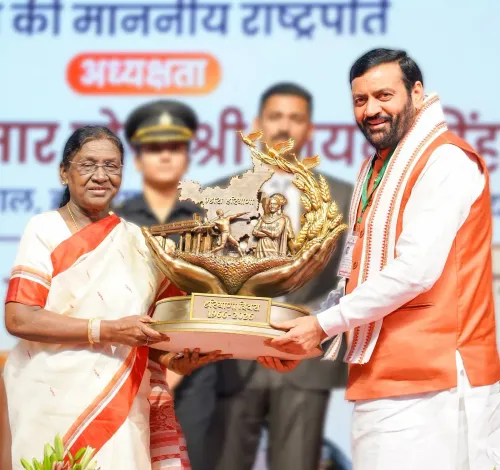
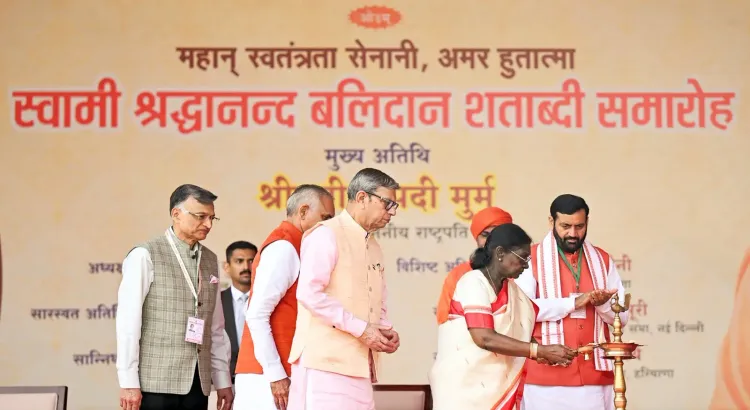
Haryana Chief Minister Nayab Singh Saini attended the Martyrdom Centenary of Swami Shraddhanand at a Kurukshetra Gurukul on November 1, 2026. President Draupadi Murmu presided, urging India to blend cultural heritage with modern innovation — a message framed around the Viksit Bharat vision.
Key Takeaways
Swami Shraddhanand's martyrdom centenary was observed at a Gurukul in Kurukshetra, Haryana on November 1, 2026 .
President Draupadi Murmu presided at the ceremony, delivering a message on combining Indian cultural heritage with modern science and innovation.
Haryana Governor Prof.
Aseem Kumar Ghosh and Gujarat Governor Acharya Devvrat also attended the high-profile event.
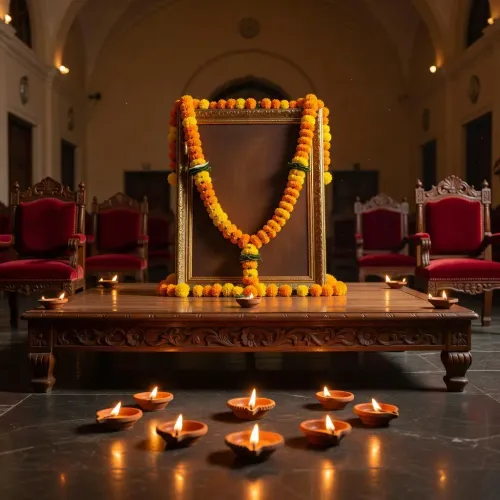
Swami Shraddhanand, an Arya Samaj leader and educationist, was assassinated in December 1926 , making 2026 the centenary of his martyrdom.
CM Saini framed President Murmu's message as 'inspiring for the building of Viksit Bharat ' — the government's vision of a developed India by 2047.
The event underscores a broader trend of state-central partnerships in honouring freedom-movement centenaries at historically resonant sites.
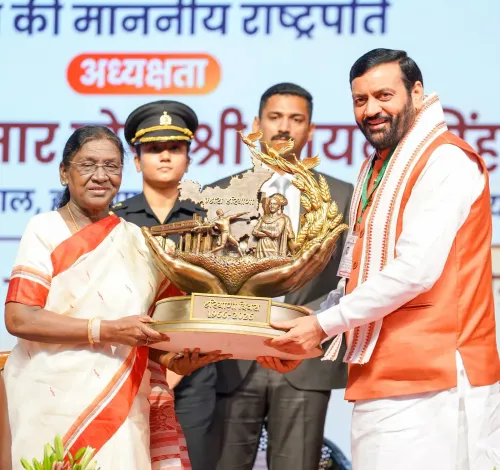
A hundred years after his assassination, Swami Shraddhanand was honoured at the very kind of institution he built — a gurukul in Kurukshetra — with President Draupadi Murmu presiding over a centenary tribute that drew Haryana Chief Minister Nayab Singh Saini and two governors on Sunday, November 1, 2026.
Saini shared his tribute on X, writing in Hindi: 'Tyaag, tapasya aur rashtraseva ki prerak virasat ko naman' — 'Salutations to the inspiring legacy of sacrifice, penance and service to the nation.' He described attending the Bali Daan Shatabdi Samaroh (Martyrdom Centenary Ceremony) of the great freedom fighter Swami Shraddhanand Ji, held at the Gurukul in the sacred city of Kurukshetra.
Who Was Swami Shraddhanand — and Why a Centenary Now?
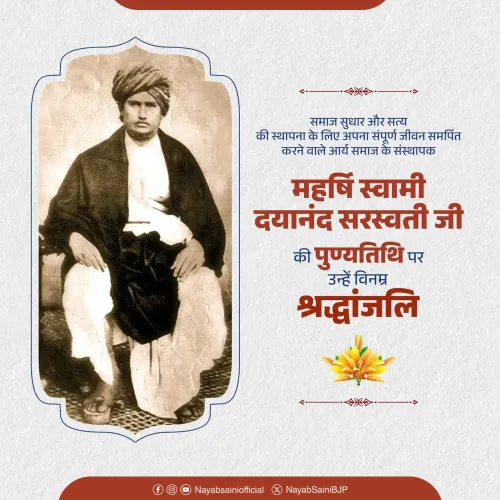
Swami Shraddhanand, born Lala Munshi Ram, was one of the most consequential figures to emerge from the Arya Samaj movement in the late nineteenth and early twentieth centuries. An educationist, social reformer and independence activist, he founded gurukul institutions to revive a Sanskrit-rooted, character-based education model as an alternative to colonial schooling. He also led the Shuddhi movement, which sought to reclaim converts to Hinduism, and was a vocal advocate for Hindu-Muslim unity in his earlier years.
He was assassinated in December 1926 — making 2026 the centenary year of his martyrdom. State-level commemorations of such centenaries have become a recurring feature of Indian public life, linking regional identity with the national freedom movement.
President Murmu's Message and the Viksit Bharat Lens
The ceremonial weight of the event was amplified by the attendance of President Draupadi Murmu, alongside Haryana Governor Prof. Aseem Kumar Ghosh and Gujarat Governor Acharya Devvrat — himself a figure closely associated with traditional gurukul education. Saini noted that President Murmu delivered a message urging India to embrace the 'glorious heritage of Indian culture' while simultaneously adopting modern knowledge, science and innovation — a formulation that maps directly onto the Viksit Bharat vision of a developed India by 2047.
That framing is deliberate. Kurukshetra — the city of the Mahabharata, of dharma and of historic battlefield philosophy — provides a resonant stage for arguments about cultural continuity and national aspiration. Invoking Swami Shraddhanand's gurukul model at such a site, with the President in attendance, signals that this was not merely a commemorative ritual but a statement about the kind of educational and civilisational roots the current political leadership wants to foreground.
Gurukuls, Heritage Education and What Follows
Acharya Devvrat's presence added a pointed dimension: as Gujarat Governor, he has consistently championed value-based and nature-aligned education rooted in gurukul traditions. His participation alongside the President gives institutional heft to questions about whether state and central governments will now announce follow-up programmes on gurukul-style models or further centenary events through the remainder of 2026.
For Haryana, the optics are also locally significant. Kurukshetra is not just a heritage site — it is an active cultural-political geography, and Chief Minister Saini's visible presence at an event chaired by the nation's first President from a tribal community adds another layer to the BJP government's ongoing outreach across religious, educational and social-reform constituencies.
Swami Shraddhanand gave his life for a vision of an India that was educated, self-determining and rooted in its own civilisation. A century later, his gurukul hosted the President of the Republic. That is the kind of full-circle moment history rarely scripted — and Indian politics rarely misses.
Point of View
Gurukul-rooted education as a precursor to the Viksit Bharat agenda. President Murmu's personal presence elevates what might otherwise be a state function into a national statement, lending constitutional authority to the cultural-education synthesis being promoted. For CM Saini, who leads a state with deep Arya Samaj roots, the visibility is both ideological and electoral. The event also raises a practical question worth watching: whether the centenary generates concrete policy commitments on traditional education models, or remains primarily ceremonial.
NationPress
1 Nov 2026
Frequently Asked Questions
Who was Swami Shraddhanand and why is 2026 significant?
Swami Shraddhanand was an Arya Samaj leader, educationist and independence activist who founded gurukul institutions and was assassinated in December 1926. The year 2026 marks the centenary of his martyrdom, prompting the national-level commemoration in Kurukshetra.
Where was the Swami Shraddhanand centenary event held?
The event was held at the Gurukul in Kurukshetra, a historic city in Haryana associated with the Mahabharata and home to several traditional educational institutions.
Who attended the Swami Shraddhanand centenary in Kurukshetra?
President Draupadi Murmu presided over the event. Haryana CM Nayab Singh Saini, Haryana Governor Prof. Aseem Kumar Ghosh, and Gujarat Governor Acharya Devvrat also attended on November 1, 2026.
What is Viksit Bharat and how does it relate to this event?
Viksit Bharat is the Indian government's vision for a developed India by 2047. President Murmu's message at the centenary — urging a blend of cultural heritage with modern knowledge and innovation — was cited by CM Saini as directly inspiring this national goal.
What was Swami Shraddhanand's contribution to Indian education?
Swami Shraddhanand founded gurukul institutions that offered a Sanskrit-rooted, character-based education as an alternative to colonial schooling. His model is considered a precursor to ongoing debates about integrating traditional knowledge systems into modern Indian education.