CM Saini Pays Tribute to Baba Lakhi Shah Banjara on Jayanti
Synopsis
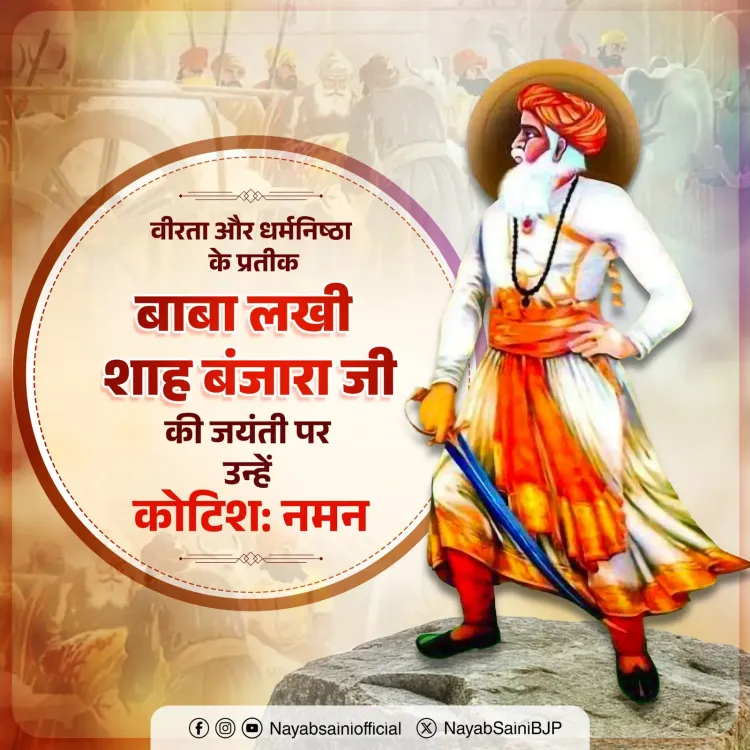
Haryana Chief Minister Nayab Singh Saini marked the Jayanti of Baba Lakhi Shah Banjara on 4 July 2026, honouring the 17th-century Banjara trader who risked his life to cremate Guru Tegh Bahadur after the Sikh Guru's execution by Aurangzeb in 1675, a sacrifice memorialised at Gurdwara Rakab Ganj Sahib in Delhi.
Key Takeaways
Haryana Chief Minister Nayab Singh Saini posted a tribute to Baba Lakhi Shah Banjara on his Jayanti on 4 July 2026 .
Baba Lakhi Shah Banjara was a 17th-century Banjara trader who cremated the remains of Guru Tegh Bahadur after the ninth Sikh Guru's execution by Aurangzeb in 1675 .
The act of cremation was carried out at great personal risk; Baba Lakhi Shah set his own home ablaze to conceal the act from Mughal authorities.
Gurdwara Rakab Ganj Sahib in New Delhi stands at the site of that cremation and memorialises his sacrifice.
Saini described Baba Lakhi Shah Banjara's life as an inspiration for 'truth, service, courage, and dharma' in the service of the nation.
The tribute is significant for both the Sikh community and the Banjara community , both of whom have a substantial presence in Haryana.
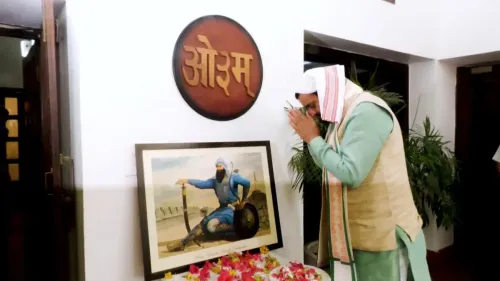
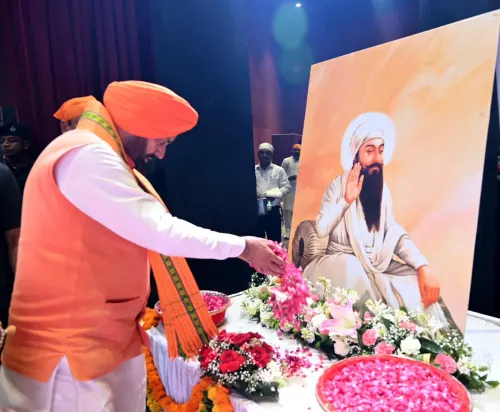
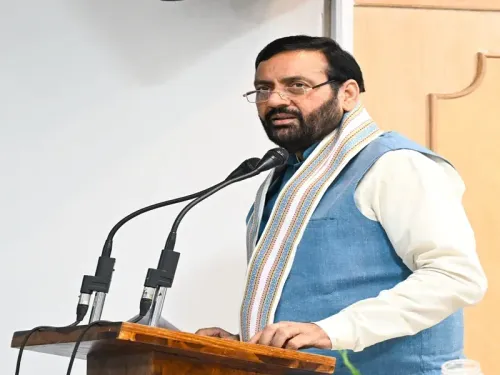
Haryana Chief Minister Nayab Singh Saini on Saturday, 4 July 2026, paid homage to Baba Lakhi Shah Banjara, the 17th-century Sikh devotee and Banjara trader, on the occasion of his Jayanti. Saini hailed him as an eternal symbol of indomitable courage, devotion to the Guru, and selfless service to the nation.
In his post, Saini wrote: 'Adamya sahas, gurubhakti aur rashtra seva ki amar misal' ['an immortal example of indomitable courage, devotion to the Guru, and service to the nation'], offering his respectful salutations to Baba Lakhi Shah Banjara. He added that Baba Lakhi Shah's sacrifice, valour, and unwavering dedication would remain 'forever inscribed in the golden chapters of Indian history.'
Context
Baba Lakhi Shah Banjara was a prosperous Banjara trader and devout Sikh who lived in 17th-century Delhi. When Guru Tegh Bahadur, the ninth Sikh Guru, was publicly executed by Mughal Emperor Aurangzeb in Chandni Chowk, Delhi, in 1675, his body was left unattended as a warning to onlookers. Baba Lakhi Shah Banjara, along with his sons, defied the Mughal state at great personal risk and secretly transported the Guru's remains to his home, where he cremated them by setting his own house ablaze to avoid detection.
This act of supreme sacrifice is regarded as one of the most courageous episodes in Sikh history. The site of that cremation later became Gurdwara Rakab Ganj Sahib, a historic Sikh shrine located in New Delhi, near the Indian Parliament complex, which stands as a permanent memorial to Baba Lakhi Shah Banjara's devotion.
Policy Backdrop
Guru Tegh Bahadur had been executed by Aurangzeb for refusing to convert to Islam and for championing the religious rights of Kashmiri Pandits, who had appealed to him for protection. His martyrdom is considered a foundational moment in Sikh history, and Baba Lakhi Shah Banjara's role in preserving his Guru's dignity in death is inseparable from that legacy.
Indian political leaders, particularly from the BJP in northern states, have increasingly used social media to publicly honour Sikh martyrs and regional historical figures. Such tributes serve to reinforce values of religious freedom, courage, and national service — themes that resonate strongly in Haryana and neighbouring Punjab, both of which have significant Sikh and Banjara populations.
Stakeholders and Impact
The tribute carries particular significance for two communities: the Sikh community, which venerates Baba Lakhi Shah Banjara as a hero of the faith, and the Banjara community, a traditionally nomadic and trading group spread across multiple Indian states, including Haryana. For both communities, public acknowledgement by a sitting Chief Minister on Jayanti is a mark of institutional recognition.
Saini's post underlines that Baba Lakhi Shah Banjara's 'inspirational life will continue to motivate us to work in the national interest by remaining steadfast on the path of truth, service, courage, and dharma.' This framing connects a historical act of religious courage to contemporary values of civic duty and national service.
What's Next
The Haryana government's engagement with Sikh heritage anniversaries is worth watching in the coming weeks, particularly any state-level events, exhibitions, or community outreach programmes tied to nomadic and trading communities. Such commemorations have, in the past, preceded broader cultural and electoral outreach in the region. The enduring legacy of Gurdwara Rakab Ganj Sahib as a national monument ensures that tributes to Baba Lakhi Shah Banjara will continue to hold both religious and political resonance at the national level.
Point of View
The tribute draws a direct line between 17th-century religious courage and contemporary nationalist values. With Haryana sharing a long border and cultural continuum with Punjab, such gestures carry electoral as well as symbolic weight. The invocation of Gurdwara Rakab Ganj Sahib's founding moment also subtly reinforces the BJP's broader narrative of protecting and celebrating India's composite religious heritage.
NationPress
4 Jul 2026
Frequently Asked Questions
Who was Baba Lakhi Shah Banjara?
Baba Lakhi Shah Banjara was a 17th-century Banjara trader and devoted Sikh who, at great personal risk, cremated the body of Guru Tegh Bahadur after the ninth Sikh Guru was executed by Mughal Emperor Aurangzeb in Delhi in 1675. He is venerated as a hero of the Sikh faith and by the Banjara community.
Why is Baba Lakhi Shah Banjara important in Sikh history?
Baba Lakhi Shah Banjara is important because he defied Mughal authority to preserve the dignity of Guru Tegh Bahadur after the Guru's martyrdom. He cremated the Guru's remains by setting his own house on fire to avoid detection, and the site later became Gurdwara Rakab Ganj Sahib in New Delhi.
What is Gurdwara Rakab Ganj Sahib?
Gurdwara Rakab Ganj Sahib is a historic Sikh shrine located in New Delhi, near the Indian Parliament complex. It was built at the site where Baba Lakhi Shah Banjara cremated the remains of Guru Tegh Bahadur in 1675 and stands as a memorial to his sacrifice and devotion.
Why did Nayab Singh Saini pay tribute to Baba Lakhi Shah Banjara?
Haryana Chief Minister Nayab Singh Saini paid tribute to Baba Lakhi Shah Banjara on the occasion of his Jayanti on 4 July 2026, honouring his legacy of courage, devotion, and national service. Such tributes are part of a broader pattern of political outreach to Sikh and Banjara communities in Haryana.
Who was Guru Tegh Bahadur and why was he executed?
Guru Tegh Bahadur was the ninth Sikh Guru, executed by Mughal Emperor Aurangzeb in Chandni Chowk, Delhi, in 1675. He was martyred for refusing to convert to Islam and for defending the religious rights of Kashmiri Pandits who had sought his protection.