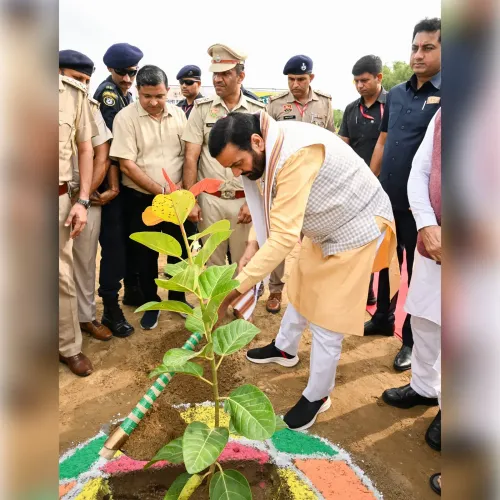
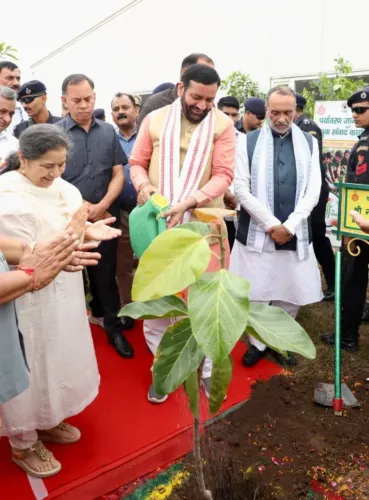
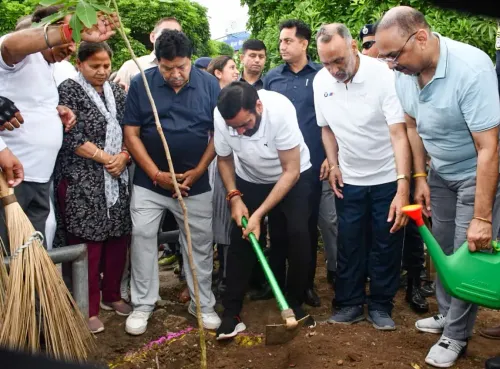
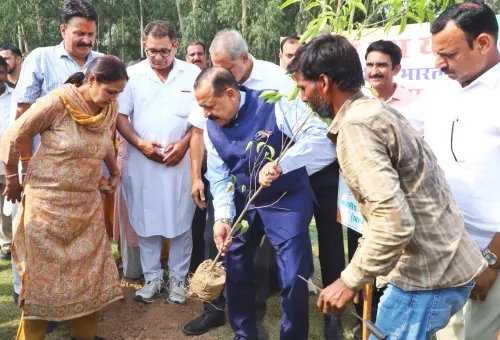
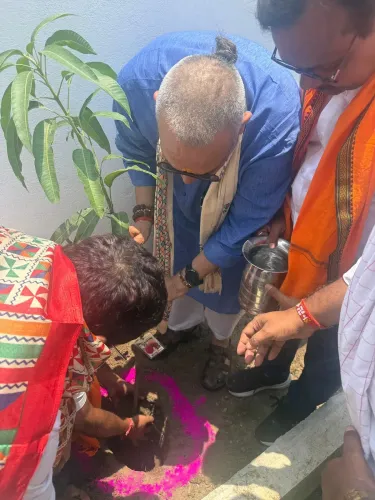
CM Saini Plants Sapling at Gurugram Judicial Complex
Synopsis
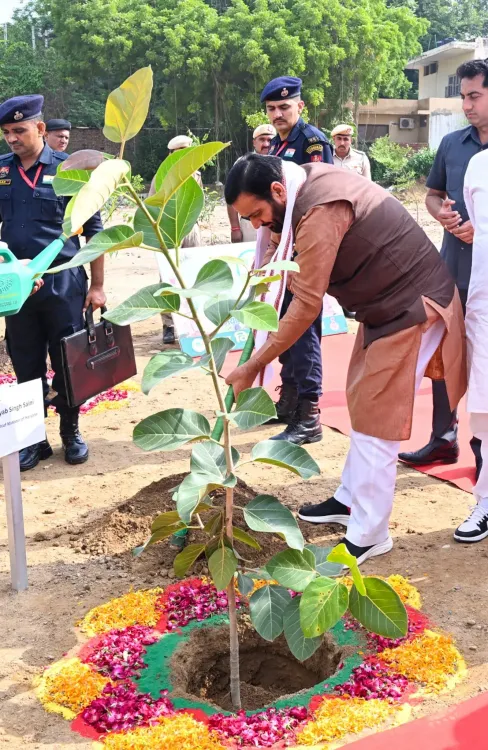
Haryana Chief Minister Nayab Singh Saini planted a sapling at the Judicial Complex in Gurugram under PM Modi's Ek Ped Maa Ke Naam campaign, calling it a sacred mission of nature conservation and urging citizens to join the nationwide tree planting movement.
Key Takeaways
Haryana CM Nayab Singh Saini participated in a tree plantation event at the Judicial Complex, Gurugram on 25 July 2026 .
The drive was held under the Ek Ped Maa Ke Naam campaign, launched by PM Narendra Modi in 2024 .
Saini called the campaign an 'inspiring initiative' to convert environmental conservation into a mass movement .
The campaign frames tree planting as a tribute to mothers and a duty towards future generations .
The initiative aligns with India's commitment to expand green cover and achieve net zero emissions by 2070 .
State level tracking of trees planted and maintained in Haryana will determine the campaign's on ground impact.
Haryana Chief Minister Nayab Singh Saini participated in a tree plantation drive at the Judicial Complex, Gurugram, on Saturday, 25 July 2026, under the Ek Ped Maa Ke Naam campaign, reinforcing the state government's commitment to environmental conservation.
Context
Posting on X, CM Saini described the occasion as a privilege, writing: 'ज्यूडिशियल कॉम्प्लेक्स, गुरुग्राम में "एक पेड़ माँ के नाम" अभियान के अंतर्गत पौधारोपण कर प्रकृति संरक्षण के इस पुनीत अभियान में सहभागी बनने का सौभाग्य प्राप्त हुआ' ['I was fortunate to participate in this sacred campaign of nature conservation by planting a sapling at the Judicial Complex, Gurugram, under the Ek Ped Maa Ke Naam initiative']. He credited Prime Minister Narendra Modi for launching the campaign and called it an inspiring effort to transform environmental conservation into a mass movement.
The Chief Minister also urged citizens to join the campaign, plant as many saplings as possible, and nurture them — framing the act as both a tribute to mothers and a responsibility towards future generations.
Policy Backdrop
The Ek Ped Maa Ke Naam ('One Tree in Mother's Name') campaign was launched by Prime Minister Narendra Modi in 2024 as a nationwide initiative linking afforestation with the sentiment of honouring one's mother. The campaign was designed to move tree planting beyond government departments and into a citizen led movement.
The drive sits within a longer continuum of India's mass afforestation efforts, including the annual Van Mahotsav festival, and aligns with the country's international climate commitments — including its stated goal of achieving net zero emissions by 2070. Haryana, a state with significant urban and industrial pressure on green cover, has been an active participant in such national drives.
Stakeholders and Impact
The choice of the Judicial Complex as the venue carries symbolic weight, associating the legal and administrative establishment with the environmental cause. Participation by a sitting Chief Minister at an institutional site is intended to encourage both government employees and the broader public to replicate the gesture.
Haryana residents and volunteer groups are the primary stakeholders, as the campaign's success depends on ground level participation and the sustained maintenance of saplings after planting. Urban centres like Gurugram, which face acute air quality and green cover challenges, stand to benefit directly from sustained plantation activity.
What's Next
Attention will now turn to state level reporting on the total number of trees planted and maintained under the campaign across Haryana, and whether the drives translate into measurable gains in the state's green cover. Linkage to national afforestation targets — including India's commitment to create an additional carbon sink of 2.5 to 3 billion tonnes of CO₂ equivalent through forest and tree cover — will be a key metric for evaluating the campaign's long term impact.
Point of View
The Chief Minister reinforces BJP's strategy of aligning state level optics with the Centre's flagship initiatives ahead of any potential electoral cycle in Haryana. The 'mother' framing of the campaign is a studied move to give an emotional, apolitical texture to what is fundamentally a policy target — expanding India's forest and tree cover. Whether such symbolic events translate into auditable green cover gains remains the harder question for Haryana's environmental record.
NationPress
25 Jul 2026
Frequently Asked Questions
What is the Ek Ped Maa Ke Naam campaign?
Ek Ped Maa Ke Naam, meaning 'One Tree in Mother's Name', is a nationwide tree plantation campaign launched by Prime Minister Narendra Modi in 2024 to promote environmental conservation as a tribute to mothers and to make afforestation a mass citizen movement.
Where did CM Nayab Singh Saini plant a tree under the Ek Ped Maa Ke Naam campaign?
Chief Minister Nayab Singh Saini planted a sapling at the Judicial Complex in Gurugram, Haryana, on 25 July 2026.
Who launched the Ek Ped Maa Ke Naam campaign in India?
The campaign was launched by Prime Minister Narendra Modi in 2024 as part of India's broader environmental and afforestation agenda.
Why is Gurugram significant for tree plantation drives?
Gurugram is a major urban and industrial hub in Haryana that faces significant challenges related to air quality and shrinking green cover, making it a priority location for afforestation initiatives.
How does Ek Ped Maa Ke Naam connect to India's climate goals?
The campaign aligns with India's international climate commitments, including the goal of creating an additional carbon sink of 2.5 to 3 billion tonnes of CO₂ equivalent through expanded forest and tree cover, and the broader net zero by 2070 target.