CM Saini Rides E-Bus in Panchkula, Backs Modi's Energy Push
Synopsis
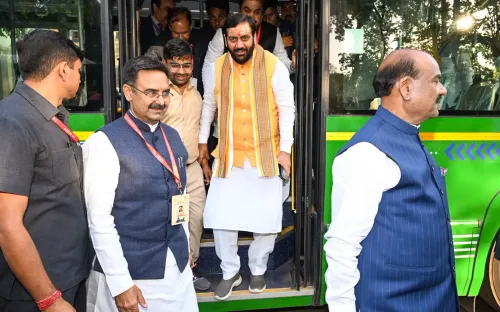
Haryana Chief Minister Nayab Singh Saini rode an electric bus in Panchkula with BJP workers after a district training camp on 23 May 2026, calling on cadre to embrace PM Modi's 'Urja Bachao' message and highlighting e-buses as a pillar of clean, sustainable development.
Key Takeaways
Nayab Singh Saini rode an electric bus in Panchkula with BJP workers on 23 May 2026 after the party's district training camp.
He urged participants to widely adopt Prime Minister Narendra Modi 's 'Urja Bachao' (save energy) message.
Saini described electric buses as tools for both environmental protection and sustainable development.
India's electric bus push is backed by the FAME India scheme (launched 2015 ) and the National Electric Mobility Mission Plan (launched 2013 ).
Haryana has been rolling out electric buses in urban centres since 2018 under central government support.
Further fleet expansion by Haryana Roadways and alignment with updated national EV policy will be key developments to watch.
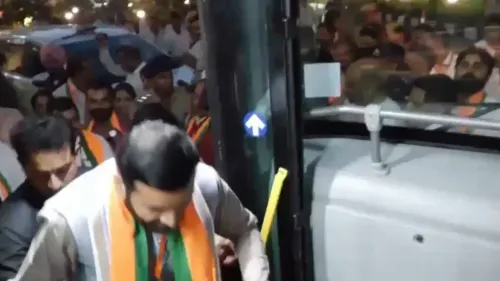
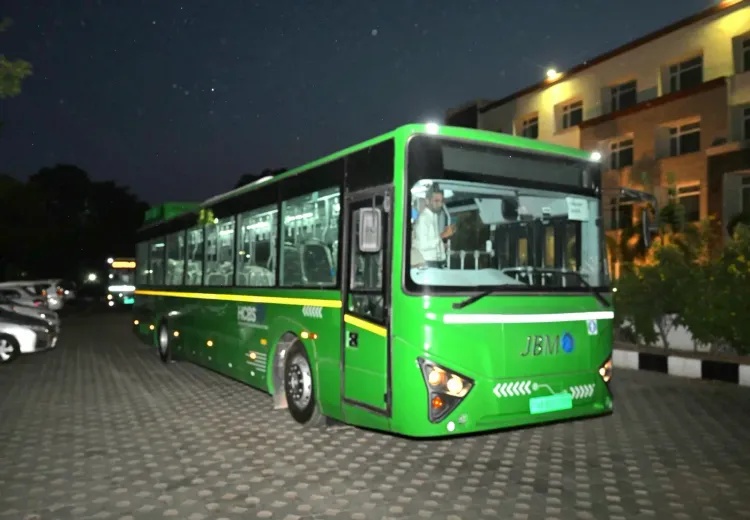
Haryana Chief Minister Nayab Singh Saini rode an electric bus with BJP workers in Panchkula on Saturday, 23 May 2026, following the conclusion of the party's district-level training camp, using the occasion to amplify Prime Minister Narendra Modi's 'Urja Bachao' (save energy) message among cadre and the public.
Context
Saini joined party workers for a ride aboard one of the electronic buses currently operating in Panchkula, the satellite city adjoining the union territory of Chandigarh. The gesture came immediately after the BJP district training session, turning a routine post-camp activity into a visible statement on clean mobility. In his post, Saini called on all participants to 'adopt the honourable Prime Minister's Urja Bachao message as widely as possible.'
The Chief Minister described electric buses as options that 'are not only helpful in environmental protection but are also an important step toward clean and sustainable development.' The dual framing — ecological and developmental — mirrors the language the BJP-led central government has used consistently in its communications on the energy transition.
Policy Backdrop
India's push toward electric public transport has a decade-long policy lineage. The National Electric Mobility Mission Plan, launched in 2013, set the strategic direction, while the FAME India (Faster Adoption and Manufacturing of Electric Vehicles) scheme, introduced in 2015, provided procurement incentives for electric buses and other vehicles for state transport corporations.
Haryana, along with several other states, began a phased rollout of electric bus fleets in major urban centres from 2018 onward, backed by central government support. The integration of e-buses into city routes in towns such as Panchkula is part of this broader national effort to reduce dependence on fossil fuels in public transport and cut urban air pollution.
Prime Minister Modi's 'Urja Bachao' campaign is an ongoing public outreach initiative urging citizens and institutions to reduce energy consumption — a message that Saini explicitly sought to reinforce by choosing the electric bus as the vehicle for his post-training engagement with workers.
Stakeholders and Impact
Urban commuters in Panchkula and across Haryana stand to benefit most directly from the expansion of electric bus services, which offer lower noise levels, zero tailpipe emissions, and — over time — reduced operational costs compared with diesel fleets. State transport corporations are the key implementing bodies, responsible for procurement, charging infrastructure, and route planning.
BJP workers who participated in the district training camp were the immediate audience for Saini's energy-conservation appeal, with the expectation that the party's ground-level network will carry the message outward to voters and communities. The symbolic choice of public transport over a personal vehicle also signals a broader communication strategy around accessible, green governance.
What's Next
Attention will now turn to whether Haryana Roadways announces further procurement rounds or route expansions for its electric bus fleet, and how the state aligns its transport policy with any updated national EV guidelines. Saini's public endorsement of the 'Urja Bachao' message at a party training event suggests the BJP intends to make clean energy a consistent campaign and governance theme heading into future electoral cycles in the state.
Point of View
The Chief Minister signals vertical alignment between state and central leadership on the environment agenda, a posture that carries electoral utility in urban Haryana constituencies sensitive to pollution concerns. The choice of public transport over a motorcade also functions as a subtle rebuke of perception gaps around political privilege. Taken together, the episode fits a broader BJP pattern of converting routine governance moments into visible, shareable demonstrations of ideological consistency on sustainability.
NationPress
7 Oct 2026
Frequently Asked Questions
Why did Haryana CM Nayab Singh Saini ride an electric bus in Panchkula?
Saini rode an electric bus in Panchkula on 23 May 2026 after a BJP district training camp to promote PM Modi's 'Urja Bachao' (save energy) message and highlight electric buses as a sustainable transport option.
What is PM Modi's 'Urja Bachao' message?
'Urja Bachao' means 'save energy' in Hindi and is an ongoing public outreach initiative by Prime Minister Narendra Modi encouraging citizens and institutions to reduce energy consumption as part of India's clean energy goals.
Does Haryana have electric buses running in its cities?
Yes, Haryana has been operating electric buses in major urban centres, including Panchkula, as part of a phased rollout that began from 2018 onward under central government support through schemes like FAME India.
What is the FAME India scheme?
FAME India — Faster Adoption and Manufacturing of Electric Vehicles — was launched in 2015 to provide financial incentives for the procurement and deployment of electric buses and other electric vehicles by state transport corporations.
What should we watch for next on Haryana's electric bus policy?
Key developments to watch include further procurement announcements or route expansions by Haryana Roadways and the state's alignment with updated national EV policy guidelines from the central government.