CM Saini visits Seva Sankalp Abhiyan art show in Kurukshetra
Synopsis
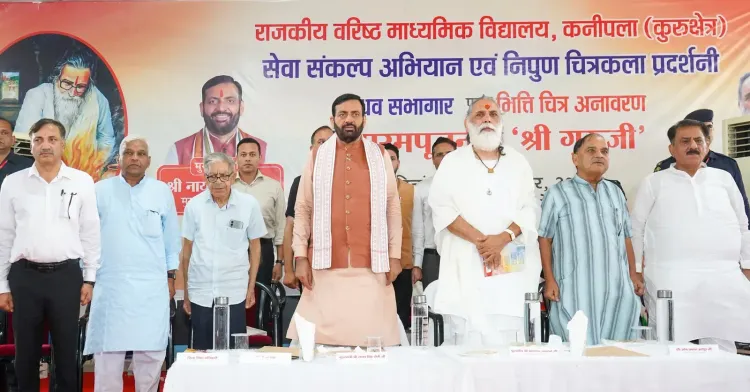
Haryana CM Nayab Singh Saini attended a student painting and rangoli exhibition at Kanipala school in Kurukshetra under the Seva Sankalp Abhiyan — a statewide campaign honouring PM Modi's 25 years in public office, running until 17 October 2026.
Key Takeaways
Haryana CM Nayab Singh Saini visited the Government Senior Secondary School, Kanipala, Kurukshetra on 24 September 2026 .
The visit was part of the Seva Sankalp Abhiyan , a state-level campaign celebrating PM Narendra Modi's 25 years in public office.
Students presented paintings, drawings, and rangoli displays on themes of social service, awareness, and community participation.
Narendra Modi first took oath as Chief Minister of Gujarat on 7 October 2001 , completing his quarter-century milestone in 2026.
The Seva Sankalp Abhiyan continues across Haryana with similar school events until 17 October 2026 .
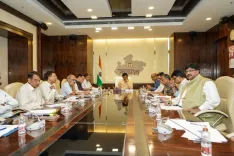
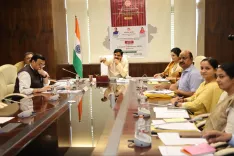
Schoolchildren in Kurukshetra turned their canvases and rangoli patterns into something larger on Thursday, 24 September 2026 — a statewide tribute to 25 years of Prime Minister Narendra Modi's public service, channelled through student art. Haryana Chief Minister Nayab Singh Saini visited the Government Senior Secondary School, Kanipala, to personally witness an exhibition of paintings, drawings, and rangoli displays organised under the Seva Sankalp Abhiyan (Service Resolve Campaign).
What students put on the walls at Kanipala
Saini described the student work as presenting 'diverse messages of social responsibility, a spirit of service, and public awareness in a beautiful and impactful manner.' The themes were not abstract — the children wove in ideas of community participation and civic duty, translating the campaign's core message into colour and form. The visit was the Chief Minister's personal nod to what Haryana's school system can produce when given a purposeful brief.
Modi's 25-year milestone — and why Haryana is marking it this way
Narendra Modi was first sworn in as Chief Minister of Gujarat on 7 October 2001, meaning 2026 marks a full quarter-century of unbroken elected office at the top level of Indian governance — first in Gandhinagar, then in New Delhi since 2014. The Seva Sankalp Abhiyan is Haryana's state-level response to that milestone, routing the celebration through schools and community participation rather than rally grounds. State BJP governments have used this model before — cultural drives in educational institutions that tie local energy to national leadership moments.
A campaign running until 17 October across Haryana
The Kanipala visit is one stop in a longer arc. Saini confirmed the campaign will run across the entire state until 17 October, with similar exhibitions and participation drives expected at other schools. The closing call in his post was direct: 'Let us all contribute to the development of society and the state by internalising the spirit of service, dedication, and social participation.' For students, the exhibition is a classroom assignment; for the state government, it is a rolling, decentralised celebration with a hard end-date.
Point of View
Reinforces service-oriented messaging in the education system, and keeps Modi's governance narrative alive in districts far from Delhi. For CM Saini, personally visiting a rural school in Kurukshetra — rather than a large city venue — signals a deliberate preference for ground-level optics over ceremonial grandeur. The campaign's 17 October deadline, roughly aligned with Modi's original swearing-in anniversary, gives the drive a sense of structured, time-bound momentum rather than open-ended symbolism.
NationPress
24 Sept 2026
Frequently Asked Questions
What is the Seva Sankalp Abhiyan in Haryana?
The Seva Sankalp Abhiyan is a statewide campaign in Haryana featuring student exhibitions, paintings, and rangoli displays to mark Prime Minister Narendra Modi's 25 years in public office. It runs across Haryana's schools until 17 October 2026.
Why is 2026 celebrated as 25 years of PM Modi's public service?
Narendra Modi was first sworn in as Chief Minister of Gujarat on 7 October 2001. By October 2026, he completes 25 uninterrupted years at the top level of Indian governance, including his tenure as Prime Minister since 2014.
Where did CM Nayab Singh Saini visit on 24 September 2026?
CM Saini visited the Government Senior Secondary School in Kanipala, Kurukshetra, to observe a painting and rangoli exhibition held under the Seva Sankalp Abhiyan.
How long will the Seva Sankalp Abhiyan continue?
According to CM Saini's post, the campaign will continue across the entire state of Haryana until 17 October 2026, with school-level exhibitions and participation drives at multiple venues.
What did Haryana students depict in the Kanipala exhibition?
Students used paintings, drawings, and rangoli designs to convey messages around social responsibility, a spirit of service, public awareness, and community participation — the core themes of the Seva Sankalp Abhiyan.