CM Saini shares Kabir doha on unity and equality
Synopsis
Haryana Chief Minister Nayab Singh Saini shared a celebrated Kabir Das couplet on June 28, 2026, drawing on the medieval saint-poet's philosophy of human oneness to convey a message of social unity and equality beyond caste and creed.
Key Takeaways
Haryana Chief Minister Nayab Singh Saini posted a Kabir Das doha on Sunday, June 28, 2026 .
The couplet translates as: 'The well is one, many fill water from it — the difference is in the vessel, the water in all is the same.' The post included a video , though no specific occasion or policy event was cited.
Kabir Das , the 15th-century mystic, is revered across Hindu, Muslim, and Sikh traditions for his egalitarian philosophy.
The verse is widely interpreted as a call to transcend caste, religious, and social divisions.
The messaging aligns with BJP and CM Saini's broader public emphasis on social harmony in Haryana .
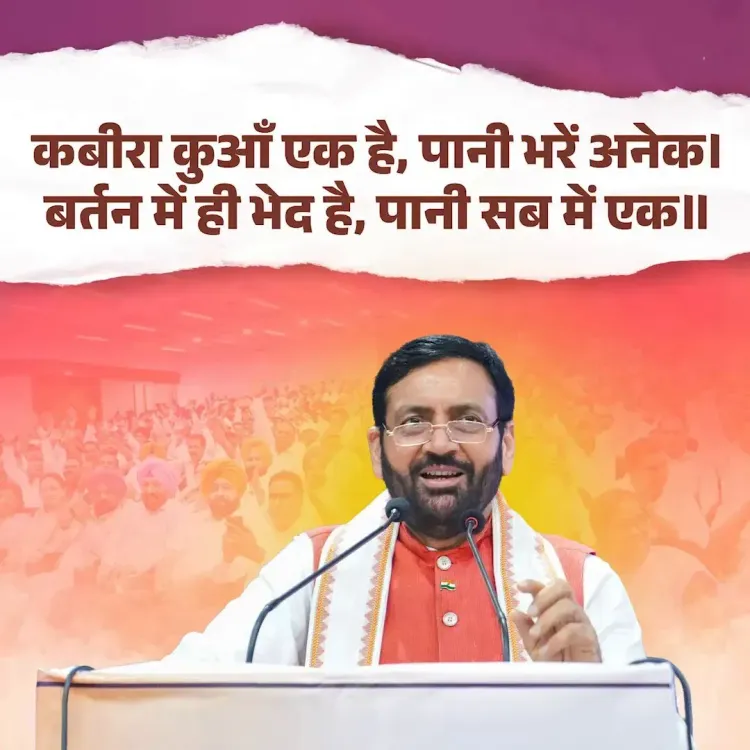
Haryana Chief Minister Nayab Singh Saini on Sunday, June 28, 2026, shared a timeless couplet by the medieval saint-poet Kabir Das on social media, invoking the philosopher's message of human equality and oneness beyond social distinctions.
The Couplet and Its Message
The doha (couplet) shared by the Chief Minister reads: 'Kabira kuan ek hai, paani bharein anek. Bartan mein hi bhed hai, paani sab mein ek.' Translated to English, it means: 'The well is one, yet many come to fill water from it. The difference lies only in the vessel — the water within all is the same.' The verse uses the metaphor of a shared well to argue that humanity is fundamentally united, and that distinctions of caste, creed, or community are superficial — like the difference between vessels, not the water they hold.
Context
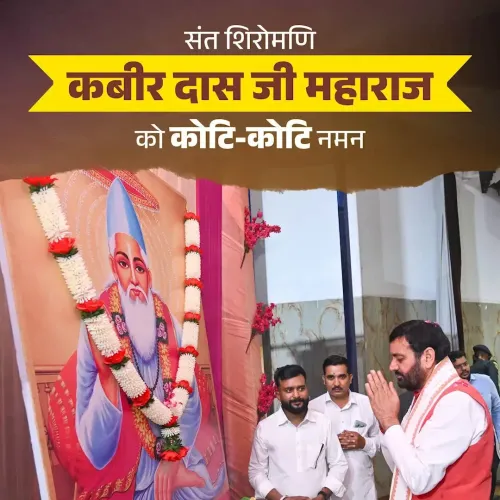
Kabir Das, the 15th-century mystic poet and social reformer, is one of the most quoted voices in Indian public discourse on equality and communal harmony. His dohas — pithy two-line verses in vernacular Hindi — have long been used across political and social contexts to articulate the idea of universal brotherhood. The couplet shared by CM Saini is among Kabir's most recognised compositions on the theme of the oneness of humanity.
The post was accompanied by a video, suggesting the couplet may have been presented in an audio-visual or calligraphic format, though the specific content of the video was not described. The Chief Minister did not attach an explicit occasion or policy context to the post.
Policy Backdrop
Nayab Singh Saini, who leads the Bharatiya Janata Party government in Haryana, has previously invoked the language of social unity and inclusion in the context of the state's diverse caste and community composition. Haryana has historically been a state where caste identities play a significant role in political and social life, making invocations of Kabir's egalitarian philosophy carry particular resonance. Quoting saint-poets such as Kabir, Ravidas, and Tukaram is a common rhetorical device among Indian politicians seeking to signal commitment to social harmony without direct policy pronouncement.
Stakeholders and Impact
The couplet's message is broadly inclusive, addressing no specific community, scheme, or event. Its appeal cuts across religious and caste lines — Kabir is revered by Hindus, Muslims, and Sikhs alike, and his philosophy of nirguna bhakti (devotion without form or ritual) has historically served as a bridge across communities. For Haryana's electorate — which includes significant OBC, Dalit, Jat, and minority populations — such messaging carries social and political undertones of unity.
What's Next
While the post does not signal a specific policy announcement, it reflects a broader pattern among Indian political leaders of using classical verse to frame governance values and public messaging. As CM Saini continues to consolidate his position in Haryana, the invocation of Kabir's egalitarian ethos may serve as a recurring motif in his public communication — particularly relevant in a state where social equity and caste dynamics remain live political issues.
Point of View
Saini signals inclusivity without committing to any specific policy or group. This fits a broader pattern among BJP leaders of deploying classical bhakti literature to project a culturally rooted, pan-social appeal. Whether it translates into tangible outreach to marginalised communities in Haryana remains the more substantive question.
NationPress
28 Jun 2026
Frequently Asked Questions
What did Haryana CM Nayab Singh Saini post on June 28 2026?
CM Nayab Singh Saini shared a Kabir Das doha on X (formerly Twitter) on June 28, 2026, conveying the message that all human beings are fundamentally equal, with differences being only superficial — like different vessels holding the same water.
What does the Kabir doha 'Kabira kuan ek hai' mean?
The couplet means: 'The well is one, yet many come to fill water from it. The difference lies only in the vessel — the water within all is the same.' It is a metaphor for human equality, arguing that social and religious distinctions are superficial.
Who was Kabir Das and why is he significant in Indian politics?
Kabir Das was a 15th-century Indian mystic poet and social reformer whose verses challenged caste hierarchy and religious division. He is revered across Hindu, Muslim, and Sikh traditions, making his quotes a popular tool for Indian politicians seeking to signal social unity.
Why did Nayab Singh Saini share a Kabir couplet?
CM Saini did not specify an occasion in the post. The couplet's message of social unity and equality is widely interpreted as a signal of inclusive governance values, particularly relevant in Haryana's diverse caste and community landscape.
What is Nayab Singh Saini's political position?
Nayab Singh Saini is the Chief Minister of Haryana and a senior leader of the Bharatiya Janata Party (BJP). He has led the BJP government in Haryana since 2024.