CM Saini Unveils Shaheed Smarak in Ambala with Amit Shah
Synopsis
Haryana CM Nayab Singh Saini and Union Home Minister Amit Shah inaugurated the 'Shaheed Smarak' in Ambala on 5 November 2026, honouring 1857 martyrs. The event also saw the launch of Haryana Vision 2047, the state's long-term development roadmap aligned with Viksit Bharat @2047.
Key Takeaways
The Shaheed Smarak in Ambala , dedicated to martyrs of the 1857 First War of Independence , was inaugurated on 5 November 2026 .
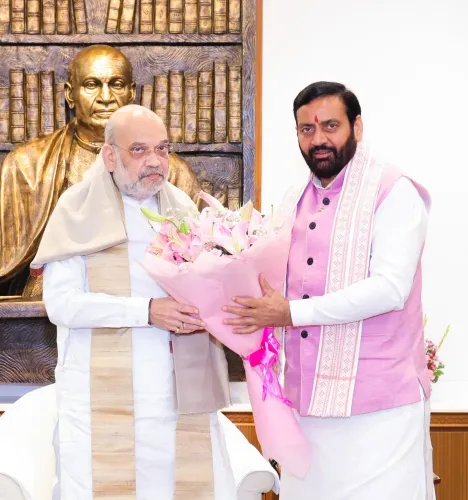
Union Home Minister Amit Shah formally opened the memorial; CM Nayab Singh Saini was present at the ceremony.
Haryana Vision 2047 , a long-term state development roadmap aligned with the Centre's Viksit Bharat @2047 goal, was released at the same event.
Ambala's military cantonment is historically associated with early unrest during the 1857 uprising , making it a symbolically significant location for the memorial.
The dual inauguration follows a wider BJP pattern of combining historical commemoration with forward-looking policy announcements.
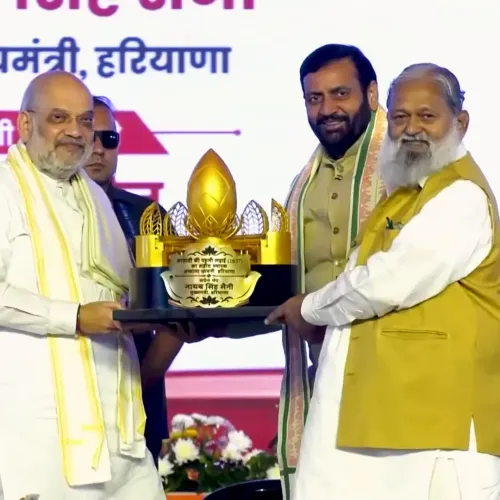
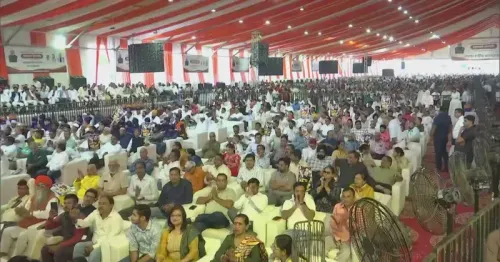
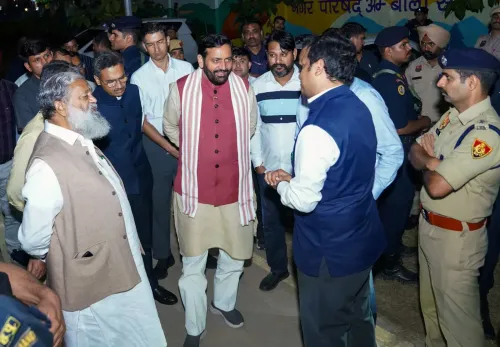
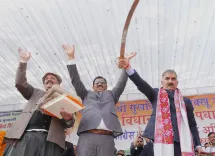
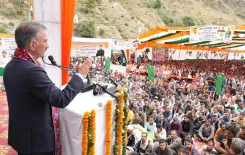
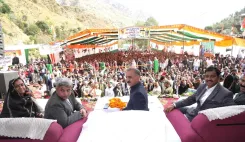
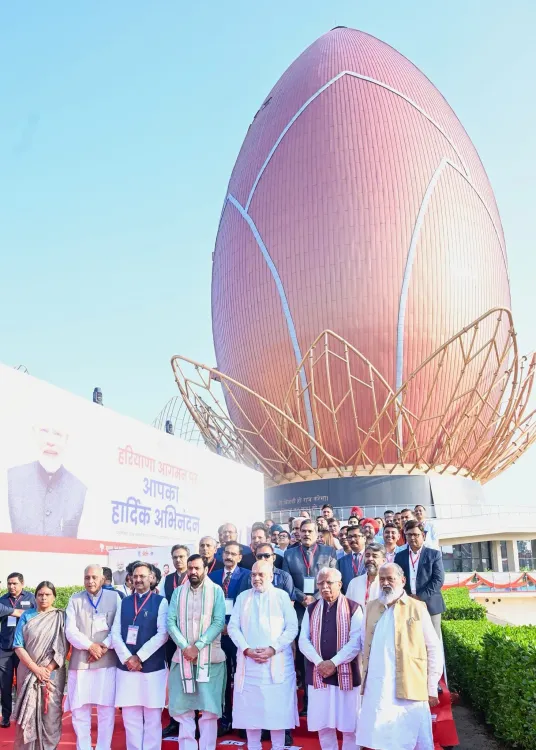
On the historic soil of Ambala, a city whose military cantonment witnessed some of the earliest tremors of the 1857 uprising, a grand martyrs' memorial rose to public life on Thursday, 5 November 2026 — a stone-and-steel salute to those who fired India's first shots at colonial rule. Haryana Chief Minister Nayab Singh Saini joined Union Home and Cooperation Minister Amit Shah for the inauguration of the 'Shaheed Smarak', dedicated to the heroes of the First War of Independence, in a ceremony that also saw the unveiling of the state's long-term blueprint, Haryana Vision 2047.
Posting on X, CM Saini wrote: 'Aazadi ki pehli ladai vastav mein Ambala mein shuru hui' — 'The first battle of freedom truly began in Ambala' — describing the event as 'an unforgettable occasion to bow before the glorious history of the nation.' He recalled the 'indomitable valour and supreme sacrifice' of the martyrs as the memorial was formally opened by Amit Shah.
Ambala's Place in the 1857 Revolt
Ambala has long held a contested but significant place in the history of the 1857 First War of Independence. Its large British-era military cantonment was among the northern garrisons where Indian soldiers chafed earliest against Company rule, and the city's historical community has pressed for formal recognition of its role for decades. The new Shaheed Smarak marks an institutional answer to that long-standing demand, giving the district a dedicated site of remembrance and civic pride.
Central and state governments have periodically inaugurated 1857 memorials since the 1950s, with a noticeable acceleration after 2014 as successive BJP-led administrations elevated regional contributions to the revolt in the national memory. Haryana's memorial fits squarely within that lineage — a local story inserted, with ceremony, into the national one.
Haryana Vision 2047: Development Meets Anniversary
The ceremony carried a second, forward-looking payload. Haryana Vision 2047 — a state-level development roadmap aligned with the Centre's Viksit Bharat @2047 framework — was formally released at the same event. The document sets long-term targets for economic growth, governance reform, and public security in Haryana, intended to mature in the year India marks a full century of independence.
The pairing of a martyrs' memorial with a future-facing policy document is a deliberate rhetorical and political architecture — linking the sacrifice of 1857 to the ambition of 2047, with the BJP government positioned as the bridge between the two. It is a pattern the party has refined at both the Centre and in state capitals: historical nationalism and development planning announced in the same breath, on the same stage.
What the Vision 2047 document actually contains — its sector-specific targets, budget commitments, and implementation timelines — will face scrutiny in Haryana's upcoming state budget cycles. The real test of its ambition begins there.
Point of View
The BJP government draws an explicit arc from colonial-era sacrifice to contemporary development ambition, reinforcing a brand of governance that fuses cultural nationalism with technocratic planning. The choice of Amit Shah — the country's most senior internal-security minister — as the inaugurating figure elevates the event beyond state politics and signals Centre-state alignment on the BJP's historical-nationalist agenda. Watch the Vision 2047 document closely: its credibility will ultimately rest not on the ceremony that launched it, but on the budget allocations and measurable milestones that follow.
NationPress
5 Nov 2026
Frequently Asked Questions
What is the Shaheed Smarak in Ambala?
The Shaheed Smarak in Ambala is a grand martyrs' memorial dedicated to the heroes of the 1857 First War of Independence, inaugurated on 5 November 2026 by Union Home Minister Amit Shah in the presence of Haryana CM Nayab Singh Saini.
What is Haryana Vision 2047?
Haryana Vision 2047 is a state-level long-term development roadmap that sets targets for economic growth, governance, and public security in Haryana, aligned with the Centre's Viksit Bharat @2047 framework aimed at the year India marks its centenary of independence.
Why is Ambala significant for the 1857 revolt?
Ambala's large British-era military cantonment was among the northern garrisons where Indian soldiers showed early resistance to East India Company rule, giving the city a historically contested but notable place in the story of the 1857 uprising.
Who inaugurated the Shaheed Smarak in Ambala?
Union Home and Cooperation Minister Amit Shah formally inaugurated the Shaheed Smarak in Ambala, with Haryana Chief Minister Nayab Singh Saini present at the ceremony on 5 November 2026.
What is Viksit Bharat 2047?
Viksit Bharat @2047 is the Central Government's national vision framework to transform India into a fully developed nation by 2047, the centenary of independence. State governments, including Haryana, have aligned their own planning documents to this goal.