CM Samrat Choudhary Hails India's Para Badminton Bronze Heroes
Synopsis
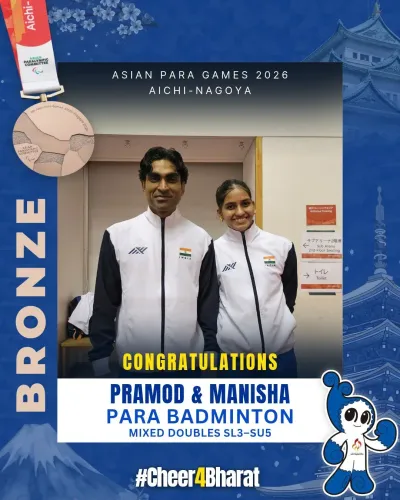
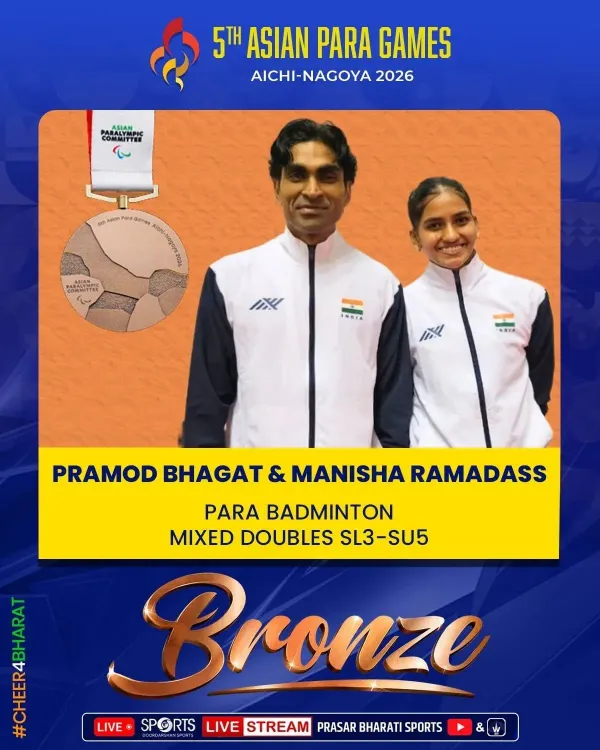
Bihar Chief Minister Samrat Choudhary congratulated six Indian para badminton players — Pramod Bhagat, Manisha Ramdas, Krishna Nagar, Nithya Sre, Abhijeet Sukhuja, and Suhas L. Yathiraj — on winning bronze medals in various events at the Asian Para Games 2026, calling their grit a source of national pride.
Key Takeaways
Six para badminton athletes — Pramod Bhagat, Manisha Ramdas, Krishna Nagar, Nithya Sre, Abhijeet Sukhuja, and Suhas L.
Yathiraj — won bronze medals at the Asian Para Games 2026 .
Bihar CM Samrat Choudhary posted congratulations on 22 October 2026 , naming each athlete individually in Hindi.
Pramod Bhagat is a multiple Paralympic medallist and one of India's most recognised para badminton players.
Yathiraj is a serving IAS officer and a Tokyo Paralympics silver medallist in para badminton.
Krishna Nagar is a Paralympic gold medallist in para badminton and a senior figure in the Indian para sports setup.
Political acknowledgement by state leaders is part of a broader pattern of increasing visibility for para athletes in Indian public discourse.
Six para badminton athletes brought home bronze medals from the Asian Para Games 2026, and Bihar Chief Minister Samrat Choudhary made sure the nation paused to recognise every one of them — by name, by grit, by sacrifice — in a congratulatory post on Thursday, 22 October 2026.
In his message in Hindi, CM Choudhary extended heartfelt congratulations to Pramod Bhagat and Manisha Ramdas, Krishna Nagar and Nithya Sre, Abhijeet Sukhuja, and Suhas L. Yathiraj — each a bronze medallist across different para badminton categories at the continental games. 'Aap sabhi ne apne khel kaushal, dhairya aur mehnat se desh ko gaurvit kiya hai' ('All of you have made the country proud through your skill, patience, and hard work'), he wrote.
The six athletes and what they carry
Pramod Bhagat is among India's most decorated para badminton names — a multiple Paralympic medallist whose career has made him a benchmark for the discipline globally. Suhas L. Yathiraj, a serving IAS officer, has long embodied the idea that public service and elite para sport are not mutually exclusive, earning a podium finish at the Tokyo Paralympics before this latest continental bronze. Krishna Nagar, another Paralympic medallist, has consistently been among the sharpest shuttlers in the standing lower-limb impairment category.
Manisha Ramdas, Nithya Sre, and Abhijeet Sukhuja are part of a deepening national bench — athletes whose bronze medals here signal that India's para badminton pipeline extends well beyond the headline names. CM Choudhary's post acknowledged this explicitly: 'Panak tak pahunchne ke liye kiya gaya aapka sangharsh' ('your struggle to reach the podium') is, he wrote, 'a matter of pride for every Indian.'
Why political recognition of para sport still matters
The Asian Para Games is a quadrennial multi-sport event that brings together athletes with disabilities from across Asia — the continent's largest para sporting stage outside the Paralympics themselves. Badminton has been one of India's strongest disciplines at the event, and public acknowledgement by state leaders amplifies visibility for a sporting community that has historically received far less media oxygen than its able-bodied counterparts.
When a Chief Minister names para athletes individually — not as a collective footnote but as individual champions — it shifts the narrative. It tells sponsors, state sports academies, and young athletes with disabilities that this work is seen and counted. That signal, repeated across political ranks, has become a recognisable feature of how India now talks about disability sport in the social-media era.
For this cohort, the next horizon is clear: the Paralympics, where Bhagat, Yathiraj, Nagar, and a growing number of their peers will carry these continental performances as evidence of form, fitness, and fire. The bronze medals from the Asian Para Games 2026 are not the summit — they are the base camp.
Point of View
Where para athletes have graduated from footnotes in congratulatory press releases to front-page acknowledgements. For Bihar specifically, whose political leaders have few direct policy levers over national para sports funding, such social-media visibility serves as both genuine recognition and soft positioning within the national BJP ecosystem. The bigger question is whether this political spotlight translates into durable institutional support — academy infrastructure, stipends, coaching — or remains a cycle of post-podium praise.
NationPress
22 Oct 2026
Frequently Asked Questions
Who won bronze in para badminton at Asian Para Games 2026?
Pramod Bhagat, Manisha Ramdas, Krishna Nagar, Nithya Sre, Abhijeet Sukhuja, and Suhas L. Yathiraj each won bronze medals in various para badminton events at the Asian Para Games 2026.
What is the Asian Para Games?
The Asian Para Games is a quadrennial multi-sport competition for athletes with disabilities held across Asia, second in scale only to the Paralympics for para athletes in the region.
Who is Suhas L. Yathiraj?
Suhas L. Yathiraj is an Indian IAS officer and para badminton player who won a silver medal at the Tokyo Paralympics and has continued competing at the top level of international para badminton.
Who is Pramod Bhagat?
Pramod Bhagat is one of India's most decorated para badminton players, having won multiple medals at the Paralympics and various international championships in the standing lower-limb impairment category.
Why did Bihar CM Samrat Choudhary congratulate para badminton players?
CM Samrat Choudhary posted congratulations on 22 October 2026 to honour the six Indian para badminton players who won bronze medals at the Asian Para Games 2026, calling their achievement a source of national pride.