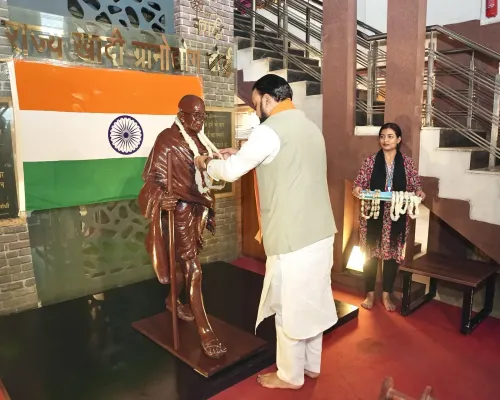
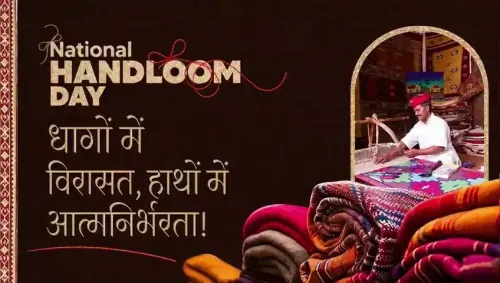
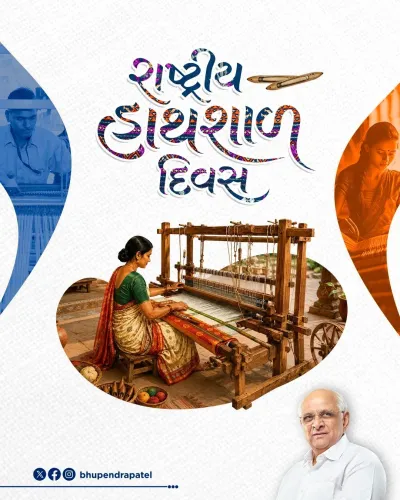
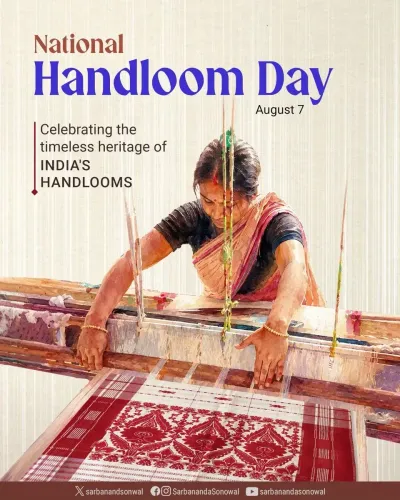
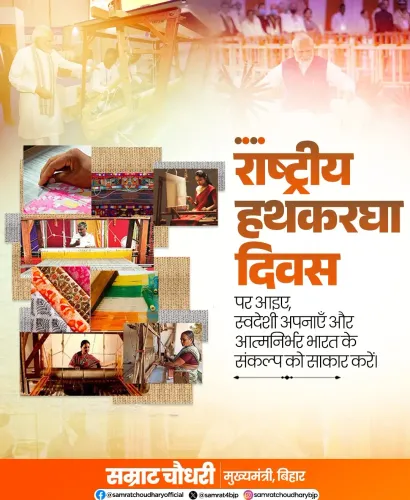
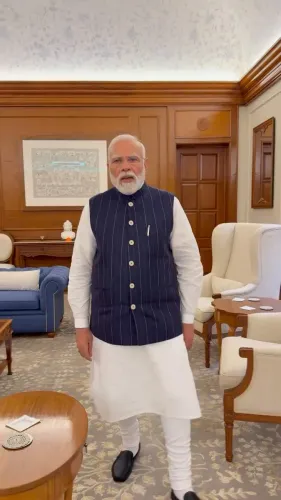
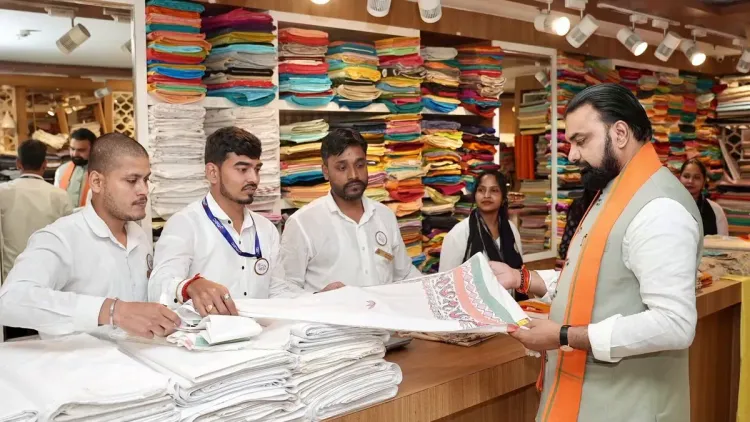
CM Samrat Choudhary shops handloom on National Handloom Day
Synopsis
Bihar Chief Minister Samrat Choudhary marked National Handloom Day on 7 August by purchasing handloom textiles and calling on Indians to support weaver communities, praising PM Modi's Vocal for Local push as a true mass movement.
Key Takeaways
Bihar CM Samrat Choudhary purchased handloom textiles on National Handloom Day, 7 August , as a personal demonstration of the Vocal for Local ethos.
National Handloom Day has been observed since 2015 to mark the centenary of the Swadeshi movement.
Choudhary credited PM Narendra Modi with transforming the Atmanirbhar Bharat and Vocal for Local campaigns into a nationwide mass movement.
The handloom sector supports millions of weaver families across India, making consumer demand a direct driver of rural household income.
The post aligns with a broader BJP pattern of amplifying sector-specific national days to drive awareness and domestic consumption.
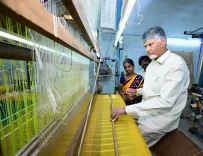
On National Handloom Day, 7 August, Bihar Chief Minister Samrat Choudhary made a point of putting his wallet where his words are — stepping out to buy handloom textiles and calling on every Indian to do the same.
Posting in Hindi, the Chief Minister wrote: 'जहां परंपरा प्रगति से जुड़ती है, वहीं आत्मनिर्भर भारत का ताना-बाना तैयार होता है' — 'Where tradition meets progress, the fabric of a self-reliant India is woven.' He described the handloom not merely as clothing, but as a symbol of India's rich culture, tradition, self-respect, and the livelihood of millions of weaver families.
A day rooted in the Swadeshi movement
National Handloom Day has been observed every 7 August since 2015, when the Ministry of Textiles chose the date to mark the centenary of the Swadeshi movement — the historic call to boycott British goods and champion Indian-made products. The choice of date is deliberate: it ties a 21st-century economic campaign to one of India's most emotionally resonant acts of national assertion. That lineage gives the day weight beyond a routine awareness event.
Vocal for Local and the Atmanirbhar thread
Choudhary reserved specific praise for Prime Minister Narendra Modi, crediting him with elevating handloom's dignity and turning the 'Vocal for Local' pledge into a mass movement. The Atmanirbhar Bharat Abhiyan — Modi's self-reliance campaign announced in May 2020 — made domestic consumption a patriotic act, and the handloom sector has been a recurring centrepiece of that messaging. Senior BJP leaders across states have consistently amplified the theme on sector-specific national days, creating a coordinated echo that goes beyond individual social media posts.
Handloom promotion sits at an unusual intersection: it is simultaneously cultural preservation, rural employment policy, and a counter to import dependence. For weaver communities — many of them in states like Bihar — a surge in consumer demand translates directly into household income. That is the concrete stakes behind what can otherwise sound like ceremonial rhetoric.
The CM's call to action
Choudhary closed his post with a direct appeal: adopt handloom products, encourage weaver brothers and sisters, and strengthen the resolve of an Atmanirbhar Bharat. The framing — personal purchase first, public call second — is a deliberate signalling device, lending the appeal a 'lead by example' credibility that a plain exhortation would lack.
As textile policy discussions around cluster development and export promotion continue in New Delhi, state-level voices like Choudhary's keep the handloom conversation alive at the ground level — one purchase, one post, one weaver family at a time.
Point of View
All on a symbolically loaded date. It reinforces the party's effort to make Atmanirbhar Bharat a lived identity rather than a policy slogan. For Bihar specifically, where handloom clusters contribute meaningfully to rural employment, the CM's visibility on this issue carries local electoral resonance beyond the national narrative. The real test will be whether state-level advocacy translates into concrete cluster-development or procurement policy in the months ahead.
NationPress
7 Aug 2026
Frequently Asked Questions
What is National Handloom Day and why is it celebrated on 7 August?
National Handloom Day is observed every 7 August since 2015 to honour India's handloom heritage. The date marks the anniversary of the Swadeshi movement launched in 1905 , which called for the promotion of Indian-made goods over British imports.
What did Bihar CM Samrat Choudhary do on National Handloom Day 2026?
Bihar Chief Minister Samrat Choudhary purchased handloom textiles on National Handloom Day and posted about it on X, urging Indians to adopt handloom products and support weaver communities under the Atmanirbhar Bharat mission.
What is the Vocal for Local campaign mentioned by Samrat Choudhary?
The Vocal for Local campaign is a call by Prime Minister Narendra Modi — part of the broader Atmanirbhar Bharat Abhiyan launched in May 2020 — to encourage Indians to buy domestically produced goods and champion Indian craftsmanship over imports.
Why is handloom important for weaver families in India?
The handloom sector is one of India's largest rural employers, supporting millions of weaver families . Consumer demand for handloom products directly boosts household incomes in these communities, making awareness campaigns like National Handloom Day economically significant.
How does Atmanirbhar Bharat relate to India's handloom sector?
Atmanirbhar Bharat — India's self-reliance mission — encourages domestic production and consumption. The handloom sector is a flagship example: promoting it preserves cultural heritage, reduces import dependence, and sustains rural livelihoods simultaneously.