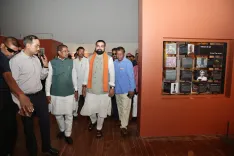
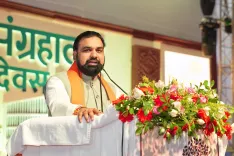
CM Mohan Yadav breaks ground for Rs 18.66 cr judges' guesthouse in Ujjain
Synopsis
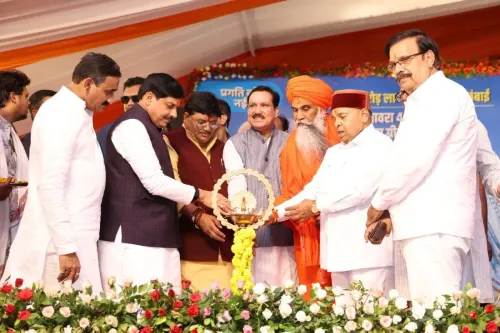
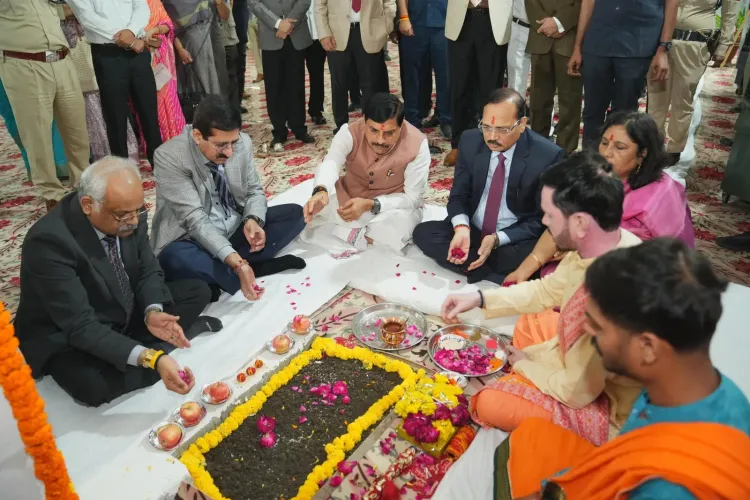
Madhya Pradesh CM Dr. Mohan Yadav and Chief Justice of India Justice Suryakant jointly performed the groundbreaking for a Rs 18.66 crore judges' guesthouse in Ujjain on 7 August 2026, aimed at providing modern residential facilities for visiting judicial officers.
Key Takeaways
Bhoomi pujan for a judges' guesthouse was performed in Ujjain on 7 August 2026 .
The project is estimated to cost Rs 18.66 crore .
Chief Justice of India Justice Suryakant was present alongside CM Dr.
Mohan Yadav at the ceremony.
The facility will offer modern amenities to judges and judicial officers visiting Ujjain.
The project is part of a broader pattern of state-level judicial infrastructure development across India.
A sacred city known for its ancient temples is now adding a new kind of landmark: a modern residential facility for the judiciary. Madhya Pradesh Chief Minister Dr. Mohan Yadav performed the bhoomi pujan (groundbreaking ceremony) for a judges' guesthouse in Ujjain on Friday, 7 August 2026, alongside the Chief Justice of India, Justice Suryakant — signalling the state's intent to upgrade judicial infrastructure in one of its most historically significant cities.
An Rs 18.66 crore facility for judges visiting Ujjain
The guesthouse, to be built at a cost of Rs 18.66 crore, is designed to provide visiting judges with high-quality residential amenities. CM Yadav described it as a facility that will be 'equipped with modern conveniences and offer better accommodation to judges visiting Ujjain.' The presence of the Chief Justice of India at the groundbreaking lends the project considerable institutional weight.
Ujjain regularly draws judges and legal officials for hearings and ceremonial occasions tied to its High Court circuit and its status as a major religious and administrative centre in Madhya Pradesh. A dedicated, purpose-built guesthouse addresses a long-standing practical gap in the city's judicial infrastructure.
Where Ujjain's judicial role meets its heritage
Ujjain is home to the Mahakaleshwar Jyotirlinga, one of the twelve sacred shrines in Hinduism, and hosts the Kumbh Mela periodically — drawing millions of visitors and placing extraordinary administrative and logistical demands on the city. For the judiciary specifically, the city's position as a circuit destination means judges travel there regularly, making quality accommodation a functional necessity rather than a luxury.
State governments across India have been steadily building out such facilities for judicial officers, a trend that runs parallel to the central government's e-Courts Mission Mode Project, which focuses on digitising court processes. Brick-and-mortar judicial infrastructure — courtrooms, residential facilities, record rooms — remains equally critical to the functioning of the system.
What the Chief Justice's presence signals
The participation of the Chief Justice of India in a state-level groundbreaking is not routine. It reflects a convergence of judicial and executive priorities — and sends a clear message that the project carries the endorsement of the country's top judicial authority. For Madhya Pradesh, having the CJI physically present in Ujjain for this ceremony is a moment of institutional alignment that the state government is unlikely to underplay.
Completion timelines and whether similar projects are planned for other Madhya Pradesh cities will be the next markers to watch as the state builds out its judicial infrastructure footprint.
A guesthouse may be a modest structure — but when the Chief Justice breaks ground alongside a Chief Minister in one of India's oldest living cities, it speaks to something larger: the quiet, unglamorous work of making justice accessible, functional, and present.
Point of View
The optics reinforce Madhya Pradesh's positioning as a state that takes judicial infrastructure seriously, not merely digital court reforms. The choice of Ujjain — a city with outsized religious and cultural significance — also suggests the state is thinking about judicial capacity in cities beyond its High Court seat of Jabalpur. If similar projects follow in other circuit cities, this groundbreaking may mark the start of a systematic judicial infrastructure push rather than a one-off gesture.
NationPress
8 Aug 2026
Frequently Asked Questions
What is the judges' guesthouse being built in Ujjain?
It is a purpose-built residential facility for judges and judicial officers visiting Ujjain, to be constructed at a cost of Rs 18.66 crore with modern amenities.
Who attended the bhoomi pujan of the Ujjain judges' guesthouse?
Madhya Pradesh Chief Minister Dr. Mohan Yadav and Chief Justice of India Justice Suryakant jointly performed the groundbreaking ceremony on 7 August 2026.
What is the cost of the Ujjain judges' guesthouse project?
The project is estimated to cost Rs 18.66 crore.
Why is a judges' guesthouse being built in Ujjain specifically?
Ujjain is a major circuit destination for judges and legal officials in Madhya Pradesh, and the facility is intended to provide better accommodation for visiting judicial officers in the city.
Is Madhya Pradesh building judicial infrastructure in other cities too?
No other specific cities have been confirmed yet; the completion of the Ujjain project and any parallel announcements in other Madhya Pradesh cities remain to be watched.