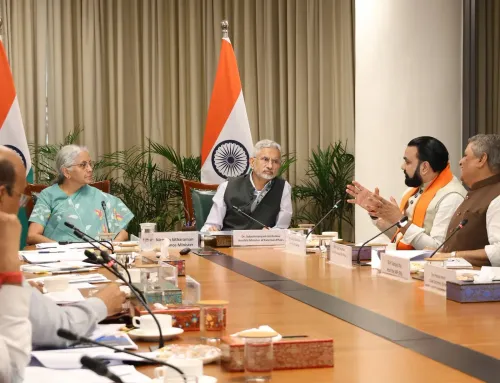
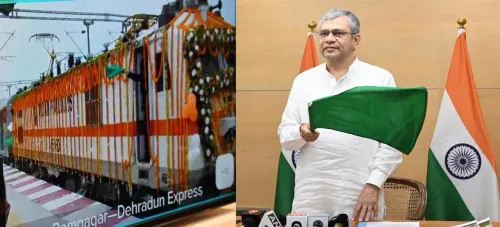
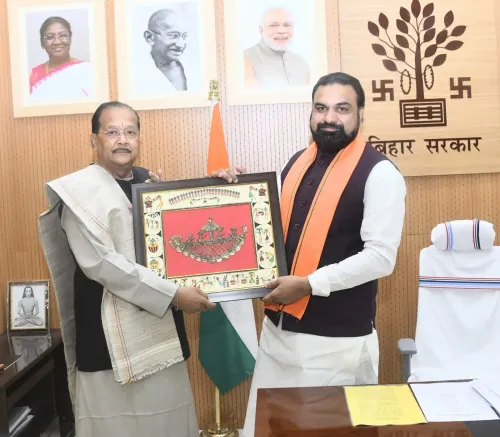
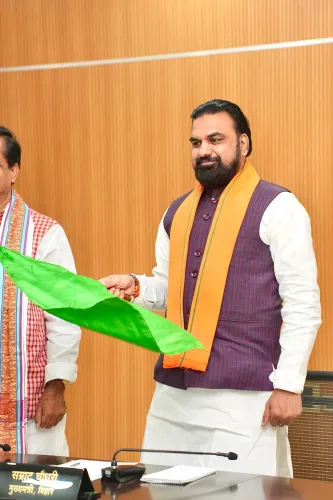
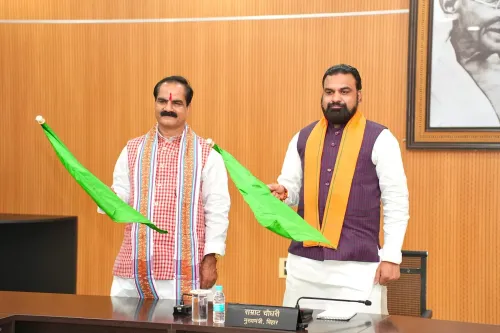
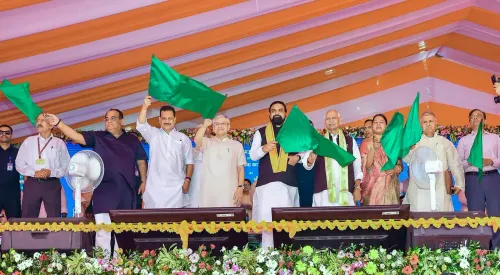
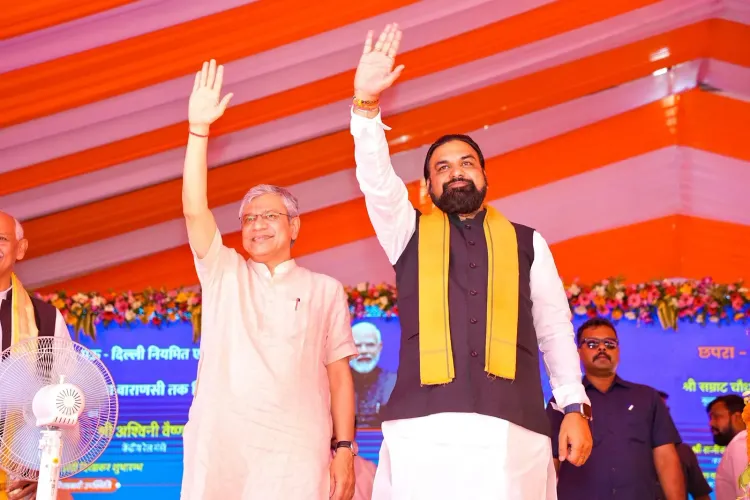
CM Samrat Choudhary, Rail Minister flag off Chhapra-Delhi Express
Synopsis
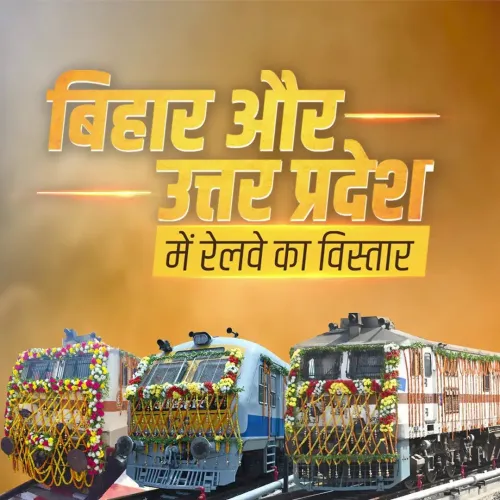
Bihar Chief Minister Samrat Choudhary and Union Railway Minister Ashwini Vaishnaw jointly flagged off the Chhapra-Delhi Express at Chhapra Junction on 19 June 2026. The Mau-Delhi Express was also launched, and the Dohrighat-Aunrihar service was extended to Varanasi, boosting rail connectivity across Bihar and eastern Uttar Pradesh.
Key Takeaways
The Chhapra-Delhi Express was jointly flagged off by Bihar CM Samrat Choudhary and Union Railway Minister Ashwini Vaishnaw at Chhapra Junction on 19 June 2026 .
The Mau-Delhi Express was simultaneously launched, providing a direct express link from Mau, eastern Uttar Pradesh to Delhi.
The Dohrighat-Aunrihar rail service was extended to Varanasi , expanding connectivity in the Purvanchal region.
All three initiatives were unveiled in a single joint ceremony, reflecting coordinated Centre-state implementation of rail projects in the Gangetic belt.
The launches continue a policy pattern since 2019 of adding express services and extending existing routes in Bihar and eastern UP without requiring new track infrastructure.
The Chief Minister's Office of Bihar announced on Friday, 19 June 2026 that Bihar Chief Minister Samrat Choudhary and Union Railway Minister Ashwini Vaishnaw jointly flagged off the Chhapra-Delhi Express from Chhapra Junction in a ceremony marking the launch of multiple new and extended rail services connecting Bihar and eastern Uttar Pradesh to the national capital.
What was inaugurated
Three rail initiatives were unveiled at the event. The Chhapra-Delhi Express was flagged off jointly by the Chief Minister and the Railway Minister at Chhapra Junction, the principal rail hub of Saran district, Bihar. Separately, the Mau-Delhi Express was also launched, adding a direct express link between Mau in eastern Uttar Pradesh and the capital.
In addition, the existing Dohrighat-Aunrihar rail service was extended to Varanasi, broadening connectivity across the Purvanchal region. The official post described the event as a joint flagging-off — 'संयुक्त रूप से हरी झंडी दिखाकर रवाना किया' ('jointly flagged off') — and a 'शुभारंभ' ('auspicious launch') of the Mau-Delhi service.
Context
Chhapra Junction serves as one of Bihar's busiest rail nodes, routing passengers from the Saran-Siwan belt toward Delhi and other major cities. Direct express trains from Chhapra to Delhi reduce travel time for a large commuter and migrant-worker population that relies heavily on rail for inter-city movement.
Mau, located in eastern Uttar Pradesh, similarly feeds a dense corridor of labour migration toward Delhi. A dedicated express service addresses a long-standing demand for faster, more reliable connectivity from this region to the capital.
Policy backdrop
Railway budgets since 2019 have consistently prioritised new express trains and line extensions linking Bihar and eastern Uttar Pradesh to Delhi, reflecting the political and economic weight of the Gangetic belt. Union Minister Ashwini Vaishnaw, who has held the Railways portfolio since 2021, has overseen a sustained push to add passenger services on existing tracks — a cost-efficient model that does not require new infrastructure before yielding connectivity gains.
The Dohrighat-Aunrihar extension to Varanasi exemplifies this approach: stretching an operational short-distance service to reach a major terminus like Varanasi multiplies its utility without fresh capital expenditure on new lines.
Stakeholders and impact
The primary beneficiaries are rail passengers in Saran, Siwan, and surrounding districts of Bihar who now have a direct express option to Delhi, and commuters in Mau and Aunrihar in eastern UP. Migrant workers, students, and traders travelling between the Purvanchal-Bihar corridor and the capital stand to gain the most from reduced journey times and additional seat availability.
The joint presence of the state Chief Minister and the Union Railway Minister at a district-level station like Chhapra signals coordinated Centre-state ownership of these projects — a pattern increasingly common in the Gangetic belt, where both levels of government claim credit for incremental rail improvements.
What's next
Passenger occupancy on the new Chhapra-Delhi and Mau-Delhi Express services will be a key early indicator of demand absorption. Zonal railway reviews and the next Union Railway Budget will be watched for announcements of frequency increases, additional stops, or further extensions of the Dohrighat-Varanasi corridor. The Purvanchal region's rail connectivity agenda is likely to remain a recurring theme in both state and central policy discussions ahead of upcoming electoral cycles.
Point of View
While operationally modest, carry outsized political value in a region with a large migrant-worker population for whom Delhi connectivity is a livelihood issue. The Dohrighat-Varanasi extension also quietly advances Uttar Pradesh's Purvanchal corridor, suggesting the event's benefits are calibrated to span state boundaries. Cumulatively, such launches reinforce a governing strategy of visible, frequent rail announcements that accumulate into a larger connectivity story ahead of electoral cycles.
NationPress
19 Sept 2026
Frequently Asked Questions
What is the Chhapra-Delhi Express?
The Chhapra-Delhi Express is a newly launched express train service connecting Chhapra Junction in Saran district, Bihar, directly to Delhi. It was flagged off on 19 June 2026 by Bihar CM Samrat Choudhary and Union Railway Minister Ashwini Vaishnaw.
Who flagged off the Chhapra-Delhi Express?
Bihar Chief Minister Samrat Choudhary and Union Railway Minister Ashwini Vaishnaw jointly flagged off the Chhapra-Delhi Express at Chhapra Junction on 19 June 2026.
What is the Mau-Delhi Express?
The Mau-Delhi Express is a new express train service launched on 19 June 2026 connecting Mau in eastern Uttar Pradesh to Delhi, inaugurated alongside the Chhapra-Delhi Express at the same ceremony.
What is the Dohrighat-Aunrihar Varanasi rail extension?
The Dohrighat-Aunrihar rail service was extended to Varanasi on 19 June 2026, lengthening an existing short-distance route to reach the major Varanasi terminus and improving connectivity across the Purvanchal region.
Why is Chhapra Junction important for Bihar railways?
Chhapra Junction is the principal rail hub of Saran district in Bihar, serving as a key interchange point for routes connecting northern and eastern India. It is a major departure point for migrant workers, students, and traders travelling to Delhi and other cities.