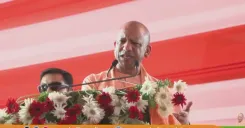
CM Samrat Choudhary Hails Rs 961 Cr Kiul-Jhajha Third Rail Line
Synopsis
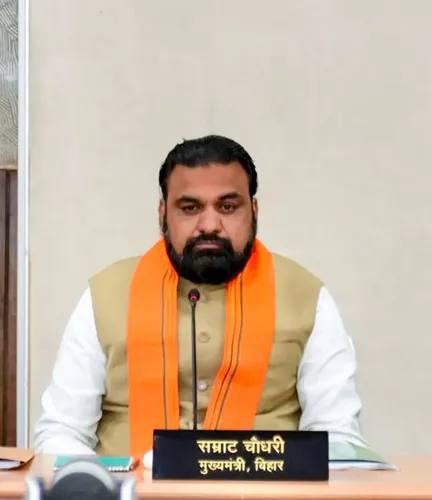
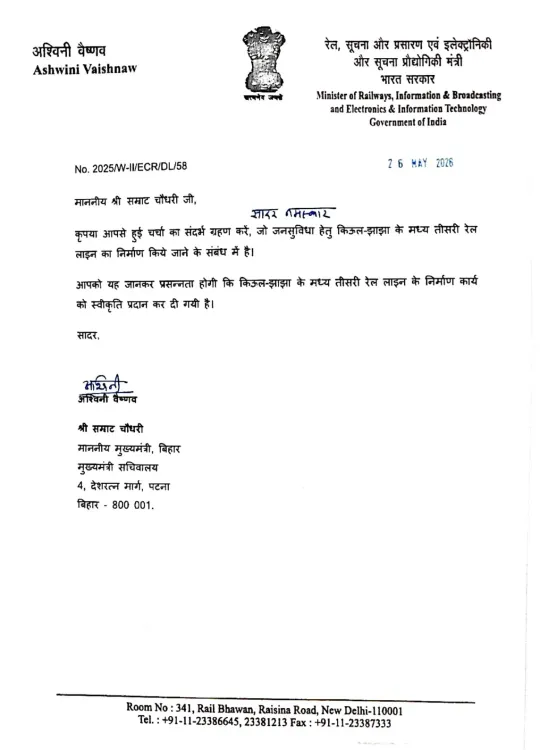
Bihar Chief Minister Samrat Choudhary has welcomed the central government's approval for a Rs 961.71 crore third railway line between Kiul and Jhajha, calling it a major boost to the state's rail infrastructure, passenger services, and economic growth.
Key Takeaways
The central government has approved construction of a third railway line between Kiul and Jhajha in Bihar.
The project is sanctioned at a cost of Rs 961.71 crore .
Bihar Chief Minister Samrat Choudhary credited PM Narendra Modi and Railway Minister Ashwini Vaishnaw for the approval.
The Kiul-Jhajha section lies on the high-density Howrah-Delhi rail corridor, a longstanding capacity bottleneck.
The project is expected to ease passenger congestion, accelerate freight movement, and support Bihar's economic development.
The approval continues a post- 2014 pattern of central rail capacity upgrades on saturated routes in eastern India.
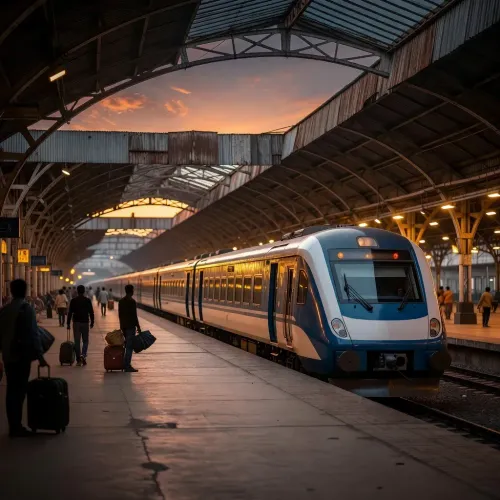
Bihar Chief Minister Samrat Choudhary on Tuesday, 26 May 2026, welcomed the central government's approval for construction of a third railway line between Kiul and Jhajha in Bihar, describing it as a major gift to the state's rail passengers. The project, sanctioned at a cost of Rs 961.71 crore, is expected to significantly decongest one of Bihar's busiest rail corridors on the Howrah-Delhi route.
Context
Posting in Hindi on X, CM Choudhary said, 'बिहार के रेल यात्रियों को बड़ी सौगात!' ('A great gift to Bihar's rail passengers!'), announcing the central government's green light for the third line project. He expressed gratitude to Prime Minister Narendra Modi and Union Railway Minister Ashwini Vaishnaw for the approval. The Chief Minister stated the project would strengthen rail infrastructure in Bihar, ease traffic movement, boost industry and trade, and add a new dimension to the state's economic progress.
The Kiul-Jhajha section is a high-density stretch in Munger and Jamui districts of Bihar. It forms part of the heavily trafficked eastern corridor connecting Howrah in West Bengal to Delhi, and has long been identified as a capacity bottleneck requiring additional line infrastructure.
Policy Backdrop
Since 2014, Indian Railways has sanctioned a series of third and fourth line projects on saturated routes across Bihar as part of successive capacity augmentation programmes. These projects are listed in railway budget allocations and are aimed at raising throughput on high-density corridors in eastern India, where freight and passenger demand consistently outpaces available track capacity.
The Rs 961.71 crore Kiul-Jhajha third line fits squarely within this national programme. Once built, the additional track is expected to allow more trains to operate on the corridor simultaneously, reducing delays for both passenger and freight services that currently compete for limited track time.
Stakeholders and Impact
Rail passengers travelling through Bihar on the eastern corridor stand to benefit most directly from reduced congestion and improved punctuality. Industries and traders in the region, particularly those dependent on freight movement, are expected to gain from faster and more reliable goods train services once the third line becomes operational.
CM Choudhary invoked the concept of the 'double engine sarkar' — referring to aligned BJP governments at both the state and central level — as the driver of Bihar's development momentum. This framing has been a recurring political motif used by BJP leaders to attribute infrastructure approvals to cooperative governance between Patna and New Delhi.
What's Next
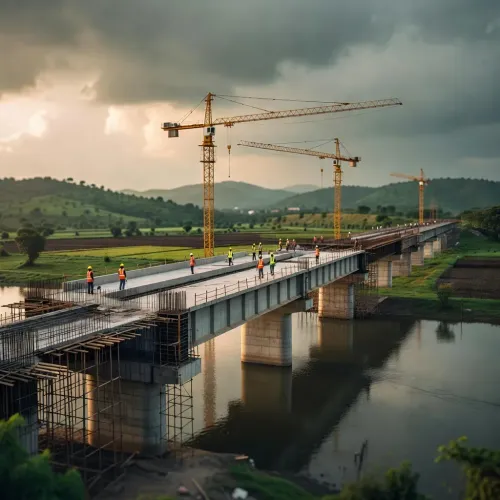
The project's next milestones will include tendering, land acquisition, and the commencement of construction work on the Kiul-Jhajha stretch. The pace of these steps will determine when passengers and freight operators begin to see tangible relief on the corridor.
Observers will also watch whether additional Bihar rail projects are announced in the next railway budget or the monsoon session of Parliament, as the central government has maintained a pattern of bundling multiple Bihar-focused rail approvals together. For the state, each such sanction adds to a cumulative push to modernise eastern India's rail network and unlock its economic potential.
Point of View
Reinforcing a deliberate political and policy strategy of directing infrastructure spending toward the state. For the BJP, such announcements serve a dual purpose: addressing genuine capacity constraints on one of India's busiest rail corridors while simultaneously demonstrating the dividends of aligned governance at the state and central level. CM Choudhary's public acknowledgment of PM Modi and Railway Minister Vaishnaw follows a well-established template that ties federal infrastructure grants to electoral messaging. The broader arc points to eastern India's rail network receiving sustained investment as the government seeks to rebalance freight and passenger capacity away from the historically overburdened western and northern corridors.
NationPress
12 Oct 2026
Frequently Asked Questions
What is the Kiul-Jhajha third railway line project?
It is a central government-approved project to build a third track between Kiul and Jhajha in Bihar at a cost of Rs 961.71 crore, aimed at decongesting a key stretch of the Howrah-Delhi rail corridor.
How much will the Kiul-Jhajha third line cost?
The project has been sanctioned at a cost of Rs 961.71 crore by the central government.
Who approved the Kiul-Jhajha rail project?
The approval was granted by the central government under Prime Minister Narendra Modi , with Railway Minister Ashwini Vaishnaw credited for the sanction.
How will the Kiul-Jhajha third line benefit Bihar?
The additional track will reduce congestion on the Howrah-Delhi corridor, improve punctuality for passenger trains, speed up freight movement, and support industrial and economic activity in the region.
What is 'double engine sarkar' in the context of Bihar?
'Double engine sarkar' is a phrase used by BJP leaders to describe the advantage of having BJP governments both at the state level in Bihar and at the centre, suggesting that aligned political leadership accelerates development and infrastructure approvals for the state.