CM Samrat Choudhary hails Rs 3,936 cr Khagaria-Purnia 4-lane nod
Synopsis
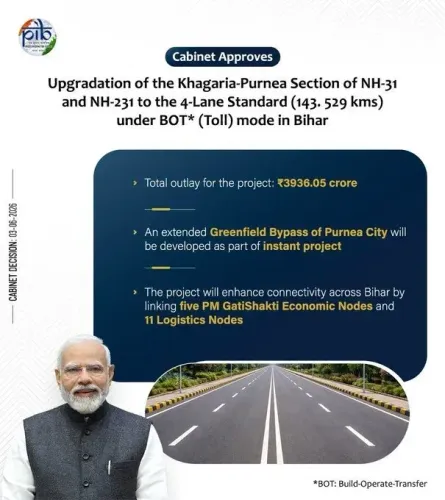
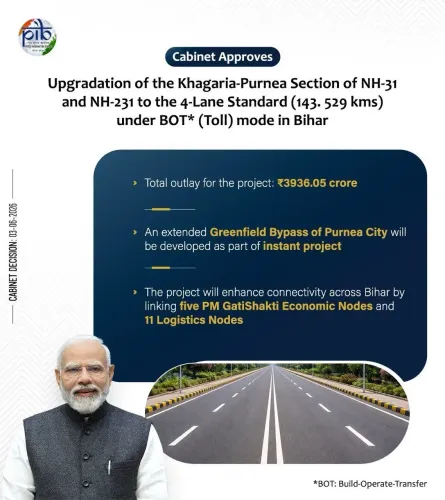
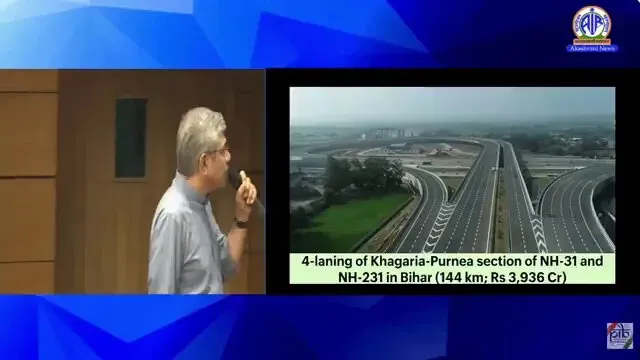
Bihar Chief Minister Samrat Choudhary welcomed the Union Cabinet's nod for a Rs 3,936-crore four-laning of the Khagaria-Purnia stretch on NH-31 and NH-231, calling it a historic step for Seemanchal and Kosi connectivity, trade and logistics under the PM Gati Shakti framework.
Key Takeaways
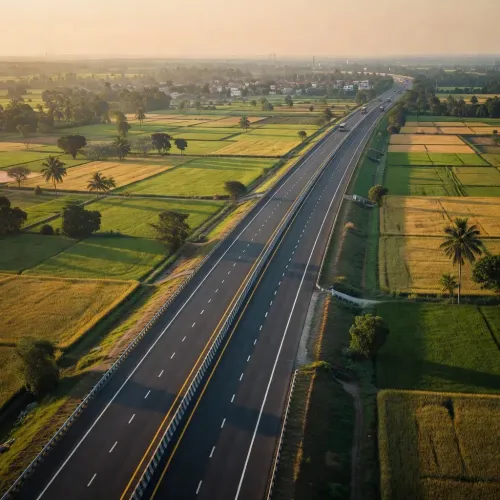
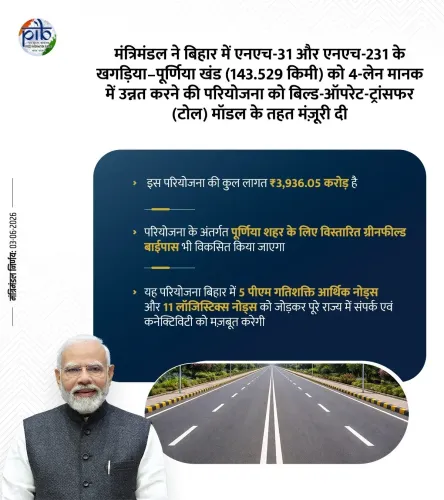
Union Cabinet has approved four-laning of the Khagaria-Purnia stretch on NH-31 and NH-231.
Project outlay exceeds Rs 3,936 crore, per the CM's post.
Upgrade is aimed at boosting Seemanchal and Kosi region connectivity.
CM Samrat Choudhary credited PM Narendra Modi and tagged PM Gati Shakti.
Corridor links Bihar to West Bengal, the Northeast and the Nepal border belt.
Next steps include land acquisition and tendering by highway authorities.
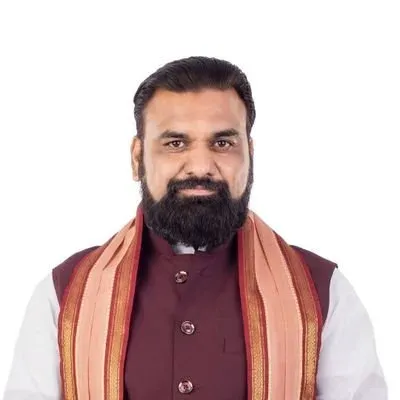
Bihar Chief Minister Samrat Choudhary on Wednesday, 3 June 2026, welcomed the Union Cabinet's clearance for upgrading the Khagaria-Purnia stretch on NH-31 and NH-231 to a four-lane standard at an outlay of over Rs 3,936 crore. In a post on X, he called the approval a 'historic decision' that would accelerate development across Bihar's Seemanchal and Kosi regions.
Context
Choudhary credited the project to the leadership of Prime Minister Narendra Modi, writing that the Union Cabinet had sanctioned the 'ambitious project' to widen the corridor. 'इस विशेष सौगात के लिए बिहारवासियों की ओर से हार्दिक आभार-धन्यवाद' ('Heartfelt gratitude on behalf of the people of Bihar for this special gift'), he added, tagging the upgrade with hashtags including #PMGatiShakti, #Seemanchal, #Khagaria and #Purnia.
The Chief Minister said the widened highway would 'strengthen connectivity in the Seemanchal and Kosi belt, ease movement, boost trade and logistics, and lend fresh momentum to the region's economic growth'. His post was accompanied by a short video and carried the tagline 'विकसित भारत, समृद्ध बिहार' ('Developed India, Prosperous Bihar').
Policy backdrop
The Khagaria-Purnia corridor sits on NH-31, a trunk route that runs across northern Bihar and links the state to West Bengal, the Northeast and the Nepal border belt. Upgrading it to four lanes is consistent with the centre's push under Bharatmala Pariyojana Phase-I, approved in 2017 for nearly 34,800 km of highways nationwide, several of which cut through Bihar.
The project also fits within the PM Gati Shakti National Master Plan, launched in October 2021, which coordinates central ministries and state agencies on integrated multimodal infrastructure. Choudhary's invocation of the Gati Shakti hashtag signals the corridor's placement within that planning framework, which has prioritised freight-heavy stretches in eastern India.
Stakeholders and impact
The Seemanchal region, comprising Purnia, Katihar, Araria and Kishanganj districts, has historically reported weaker road density than southern Bihar. A four-lane Khagaria-Purnia link is expected to compress travel time between the Kosi floodplain and the Seemanchal commercial belt, benefiting agricultural traders, transporters and migrant workers who shuttle between Bihar, West Bengal and the Northeast.
Local logistics operators stand to gain from smoother freight movement of maize, jute, makhana and dairy produce that originate in the Kosi-Seemanchal belt. Improved access is also likely to shore up cross-border trade flows toward the Nepal frontier, where Purnia functions as a regional hub.
What's next
Attention will now turn to land acquisition timelines and the tendering schedule for the Khagaria-Purnia stretch, which typically determine how quickly four-laning projects of this scale move from cabinet approval to ground-breaking. State revenue authorities and the National Highways Authority of India will need to coordinate on alignment, compensation and environmental clearances for the upgrade to stay on track.
Observers will also watch for follow-up cabinet nods on adjoining national highway segments in Bihar, given the centre's pattern of clustering approvals across the Seemanchal-Kosi corridor. With state Assembly politics in Bihar already shaped by debates over connectivity and migration, the Rs 3,936-crore sanction is likely to feature prominently in the ruling coalition's development pitch in the months ahead.
Point of View
With a clear tilt toward the underserved Seemanchal-Kosi belt. For the state's ruling coalition, projects of this scale double as political currency in a poll-sensitive Bihar, where connectivity and out-migration are recurring campaign themes. Choudhary's quick public framing — gratitude to the PM, plus a 'Developed India, Prosperous Bihar' tagline — signals tight messaging coordination between Patna and the centre. The real test will be execution speed on land acquisition, where Bihar highway projects have historically slipped.
NationPress
19 Sept 2026
Frequently Asked Questions
What is the Khagaria-Purnia highway project?
It is a project to upgrade the Khagaria-Purnia stretch on NH-31 and NH-231 in Bihar to a four-lane standard, cleared by the Union Cabinet at an outlay of over Rs 3,936 crore.
How much will the Khagaria-Purnia four-lane project cost?
The sanctioned outlay is more than Rs 3,936 crore, according to Bihar Chief Minister Samrat Choudhary's post on X.
Which regions will benefit from the NH-31 upgrade?
The Seemanchal and Kosi regions of Bihar are the primary beneficiaries, with improved connectivity expected for districts including Khagaria and Purnia.
How is the project linked to PM Gati Shakti?
The corridor is being taken up within the PM Gati Shakti National Master Plan, launched in October 2021 to coordinate multimodal infrastructure planning across ministries.
What happens next after the cabinet approval?
The focus shifts to land acquisition, environmental clearances and tendering by highway authorities before construction can begin on the Khagaria-Purnia stretch.