PM Modi clears 4-laning of NH-31, NH-231 Khagaria-Purnia stretch
Synopsis
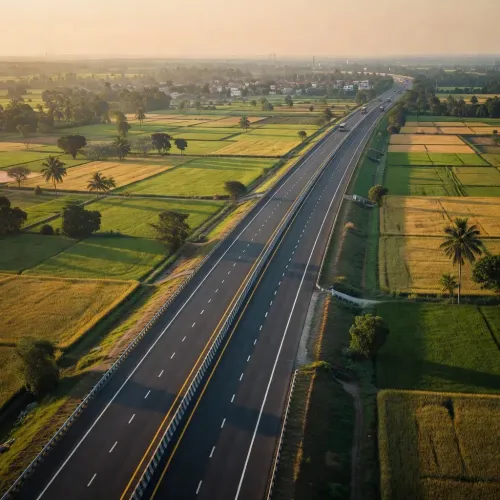
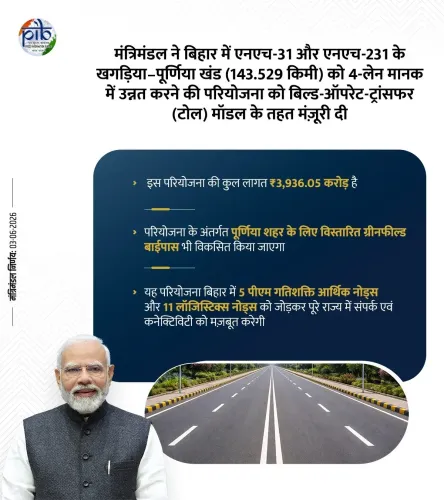
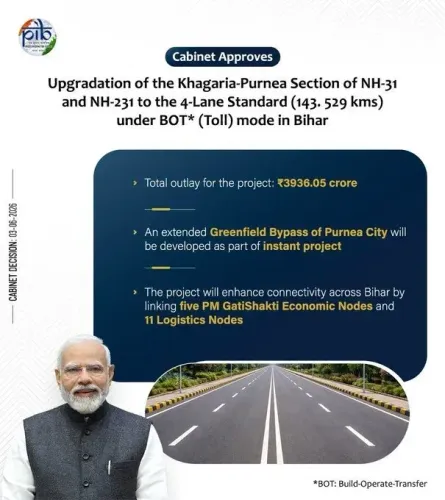
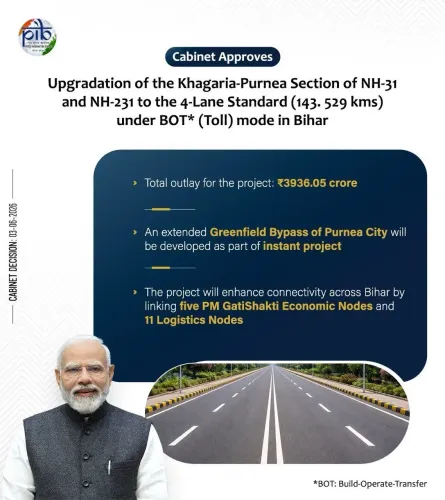
Prime Minister Narendra Modi said the central government has approved four-laning of the Khagaria-Purnia section of NH-31 and NH-231 in Bihar, a corridor expected to benefit Khagaria, Bhagalpur, Katihar and Purnia districts and tighten eastern India's highway grid.
Key Takeaways
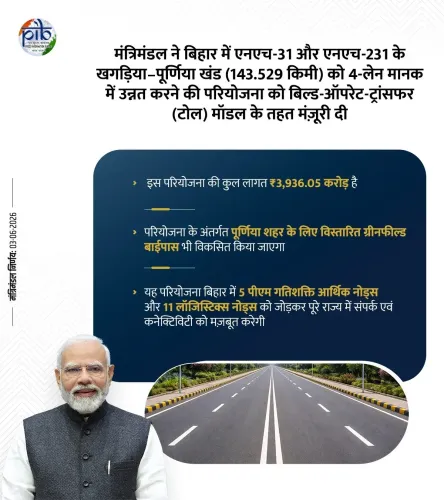
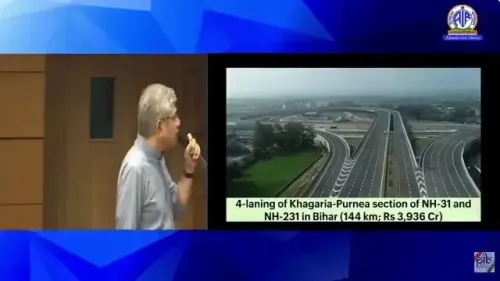
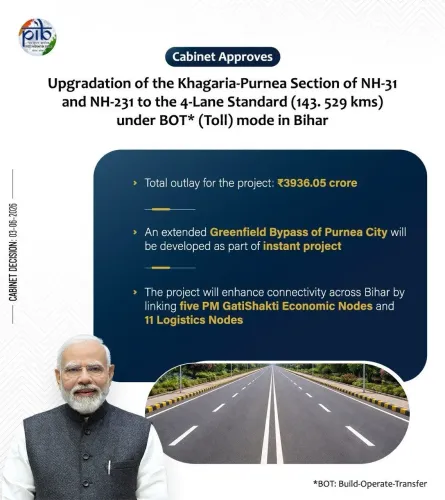
Centre has approved four-laning of the Khagaria-Purnia section of NH-31 and NH-231 in Bihar.
Project named beneficiary districts include Khagaria, Bhagalpur, Katihar and Purnia.
Upgrade fits within the Bharatmala Pariyojana framework launched in 2015 covering 34,800 km of highways.
NHAI under the Ministry of Road Transport and Highways will execute the corridor.
Tendering and land acquisition timelines will determine the start of construction.
Prime Minister Narendra Modi on Wednesday announced that the central government has approved the upgradation of the Khagaria-Purnia section of NH-31 and NH-231 in Bihar to four lanes. In a post on X, the Prime Minister framed the decision as part of a sustained push to strengthen connectivity across the country, with a particular focus on eastern Bihar districts.
Writing in Hindi, the Prime Minister said, 'Our government is continuously working to further strengthen connectivity across the country. In this direction, an important decision has been taken to approve the upgradation of the Khagaria-Purnia section of NH-31 and NH-231 in Bihar to 4-lane.' He added that the project would benefit the entire state, and specifically named Khagaria, Bhagalpur and Katihar as districts that would gain from the new corridor.
Context
The Khagaria-Purnia corridor sits on a critical east-west axis in northern Bihar, linking the central Gangetic belt with the Seemanchal region. NH-31, one of the older national highways traversing Bihar, has long been a key freight and passenger route, while NH-231 feeds into the wider network that connects districts north and south of the Ganga.
Upgrading the stretch to four lanes is expected to reduce travel time between commercial hubs in eastern Bihar and ease bottlenecks at district junctions where mixed traffic, including agricultural transport, currently slows movement.
Policy backdrop
The approval continues a multi-year pattern of central highway investment in Bihar. The Bharatmala Pariyojana, launched in 2015, set a target of developing roughly 34,800 km of national highways nationwide, with Phase-I cleared by the Union Cabinet in 2017 and including several four-laning projects across eastern India.
Between 2018 and 2022, multiple Bihar highway packages were sanctioned under Bharatmala and the PM Gati Shakti framework, which aims to integrate road, rail and logistics planning. The National Highways Authority of India, under the Ministry of Road Transport and Highways, is the principal executing agency for such corridors.
Stakeholders and impact
Residents of Khagaria, Bhagalpur, Katihar and Purnia are the most immediate beneficiaries, alongside road transport operators who run freight services between Bihar and neighbouring West Bengal, Jharkhand and the Northeast. Local traders in the Seemanchal belt, who depend on the corridor to move agricultural produce and consumer goods, stand to gain from faster, more reliable haulage.
For passenger traffic, a four-lane upgrade typically shortens journey times and improves road safety on stretches where two-lane configurations have struggled with rising vehicle volumes. The project also feeds into broader plans to knit Bihar more tightly into the national East-West and North-South corridors.
What's next
Attention now turns to the NHAI tendering process and the land acquisition timeline, both of which typically determine how quickly groundwork begins on a four-laning project of this scale. Bidder selection, environmental clearances and the alignment of bypasses around dense town segments such as those in Khagaria and Purnia will shape the execution schedule.
Further Cabinet approvals for adjacent Bihar stretches may follow as part of upcoming infrastructure packages. If executed on schedule, the Khagaria-Purnia upgrade could become a template for how the centre continues to layer four-lane capacity onto Bihar's older national highway grid, with downstream effects on logistics costs, regional commerce and inter-state mobility in eastern India.
Point of View
And Bihar has been a recurring focus given its strategic position between the Hindi heartland and the Northeast. Layering four-lane upgrades onto older NH-31 stretches signals that the centre is moving from greenfield expressway announcements to capacity-deepening on existing arterial routes. The political subtext is hard to miss in a state where infrastructure delivery has become a central plank of governance messaging. Execution speed, especially on land acquisition in densely populated Seemanchal towns, will decide whether the announcement translates into visible change on the ground.
NationPress
17 Oct 2026
Frequently Asked Questions
Which highway stretch has been approved for four-laning in Bihar?
The Khagaria-Purnia section of NH-31 and NH-231 in Bihar has been approved for upgradation to four lanes, as announced by Prime Minister Narendra Modi.
Which districts will benefit from the Khagaria-Purnia highway project?
The Prime Minister specifically named Khagaria, Bhagalpur, Katihar and Purnia among the districts that will benefit, along with the broader state of Bihar.
What is Bharatmala Pariyojana?
Bharatmala Pariyojana is a central highway development programme launched in 2015 to construct and upgrade about 34,800 km of national highways across India, including several stretches in Bihar.
Who will execute the NH-31 and NH-231 four-laning project?
The National Highways Authority of India, under the Ministry of Road Transport and Highways, is the central agency responsible for developing and upgrading national highways such as this corridor.
How will the four-laning affect travel in eastern Bihar?
A four-lane upgrade is expected to reduce travel time, ease congestion and improve safety on the Khagaria-Purnia corridor, benefiting freight movement and passenger traffic across eastern Bihar.