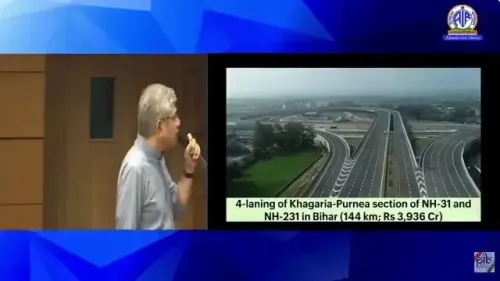
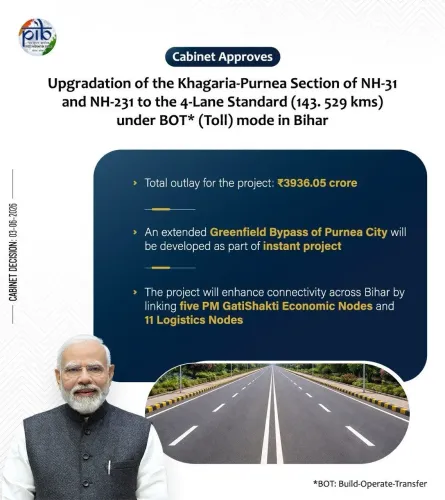
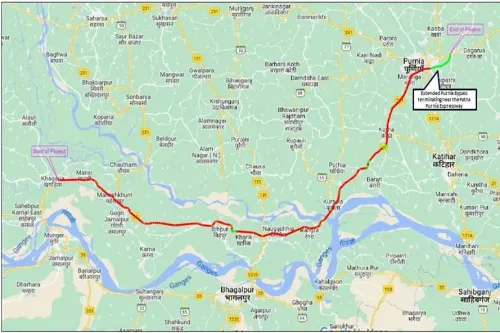
CCEA clears Khagaria-Purnia four-laning of NH-31, NH-231 in Bihar
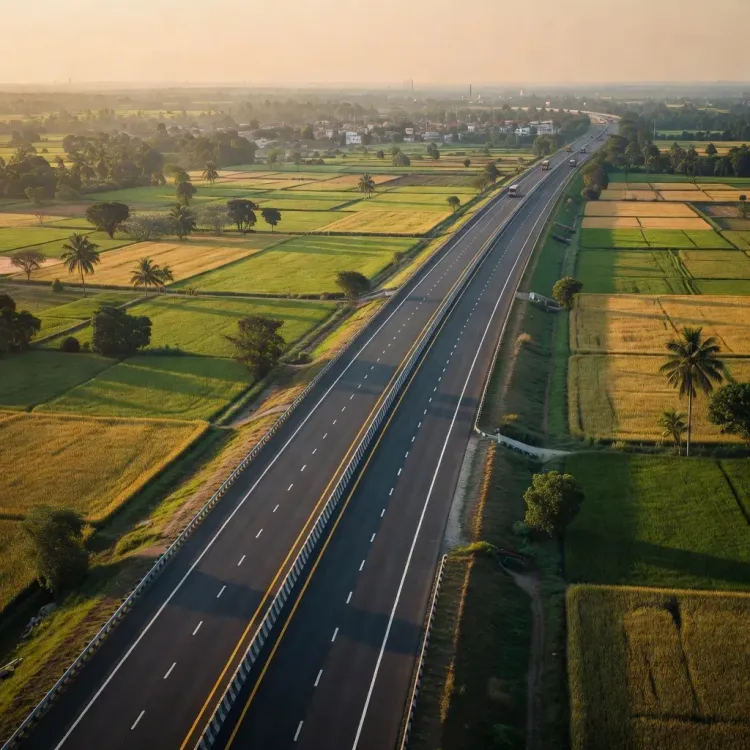
Synopsis
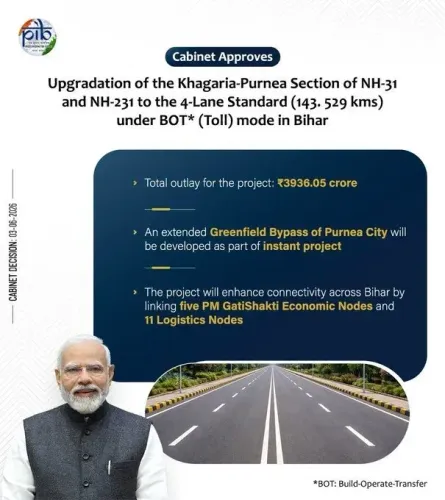
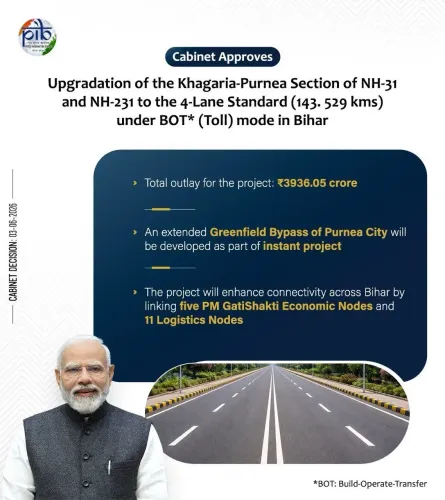
The Chief Minister's Office of Bihar announced that the Cabinet Committee on Economic Affairs, chaired by Prime Minister Narendra Modi, has approved a Rs 3,936.05 crore project to upgrade the Khagaria-Purnia section of NH-31 and NH-231 to four lanes, a key boost for Seemanchal connectivity and eastern India freight movement.
Key Takeaways
CCEA, chaired by PM Narendra Modi, has approved four-laning of the Khagaria-Purnia section of NH-31 and NH-231.
The project carries an outlay of Rs 3,936.05 crore.
The corridor links eastern Bihar districts across the Kosi and Seemanchal regions.
The upgrade is positioned within the central push under Bharatmala Pariyojana, cleared in 2017.
Next steps include DPR finalisation, land acquisition and tendering of construction packages.
The Chief Minister's Office of Bihar on Wednesday, 3 June 2026, announced that the Cabinet Committee on Economic Affairs (CCEA), chaired by Prime Minister Narendra Modi, has approved a major project to upgrade the Khagaria-Purnia section of NH-31 and NH-231 to four lanes at an outlay of Rs 3,936.05 crore. The clearance covers a stretch linking two eastern Bihar districts that anchor regional freight and passenger movement.
In its post, the office said the CCEA 'has accorded approval' to the four-laning of the Khagaria-Purnia section, describing it as a 'significant project' (महत्वपूर्ण परियोजना) for the state's road network.
Context
NH-31 is one of the principal national highways traversing Bihar and connecting it to neighbouring eastern states, while NH-231 forms part of the state's regional connectivity grid. The Khagaria-Purnia corridor cuts across the Kosi and Seemanchal belts, regions that have historically reported lower road density and higher travel times to Patna and to the Bengal-Northeast trunk routes.
The four-laning is expected to ease congestion on a mixed-traffic stretch that currently carries grain, dairy, textile and migrant-labour movement between north Bihar and the Northeast.
Policy backdrop
The approval sits within the central government's sustained push to widen national highways in eastern India, a thrust formalised under the Bharatmala Pariyojana cleared in 2017. Successive CCEA clearances since 2014 have prioritised four-lane and access-controlled corridors in Bihar, Jharkhand, Odisha and West Bengal, with the stated aim of cutting logistics costs and integrating lagging regions with national freight arteries.
Highway upgrades in Bihar have typically followed a sequence of in-principle approval, detailed project report finalisation, land acquisition and engineering, procurement and construction (EPC) or hybrid annuity tendering. The CCEA nod is the financial gateway that unlocks the budgetary commitment for the section.
Stakeholders and impact
The most direct beneficiaries are commuters and transporters across Khagaria, Madhepura, Saharsa, Araria and Purnia districts, who currently navigate a two-lane stretch with significant slowdowns through town sections. Four-laning is generally expected to compress travel times and improve safety on a corridor that sees a heavy share of heavy commercial vehicles.
For eastern India transporters, the project strengthens the east-west link feeding into the broader Purnia-Siliguri-Northeast axis, a route critical for perishables and consumer goods. State agencies, including the Bihar State Road Development Corporation and the National Highways Authority of India's regional units, will be the implementing interfaces.
The Bihar government has consistently positioned highway upgrades as central to its development pitch, and the office's prompt amplification of the CCEA clearance fits that messaging pattern, particularly in a year when infrastructure announcements carry political resonance in the state.
What's next
Attention will now shift to the finalisation of the detailed project report, the appointed-date notification, land acquisition progress in the affected revenue villages, and the tendering model chosen for execution. Completion timelines, alignment details and the exact length of the section will become clearer once contract awards are notified.
If executed on schedule, the four-laned Khagaria-Purnia stretch could become one of the more consequential mid-decade upgrades for Seemanchal, knitting an underserved belt more tightly into Bihar's and eastern India's logistics map.
Point of View
With Bihar a recurring beneficiary of CCEA clearances since the Bharatmala framework took shape. Routing a four-lane spine through Khagaria and Purnia is strategically significant because it strengthens the Seemanchal-to-Northeast freight corridor, an axis that has historically lagged trunk-route investment. Politically, the timing amplifies Bihar's infrastructure narrative at a moment when state-centre coordination on capital projects is a visible plank. The real test, as with prior approvals, will be land acquisition pace and on-ground execution rather than the headline outlay.
NationPress
18 Oct 2026
Frequently Asked Questions
What has the CCEA approved for Bihar's NH-31 and NH-231?
The CCEA has approved four-laning of the Khagaria-Purnia section of NH-31 and NH-231 in Bihar. The project has an outlay of Rs 3,936.05 crore as stated by the Bihar Chief Minister's Office.
What is the cost of the Khagaria-Purnia four-lane highway project?
The project has been cleared at a cost of Rs 3,936.05 crore. The figure was announced by the Chief Minister's Office of Bihar after the CCEA decision.
Who chairs the Cabinet Committee on Economic Affairs?
The Cabinet Committee on Economic Affairs is chaired by Prime Minister Narendra Modi. It is the apex central body that clears major capital expenditure proposals, including national highway upgrades.
Which districts will benefit from the NH-31 and NH-231 upgrade?
Khagaria and Purnia are the anchor districts of the approved four-laning stretch. Adjoining districts in the Kosi and Seemanchal belt, including Madhepura, Saharsa and Araria, are expected to benefit from improved connectivity.
What happens after CCEA approval of a highway project?
After CCEA approval, the implementing agency finalises the detailed project report, initiates land acquisition and floats tenders for construction packages. Physical work begins after the appointed date is notified for the contractor.