Jitendra Singh: Cabinet clears Khagaria-Purnea 4-laning in Bihar
Synopsis
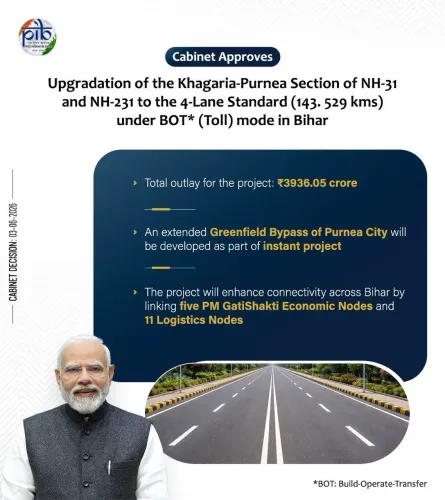
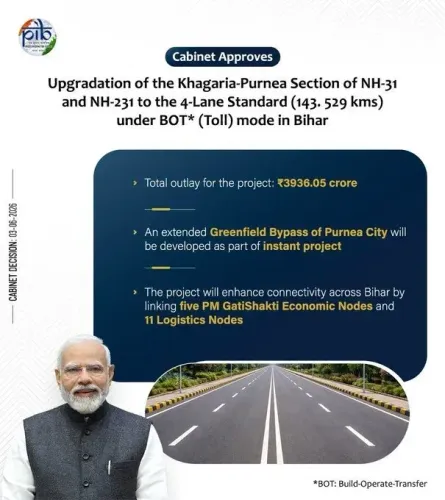
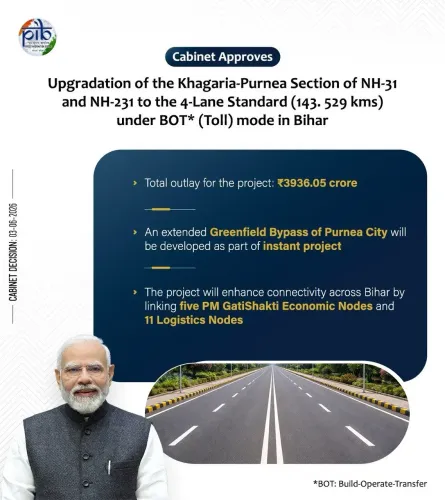
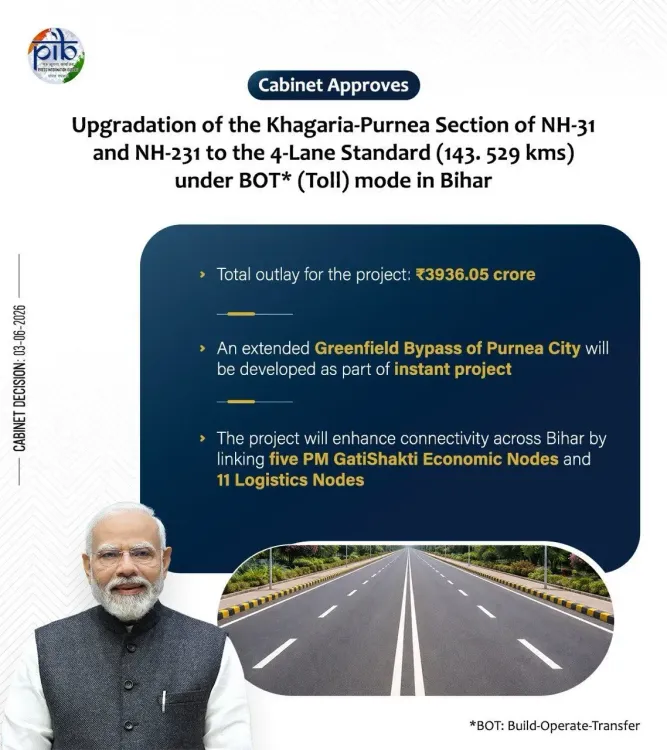
The Union Cabinet has approved upgradation of the Khagaria-Purnea section of NH-31 and NH-231 in Bihar to four-lane standard on BOT (Toll) mode at Rs.3,936.05 crore, Union Minister Dr. Jitendra Singh announced. The project is expected to improve east-west connectivity across the Kosi-Seemanchal region.
Key Takeaways
Cabinet approves four-laning of Khagaria-Purnea section of NH-31 and NH-231 in Bihar.
Project cost pegged at Rs.3,936.05 crore.
Execution to be on Build-Operate-Transfer (BOT) Toll mode via private concessionaire.
Announcement made by Union Minister Dr.
Jitendra Singh on 3 June 2026.
Project aligns with Bharatmala Pariyojana goals of corridor-based highway expansion.
Expected to cut travel time and logistics costs in the Kosi-Seemanchal belt.
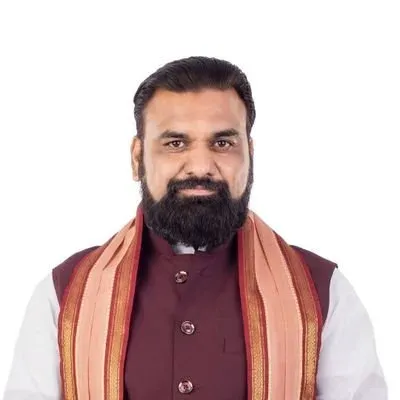
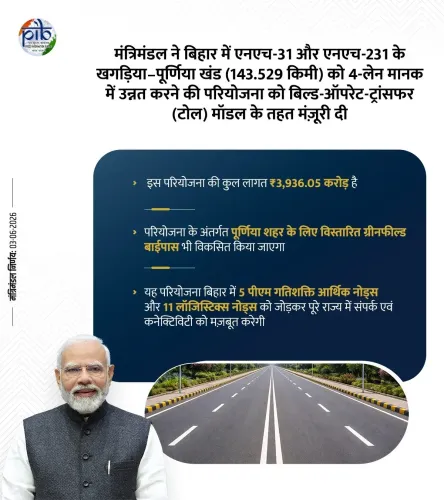
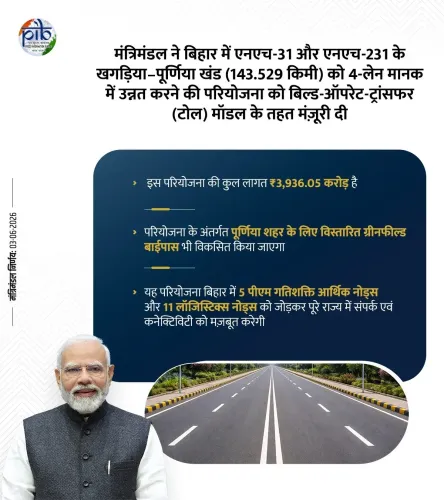
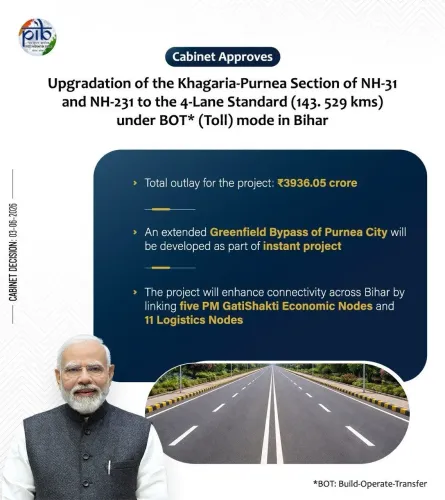
Union Science and Technology Minister Dr. Jitendra Singh announced on Wednesday that the Union Cabinet, chaired by Prime Minister Narendra Modi, has approved the upgradation of the Khagaria-Purnea Section of NH-31 and NH-231 to four-lane standard in Bihar. The project, cleared on 3 June 2026, will be executed on Build-Operate-Transfer (BOT) Toll Mode at a cost of Rs.3,936.05 crore, as per the minister's post.
Context
In his post, Dr. Singh wrote that the 'Cabinet under PM Sh @NarendraModi approves upgradation of the Khagaria-Purnea Section of NH-31 and NH-231 to the 4-Lane Standard in Bihar on BOT (Toll) Mode at a cost of Rs.3936.05 crore'. The announcement was tagged under the government's routine #CabinetDecisions communication stream.
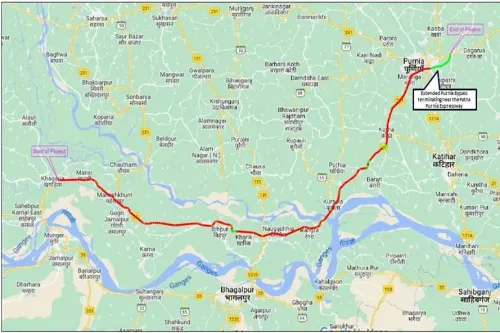
The Khagaria-Purnea stretch links two key districts in eastern Bihar and forms part of a longer east-west corridor that carries significant freight and passenger traffic. Converting the existing carriageway to four lanes is expected to compress travel time and improve safety on a route that has historically suffered from congestion and mixed-traffic bottlenecks.
Policy backdrop
The approval fits within a broader pattern of phased four-laning of national highways under central programmes such as the Bharatmala Pariyojana, launched in 2015 to develop roughly 34,800 km of national highways with a focus on high-traffic and economic corridors. Multiple Bihar sections have been cleared for capacity upgrades since 2017 under successive Cabinet rounds.
The choice of BOT (Toll) Mode is significant. Under this public-private partnership model, the private concessionaire finances, constructs and operates the highway, recovering investment through user tolls over a fixed concession period. After a stretch in which engineering-procurement-construction (EPC) and hybrid annuity contracts dominated highway awards, the central government has been signalling a measured return to BOT (Toll) where traffic projections are robust.
Stakeholders and impact
The most direct beneficiaries are commuters and transport operators moving between Khagaria, Purnea and the wider Seemanchal-Kosi region, which connects onward to West Bengal and the Northeast. Faster, all-weather connectivity is expected to lower logistics costs for agricultural produce, including maize and jute from the Kosi belt, and for industrial goods routed through the eastern corridor.
Local businesses along the alignment, including roadside enterprises, fuel retailers and warehousing operators, typically see secondary gains from such upgrades. State authorities in Bihar will be involved in land acquisition, utility shifting and law-and-order coordination during construction, while the central road transport ministry will oversee tendering and concession management.
For the Union government, the project also reinforces a political narrative of sustained capital expenditure in eastern India, a region that has historically lagged the western and southern states in highway density. Bihar, in particular, has been a focal point of recent central infrastructure announcements covering highways, bridges over the Ganga, and rail upgrades.
What's next
Attention now shifts to the detailed project report, bid documents and the concessionaire selection process for the Khagaria-Purnea stretch. Land acquisition status, environmental and forest clearances, and the financial close timeline will determine how quickly construction can begin on the ground.
Adjacent national highway sections in Bihar are likely candidates for similar Cabinet nods in subsequent rounds, as the government continues to push the core national highway network toward its long-term expansion target. For residents of the Kosi-Seemanchal belt, the immediate question is how soon the approved Rs.3,936.05 crore outlay translates into shovels in the ground.
Point of View
With Bihar emerging as a consistent recipient ahead of and beyond election cycles. The revival of BOT (Toll) for a project of this size also suggests growing confidence in traffic monetisation on eastern corridors, which were long considered too thin for private risk capital. Politically, the announcement gives the ruling alliance a tangible deliverable in the Kosi-Seemanchal belt. Execution risk, particularly around land acquisition, will determine whether the headline figure converts into visible road within a credible timeframe.
NationPress
18 Oct 2026
Frequently Asked Questions
What did the Union Cabinet approve for the Khagaria-Purnea highway?
The Cabinet approved upgradation of the Khagaria-Purnea section of NH-31 and NH-231 in Bihar to four-lane standard. The project will be executed on BOT (Toll) mode at a cost of Rs.3,936.05 crore.
What is the cost of the Khagaria-Purnea four-laning project?
The project cost is Rs.3,936.05 crore, as stated by Union Minister Dr. Jitendra Singh. The amount covers the four-lane upgradation under the BOT (Toll) framework.
What is BOT (Toll) mode in highway projects?
BOT (Toll) is a public-private partnership model where a private concessionaire builds and operates a highway and recovers costs by collecting tolls. Ownership eventually transfers back to the government after the concession period.
Which districts does the Khagaria-Purnea highway connect?
The stretch connects Khagaria and Purnea districts in eastern Bihar. It is part of a wider east-west corridor serving the Kosi-Seemanchal region.
How does this project link to Bharatmala Pariyojana?
The four-laning aligns with the Bharatmala Pariyojana framework launched in 2015 for developing about 34,800 km of national highways. Multiple Bihar sections have been cleared under successive phases of the programme.