Sonowal: Cabinet clears Khagaria-Purnea NH 4-laning at Rs 3,936 cr
Synopsis
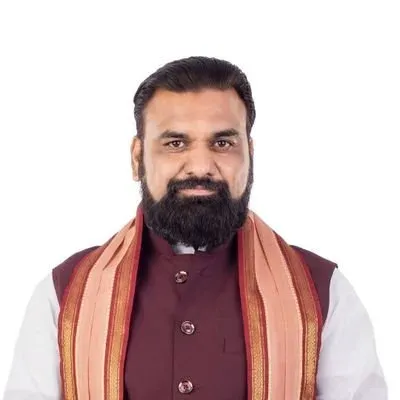
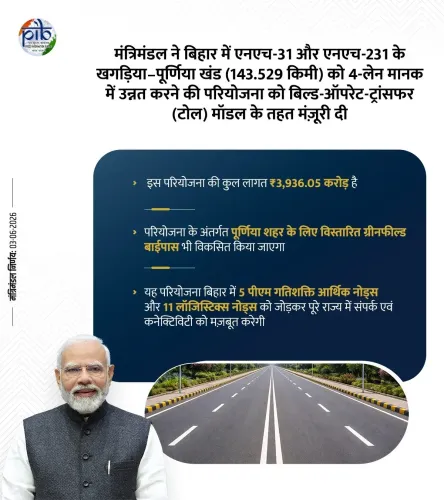
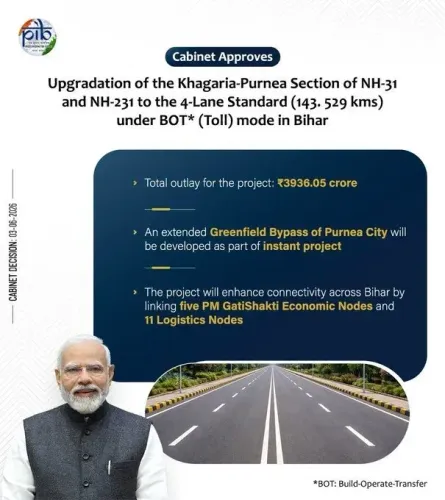
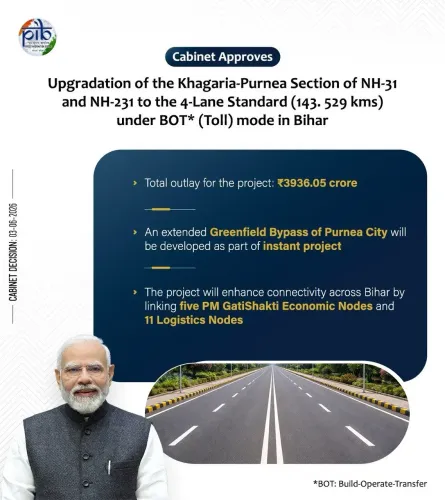
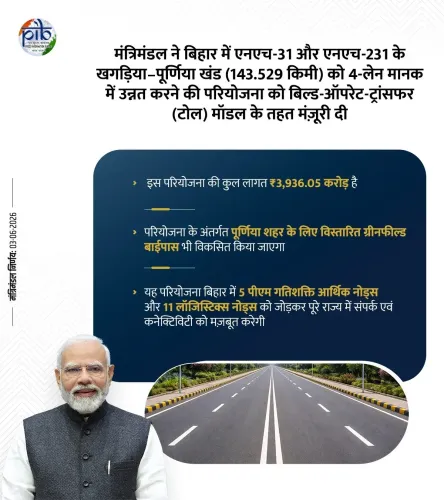
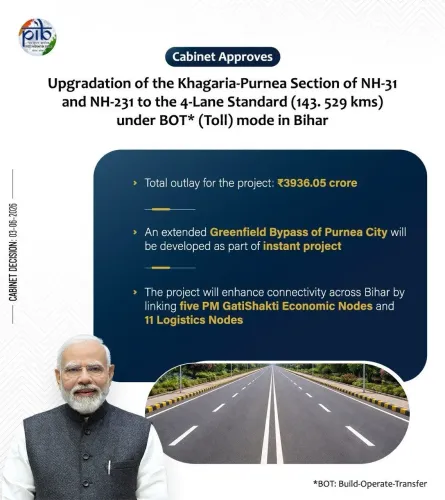
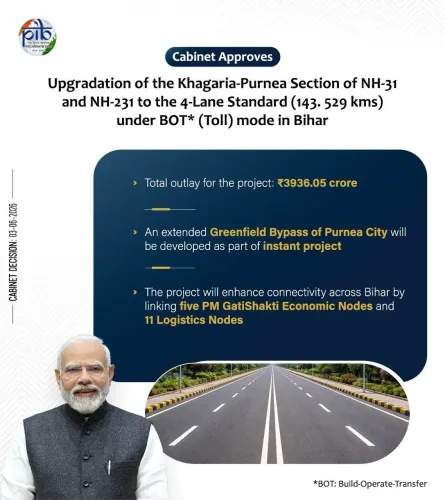
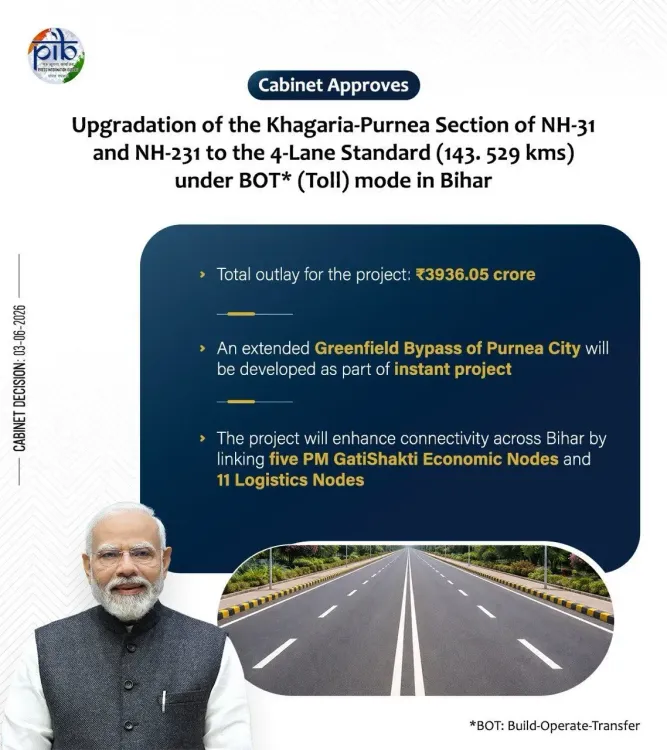
Union Ports and Shipping Minister Sarbananda Sonowal said the Union Cabinet, chaired by PM Narendra Modi, has approved upgrading the Khagaria-Purnea section of NH-31 and NH-231 in Bihar to four-lane standard on BOT (Toll) mode at a cost of Rs 3,936.05 crore, deepening the centre's eastern-India highway push.
Key Takeaways
Cabinet approved 4-laning of the Khagaria-Purnea section of NH-31 and NH-231 in Bihar.
Project cost pegged at Rs 3,936.05 crore, to be executed on BOT (Toll) mode.
Announcement made by Union Minister Sarbananda Sonowal on X with the hashtag #CabinetDecisions.
Corridor links north Bihar's Kosi belt to Purnea and onward routes toward the Northeast.
Extends the post-2014 thrust on four-laning eastern-India national highways under Bharatmala Pariyojana.
NHAI will be the implementing agency; tendering and land acquisition are the next milestones.
Union Ports and Shipping Minister Sarbananda Sonowal announced on Wednesday that the Union Cabinet, chaired by Prime Minister Narendra Modi, has approved the upgradation of the Khagaria-Purnea section of NH-31 and NH-231 in Bihar to four-lane standard. The project, cleared on 3 June 2026, will be executed on Build-Operate-Transfer (BOT) Toll mode at a cost of Rs 3,936.05 crore.
In his post on X, Sonowal said the 'Cabinet chaired by Hon'ble PM Shri Narendra Modi ji approves the upgradation of the Khagaria-Purnea Section of NH-31 and NH-231 to the 4-Lane standard in Bihar on BOT (Toll) Mode at a cost of Rs 3936.05 crore.' The announcement was tagged with the hashtag #CabinetDecisions, indicating its place within the Cabinet's routine roster of approvals shared by ministers.
Context
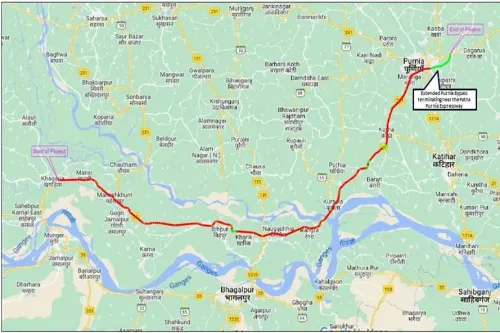
The Khagaria-Purnea corridor links the agrarian heartland of north Bihar with the eastern districts that border West Bengal and connect onward to the Northeast. NH-31, one of the longest national highways in eastern India, runs through Bihar's flood-prone Kosi belt, while NH-231 serves as a feeder route between district headquarters in the same region.
Four-laning has been a long-pending demand from commuters and freight operators in the corridor, given recurring congestion and seasonal damage during monsoon months. The cost of Rs 3,936.05 crore places the project among the larger highway approvals cleared for Bihar in recent Cabinet cycles.
Policy backdrop
The approval extends the central government's post-2014 push to convert two-lane national highways in eastern states into four-lane standard, a thrust formalised under the Bharatmala Pariyojana Phase-I cleared in 2017. That programme envisaged roughly 34,800 km of network development, with Bihar receiving multiple 4-laning packages.
Earlier Cabinet approvals for NH-31 upgrades in Bihar were granted in 2016 and 2018, also under the BOT (Toll) framework. The continued reliance on BOT (Toll) signals the government's preference for public-private partnership financing for trunk corridors where toll revenue is projected to service private investment.
Stakeholders and impact
The principal beneficiaries are commuters in Khagaria, Madhepura, Saharsa, Purnea and adjoining districts, along with freight transporters carrying foodgrain, perishables and consumer goods between north Bihar and the eastern seaboard. Faster four-lane connectivity is expected to reduce travel time and logistics cost on a corridor that also feeds traffic toward Siliguri and the Northeast.
The National Highways Authority of India (NHAI) will be the implementing agency. Construction contractors, toll concessionaires and lenders financing BOT projects form the second tier of stakeholders, while the Bihar state government is expected to coordinate land acquisition and utility shifting.
The timing of the announcement also carries political weight: Bihar has been a focus state for highway investment ahead of and beyond successive electoral cycles, and central ministers have routinely amplified such approvals as evidence of sustained infrastructure spending in the state.
What's next
Attention will now shift to NHAI's tendering schedule for the project, the appointment of the BOT concessionaire, and the pace of land acquisition along the alignment. Environmental clearances and resettlement plans for stretches passing through populated and flood-prone tracts will be watched closely.
Observers will also track whether the four-laning is sequenced with parallel inland waterway and bridge upgrades in the Kosi-Ganga region, where the Ports, Shipping and Waterways ministry led by Sonowal has separately pushed national waterway development. A coordinated road-and-river logistics push could amplify the corridor's economic effect well beyond the immediate Khagaria-Purnea stretch.
Point of View
Reinforcing the centre's narrative of sustained eastern-India infrastructure spending. The choice of BOT (Toll) mode is notable, as several past projects in the state had drifted toward EPC and Hybrid Annuity after lukewarm private interest; a return to BOT (Toll) suggests greater traffic-revenue confidence on this corridor. With Bihar's political calendar always close at hand, such announcements carry both economic and signalling value. Execution risk, particularly land acquisition in the Kosi floodplain, will be the real test.
NationPress
18 Oct 2026
Frequently Asked Questions
What is the cost of the Khagaria-Purnea highway project?
The project has been approved at a cost of Rs 3,936.05 crore. It will upgrade the Khagaria-Purnea section of NH-31 and NH-231 in Bihar to four-lane standard.
Which highways are being upgraded between Khagaria and Purnea?
The upgradation covers the Khagaria-Purnea section of NH-31 and NH-231 in Bihar. Both will be widened to four-lane standard.
What is BOT (Toll) mode in highway projects?
BOT (Toll) stands for Build-Operate-Transfer on a toll basis. A private concessionaire finances and builds the highway, recovers its investment by collecting tolls for a fixed period, and then transfers the asset back to the government.
Who announced the Khagaria-Purnea highway approval?
Union Ports and Shipping Minister Sarbananda Sonowal announced the approval on X. He said the Cabinet chaired by Prime Minister Narendra Modi cleared the project.
How will the project benefit Bihar commuters?
Four-laning is expected to reduce travel time and congestion on a key north-east Bihar corridor. It is also expected to lower logistics costs for freight movement toward Purnea, Siliguri and the Northeast.