Govt clears ₹1,200 crore rail projects for Jammu-Katra, Howrah-Delhi corridors
Synopsis
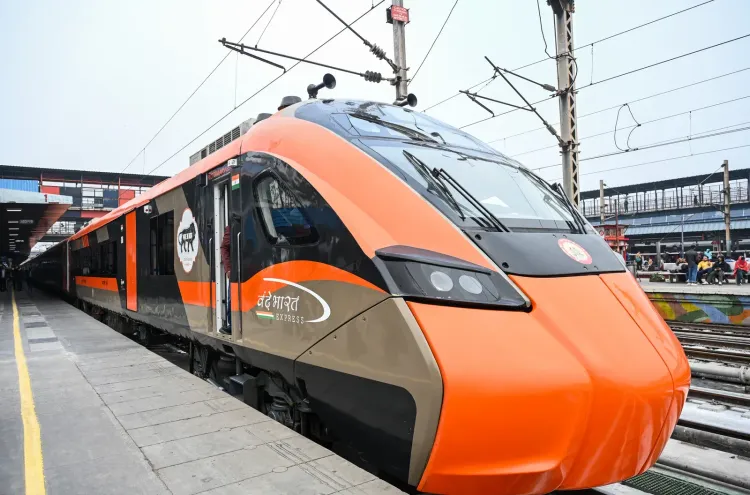
The Railways Ministry has cleared ₹1,200 crore worth of projects in a single day — slope stabilisation and tunnel fixes on the pilgrimage-heavy Jammu-Katra route, and a new 54-km third line on the congested Howrah-Delhi corridor. The twin approvals underscore how freight bottlenecks and terrain-driven safety risks are now being addressed in tandem, not in silos.
Key Takeaways
The Ministry of Railways sanctioned ₹1,200 crore in rail infrastructure projects on 19 May 2025 . ₹238 crore approved for slope stabilisation, tunnel seepage treatment, and bridge protection on the Jammu-Shri Mata Vaishno Devi Katra section of Northern Railway. ₹962 crore cleared for the Kiul-Jhajha 3rd Line Project spanning 54 km on the Howrah-Delhi corridor.
The Kiul-Jhajha section is currently operating beyond optimal capacity, with traffic demand expected to rise further.
The corridor connects Kolkata and Haldia ports to Raxaul, Bihar , handling freight for Barh STPP , Jawahar STPP , and Birganj ICD .
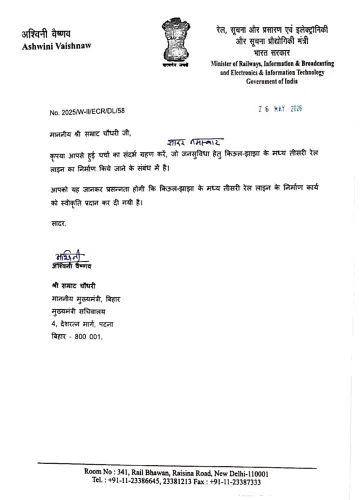
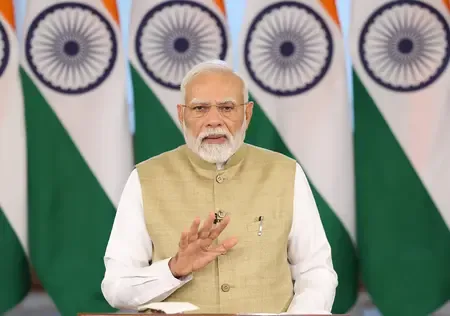
Railways Minister Ashwini Vaishnaw cited the government's commitment to safe connectivity in challenging terrain.
The Ministry of Railways on Tuesday, 19 May sanctioned railway infrastructure projects worth ₹1,200 crore aimed at bolstering safety, connectivity, and operational efficiency on two of India's most critical rail corridors — the Jammu-Katra section and the Howrah-Delhi corridor. The approvals cover both slope stabilisation and tunnel rehabilitation works in the Himalayan foothills and a new third rail line in the high-density eastern trunk route.
Jammu-Katra Section: Safety and Rehabilitation Works
The government has cleared protection and rehabilitation works on the Jammu-Shri Mata Vaishno Devi Katra section of Northern Railway at a cost of ₹238 crore. The approved scope includes slope stabilisation, treatment of tunnel seepage, bridge protection works, and other safety interventions at vulnerable locations along the route.
Union Railways Minister Ashwini Vaishnaw said the works 'reflect the government's commitment towards ensuring safe and reliable rail connectivity in some of the country's most challenging terrains.' The sanctions follow a detailed engineering assessment of cuttings, bridges, and tunnels across the section.
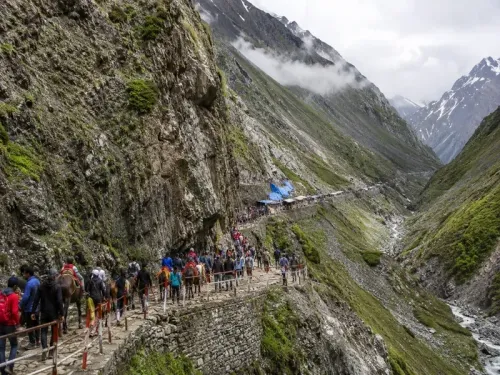
The Jammu-Katra corridor has historically faced engineering and operational difficulties owing to difficult terrain, adverse geological conditions, and extreme weather. According to the ministry, the newly approved measures are designed to make the route more resilient for the millions of passengers who travel the corridor each year — many of them pilgrims bound for the Vaishno Devi shrine.
Kiul-Jhajha Third Line: Expanding the Howrah-Delhi Corridor
In a separate clearance, the government approved the Kiul-Jhajha 3rd Line Project, spanning 54 km, at a cost of ₹962 crore. The project forms part of the high-density Howrah-Delhi main corridor, one of the busiest rail arteries in the country.
According to the ministry, the existing double-line section between Kiul and Jhajha is currently operating beyond optimal capacity utilisation, with traffic demand expected to rise further in coming years. The proposed third line is intended to significantly improve line capacity, reduce congestion, and facilitate smoother movement of both passenger and freight trains.
Strategic Freight and Connectivity Significance
Beyond passenger traffic, the Kiul-Jhajha corridor plays a pivotal role in freight logistics. The route provides key connectivity between Kolkata and Haldia ports and Raxaul in Bihar — near the Nepal border — while also handling substantial freight linked to major industrial establishments, including Barh STPP, Jawahar STPP, and Birganj ICD. Expanding capacity here is expected to ease freight bottlenecks across Eastern and Northern India.
What Comes Next
With both projects now sanctioned, execution timelines and contractor appointments are expected to be the next milestones. The combined outlay of ₹1,200 crore signals continued Centre-level prioritisation of rail safety and capacity expansion — particularly on routes that carry strategic, pilgrim, and freight traffic simultaneously. How quickly ground-level work commences will determine whether the safety and capacity benefits materialise within the projected timeframes.
Point of View
Yet rehabilitation works are arriving only now — raising questions about the pace of safety audits on other similarly exposed Himalayan rail sections. On the Howrah-Delhi corridor, a third line at Kiul-Jhajha is a welcome but incremental fix on a route that carries some of the country's heaviest freight loads; the real test will be whether execution keeps pace with the traffic growth projections the ministry itself has cited. Sanctioning is the easy part — delivery timelines and contractor accountability will determine whether these ₹1,200 crore translate into measurable safety and capacity gains.
NationPress
3 Oct 2026
Frequently Asked Questions
What are the railway projects sanctioned worth ₹1,200 crore?
The government approved two projects: ₹238 crore for slope stabilisation, tunnel rehabilitation, and bridge protection on the Jammu-Shri Mata Vaishno Devi Katra section, and ₹962 crore for the 54-km Kiul-Jhajha 3rd Line Project on the Howrah-Delhi corridor. Both were sanctioned by the Ministry of Railways on 19 May 2025.
Why does the Jammu-Katra section need rehabilitation works?
The Jammu-Katra section faces engineering challenges due to difficult Himalayan terrain, adverse geological conditions, and extreme weather events. The sanctioned works — covering slope stabilisation, tunnel seepage treatment, and bridge protection — are aimed at making the route more resilient for the millions of passengers, including pilgrims, who use it annually.
What is the Kiul-Jhajha 3rd Line Project?
It is a 54-km rail capacity expansion project on the high-density Howrah-Delhi corridor, approved at a cost of ₹962 crore. The existing double-line section between Kiul and Jhajha is operating beyond optimal capacity, and the third line is intended to reduce congestion and improve both passenger and freight movement.
Which industries and ports does the Kiul-Jhajha corridor serve?
The corridor connects Kolkata and Haldia ports to Raxaul in Bihar near the Nepal border, and handles freight for major industrial establishments including Barh STPP, Jawahar STPP, and Birganj ICD. Expanding its capacity is expected to ease freight bottlenecks across Eastern and Northern India.
What did Railways Minister Ashwini Vaishnaw say about these projects?
Minister Ashwini Vaishnaw said the sanctioned works 'reflect the government's commitment towards ensuring safe and reliable rail connectivity in some of the country's most challenging terrains.' He noted the approvals followed a detailed assessment of cuttings, bridges, and tunnels on the Jammu-Katra section.