Cabinet Approves Major Railway Projects Valued at Rs 9,072 Crore
Synopsis
In a groundbreaking move for rail infrastructure, the Cabinet Committee on Economic Affairs has approved investments worth Rs 9,072 crore for three multi-tracking railway projects, enhancing connectivity across four states and promoting local employment opportunities.
Key Takeaways
9,072 crore approved for railway projects.
States Involved: Maharashtra, Madhya Pradesh, Bihar, and Jharkhand.
Project Completion: Expected by 2030.
Village Connectivity: 5,407 villages to benefit.
Environmental Impact: Reduction in CO2 emissions equivalent to planting one crore trees.
New Delhi, Feb 24 (NationPress) The Cabinet Committee on Economic Affairs, led by Prime Minister Narendra Modi, has granted approval for three significant multi-tracking railway projects spanning four states, with a substantial investment of Rs. 9,072 crore.
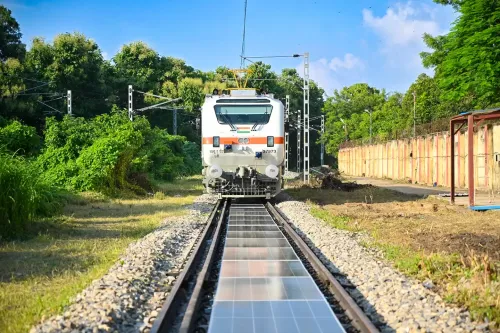
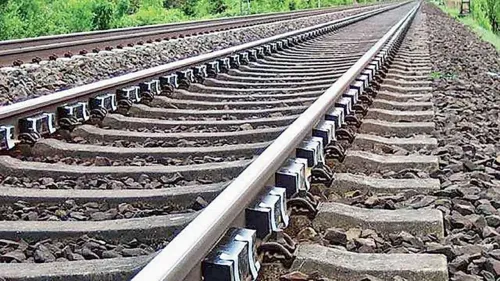
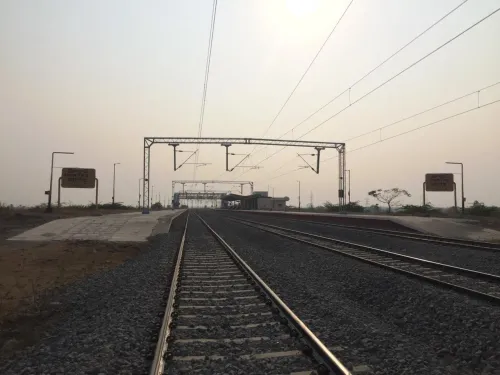
The projects encompass the Gondia-Jabalpur doubling, the Punarakh-Kiul 3rd and 4th line, and the Gamharia-Chandil 3rd and 4th line. Collectively, these initiatives will impact eight districts across Maharashtra, Madhya Pradesh, Bihar, and Jharkhand, expanding the current Indian Railways network by approximately 307 km and are expected to be finalized by 2030.
This proposed multi-tracking initiative aims to enhance accessibility to around 5,407 villages, benefiting a population of nearly 98 lakh.
Moreover, the capacity enhancement is set to significantly improve rail access to several renowned tourist spots throughout the country, which include the Kachnar Shiv Temple (Jabalpur), Kanha National Park (Balaghat), Gangulpara Dam and Waterfall, Pench National Park, Dhuandhar Waterfall, Bargi Dam, Gomji-Somji Temple, Chandil Dam, Dalma Hill Top, Hesakocha Waterfall, Raijama Ghati, and Dalma Wildlife Sanctuary.
The increase in line capacity will drastically improve mobility, leading to enhanced operational efficiency and reliability of services provided by Indian Railways. These multi-tracking plans align with Prime Minister Narendra Modi’s vision for a New India, aiming to empower local populations towards self-reliance through comprehensive regional development and improved employment prospects, as stated in an official announcement.
The projects are integrated into the PM-Gati Shakti National Master Plan, which emphasizes the improvement of multi-modal connectivity and logistic efficiency through coordinated planning and stakeholder engagement. This will facilitate seamless movement of individuals, goods, and services, as highlighted in the statement.
Furthermore, these projects are vital routes for the transportation of essential commodities including coal, steel, iron ore, cement, ballast, stone chips, fly ash, fertilizers, limestone, manganese, dolomite, and food grains. The capacity augmentation is anticipated to generate an additional freight traffic of approximately 52 MTPA (Million Tonnes Per Annum). The environmentally friendly and energy-efficient nature of rail transport will contribute to achieving climate objectives, reducing logistics costs, decreasing oil imports by 6 crore litres, and cutting down CO2 emissions by 30 crore kg, which is equivalent to planting one crore trees, the statement concluded.
Point of View
The government seeks to foster economic growth and development. This initiative aligns with the broader goals of enhancing multimodal transport and reducing logistics costs, reflecting a commitment to a more self-sufficient nation.
NationPress
29 Sept 2026
Frequently Asked Questions
What is the total investment for the approved railway projects?
The total investment for the approved railway projects is Rs. 9,072 crore.
Which states will benefit from these railway projects?
The railway projects will benefit four states: Maharashtra, Madhya Pradesh, Bihar, and Jharkhand.
What is the expected completion date for these projects?
The projects are expected to be completed by 2030.
How many villages will gain enhanced connectivity?
Approximately 5,407 villages will gain enhanced connectivity from these projects.
What type of commodities will be transported through these railway routes?
The railway routes will transport various commodities including coal, steel, iron ore, cement, and food grains.