Indian Railways Receives ₹1.53 Lakh Crore Investment for Expansion
Synopsis
On April 12, the Indian Railways announced a staggering ₹1.53 lakh crore investment to enhance its network. This funding will support 100 new projects, significantly expanding services and improving connectivity across India’s railway system.
Key Takeaways
Government investment of ₹1.53 lakh crore for Indian Railways.
100 new projects covering over 6,000 km of rail network.
Focus on enhancing connectivity and efficiency.
Significant benefits for key states like Maharashtra and Bihar.
Projects aligned with the PM Gati Shakti National Master Plan.
New Delhi, April 12 (NationPress) The Indian Railways is on the brink of a significant transformation, as the government has greenlit an impressive investment of Rs 1.53 lakh crore for 100 new projects in the fiscal year 2025-26, extending over 6,000 kilometres of railway infrastructure, as reported by the Ministry of Railways on Sunday.
In comparison to FY 2024–25, during which 64 projects valued at Rs 72,869 crore covering more than 2,800 kilometres were approved, there has been a 56% increase in project approvals, a 114% rise in route coverage, and a substantial 110% escalation in financial commitment, according to the ministry's factsheet.
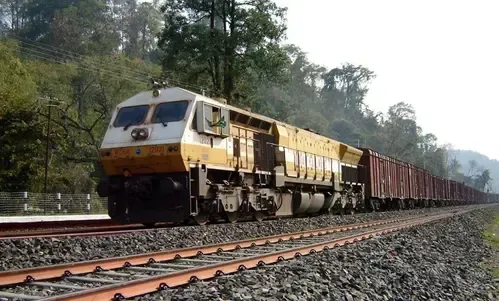
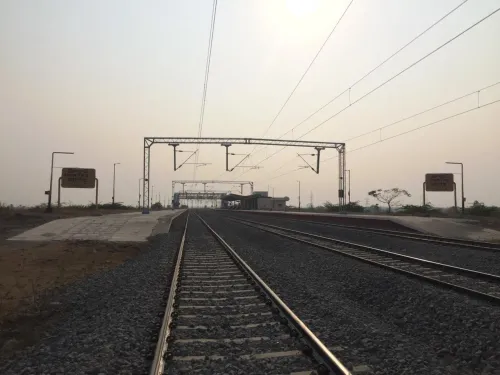
The sanctioned projects encompass new rail lines, doubling and multitracking initiatives, as well as bypass lines, flyovers, and chord lines. These efforts are strategically designed to alleviate congestion on overloaded routes, enhance punctuality, and improve the overall passenger experience while increasing connectivity to less accessible regions. The expected outcome is a significant boost in operational efficiency and a reduction in travel duration across the railway network.
The projects will impact nearly all major states, promoting a well-rounded and inclusive growth of the railway system. Key states such as Maharashtra (17 projects), Bihar (11), Jharkhand (10), and Madhya Pradesh (9) are highlighted due to their essential roles in freight corridors, industrial connectivity, and passenger demand.
The concentration of developments in these areas is set to fortify freight corridors, enhance industrial connections, and facilitate passenger movement. These states are integral to India’s logistics network, and improved connectivity will yield widespread benefits for the economy, as stated in the factsheet.
These initiatives align with the PM Gati Shakti National Master Plan, extending beyond mere infrastructure development to foster social change. A significant emphasis is placed on enhancing rail connectivity in tribal and remote regions. Notable projects, such as the Rowghat–Jagdalpur line in Chhattisgarh and various corridors in Jharkhand and Odisha, will provide access to markets, healthcare, education, and job opportunities, integrating underserved communities into the broader spectrum of national growth.
Financially, this expansion represents a transformative shift towards substantial investments. More than 35 projects surpass the Rs 1,000 crore mark, forming the foundation of corridor-level enhancements. Major undertakings include the Kasara–Manmad 3rd and 4th line (131 km) with an investment of around Rs 10,150 crore, the Kharsia–Naya Raipur–Parmalkasa 5th & 6th line (278 km) at over Rs 8,740 crore, the Itarsi–Nagpur 4th line (297 km) at over Rs 5,450 crore, and the Secunderabad (Sanathnagar)–Wadi 3rd and 4th line (173 km) at more than Rs 5,000 crore. Collectively, these projects represent over Rs 28,000 crore, emphasizing the intent to bolster high-density trunk routes.
The initiatives are strategically aligned with the Mission 3000 MT (million tonnes) initiative aimed at significantly increasing cargo capacity. Energy corridor projects are predominant, facilitating quicker coal and mineral transportation while enhancing energy security. High-Density Network projects seek to alleviate congestion on crucial routes, while the Rail Sagar Corridor improves port connectivity and coastal commerce. Together, these efforts will optimize overall network efficiency and logistics performance, according to the factsheet.
This substantial investment is anticipated to generate considerable employment, invigorate demand in essential sectors such as steel and cement, and lower logistics expenses nationwide. As these projects unfold, they will enhance railway capacity, elevate service quality, and serve as a catalyst for India's economic advancement. "This is not just incremental progress—this is India paving the way for its next economic leap," the report concluded.
Point of View
It's imperative to recognize the significance of this investment by Indian Railways. The capital infusion not only promises infrastructural growth but also aims to improve connectivity, supporting underserved regions and fostering economic development across the nation. This comprehensive approach aligns with national priorities and reflects a commitment to holistic progress.
NationPress
16 Sept 2026
Frequently Asked Questions
What is the total investment approved for Indian Railways?
The government has approved a total investment of ₹1.53 lakh crore for Indian Railways.
How many projects are included in this investment?
The investment supports 100 new projects across the railway network.
What will be the impact of these projects?
These projects aim to enhance connectivity, improve punctuality, and decongest railway routes.
Which states will benefit the most from these projects?
Key states include Maharashtra, Bihar, Jharkhand, and Madhya Pradesh.
How will this investment affect employment?
This investment is expected to generate substantial employment opportunities across various sectors.