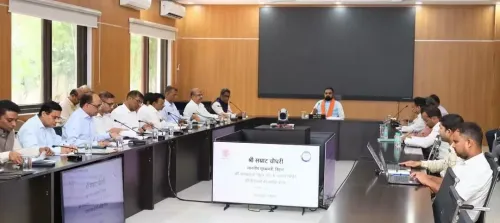
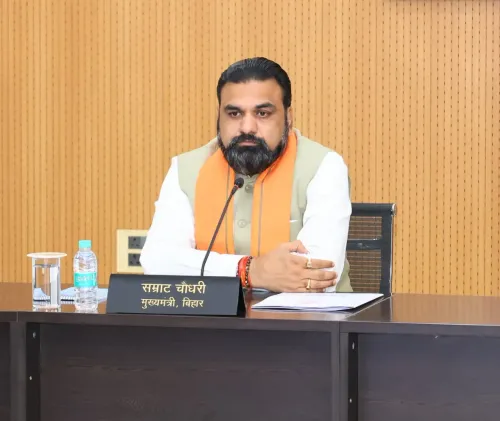
CM Samrat Choudhary Approves Court Buildings in 4 Bihar Districts
Synopsis
Bihar Chief Minister Samrat Choudhary has sanctioned over ₹164 crore to build new court complexes in Siwan, East Champaran, Begusarai, and Nawada — a significant push to strengthen judicial infrastructure and reduce case pendency across the state.
Key Takeaways
Bihar CM Samrat Choudhary announced administrative approval for new court buildings in four districts on 24 June 2026 .
Motihari (East Champaran) receives the largest allocation — ₹53.02 crore for 20 court buildings .
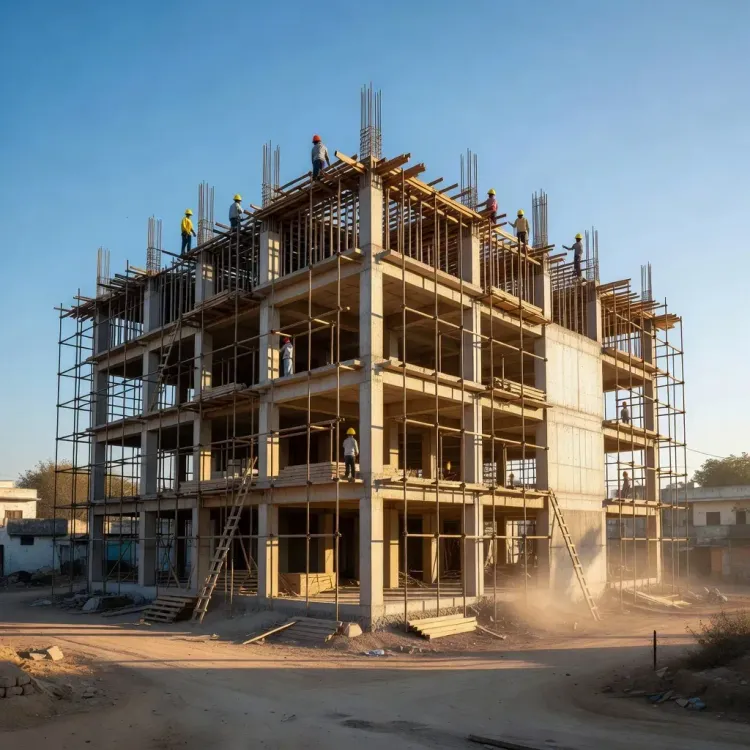
Begusarai is sanctioned ₹39.04 crore for a 15-court G+7 multi-storey complex , the tallest of the four projects.
Total combined outlay across all four projects is approximately ₹164.77 crore .
Amenity buildings and hajat (lock-up) facilities are included in the Siwan and Nawada packages.
The approvals are framed under the state's Viksit Bihar governance agenda and aim to reduce judicial pendency and improve citizen access to courts.
Bihar Chief Minister Samrat Choudhary on Wednesday, 24 June 2026 announced administrative approval for the construction of new court buildings across four districts of Bihar, with a combined outlay of over ₹1.64 crore — marking one of the state's largest single-round judicial infrastructure sanctions in recent years.
Context
Posting on X, CM Choudhary listed district-wise approvals: ₹34.33 crore for 10 court buildings, an amenity building, and a hajat (lock-up) building at Maharajganj, Siwan; ₹53.02 crore for 20 court buildings at Motihari, East Champaran; ₹39.04 crore for 15 court buildings (G+7) at Begusarai; and ₹38.38 crore for 10 court buildings, an amenity building, and a hajat building at Rajouri, Nawada. The total sanctioned amount across the four projects stands at ₹1,64,77 lakh (approximately ₹164.77 crore).
In his post, the Chief Minister stated that these projects will strengthen judicial infrastructure, accelerate judicial proceedings, and make better judicial facilities available to ordinary citizens — 'आम नागरिकों को बेहतर न्यायिक सुविधाएं उपलब्ध होंगी' ('better judicial facilities will be available to common citizens').
Policy Backdrop
Bihar's push to expand court infrastructure aligns with the national e-Courts Mission Mode Project, launched in 2007, which has funded phased improvements to physical court infrastructure across Indian states. The project has undergone multiple phases, with state governments supplementing central grants through their own budgets and Finance Commission allocations.
The four districts receiving approvals — Siwan, East Champaran, Begusarai, and Nawada — are among Bihar's mid-tier districts where rising case loads have strained existing court facilities. Comparable court-building approvals have been carried out in other Bihar districts in preceding years, reflecting an incremental but sustained expansion strategy. The G+7 specification for the Begusarai complex signals a move toward high-density, multi-floor judicial campuses suited to consolidating court functions.
Stakeholders and Impact
The primary beneficiaries are litigants and judicial officers in the four districts, where inadequate courtroom space has historically contributed to hearing delays and overcrowding. New amenity bhavans (amenity buildings) and hajat bhavans (lock-up facilities) at Maharajganj and Rajouri will also improve conditions for undertrial prisoners produced before courts.
Lawyers' associations and district bar councils in these towns are among the stakeholders who have long pressed for upgraded facilities. Improved infrastructure is also expected to support faster disposal of pending cases, a metric that courts and the state government are both closely watched on. Bihar carries one of the higher per-court pendency loads among large Indian states.
What's Next
Administrative approval is the first formal step; the projects must now move through tendering, contractor selection, and construction phases before any physical work begins. Observers will watch whether the state government issues tenders promptly and whether construction timelines are publicly disclosed. Further rounds of judicial infrastructure approvals for other Bihar districts remain possible, given that the state has flagged judicial modernisation as a governance priority under its Viksit Bihar agenda.
Point of View
District-level delivery of Bihar's broader governance narrative, channelling capital expenditure into judicial infrastructure at a time when court pendency remains a visible public grievance. By naming specific rupee figures and building counts for each district, CM Choudhary signals accountability and specificity — a political posture distinct from generic development announcements. The inclusion of multi-storey (G+7) construction at Begusarai points toward a shift from incremental additions to consolidated judicial campuses, consistent with a longer national push to modernise subordinate court facilities. Whether the approvals translate into completed structures on schedule will be the real test of the state's administrative capacity.
NationPress
23 Sept 2026
Frequently Asked Questions
Which four Bihar districts will get new court buildings?
The four districts are Siwan (at Maharajganj), East Champaran (at Motihari), Begusarai, and Nawada (at Rajouri), as announced by Bihar CM Samrat Choudhary on 24 June 2026.
How much money has been sanctioned for Bihar's new court buildings?
A total of approximately ₹164.77 crore has been sanctioned: ₹34.33 crore for Siwan, ₹53.02 crore for East Champaran, ₹39.04 crore for Begusarai, and ₹38.38 crore for Nawada.
How many court buildings will be built under this approval?
A total of 55 court buildings will be built — 10 in Maharajganj (Siwan), 20 in Motihari (East Champaran), 15 in Begusarai, and 10 in Rajouri (Nawada) — along with amenity and hajat buildings at two sites.
What is the e-Courts Mission Mode Project and how does it relate to Bihar?
The e-Courts Mission Mode Project, launched nationally in 2007, funds phased improvements to physical court infrastructure across Indian states. Bihar has used a combination of central grants and state funds to expand court facilities in its districts under this broader framework.
What is a hajat bhavan in the context of Bihar court buildings?
A hajat bhavan is a lock-up or holding facility attached to a court complex where undertrial prisoners are held when produced before a judge. The new approvals include hajat buildings at Maharajganj and Rajouri.