CM Samrat Choudhary Pays Tribute to JP on Sampoorna Kranti Divas
Synopsis
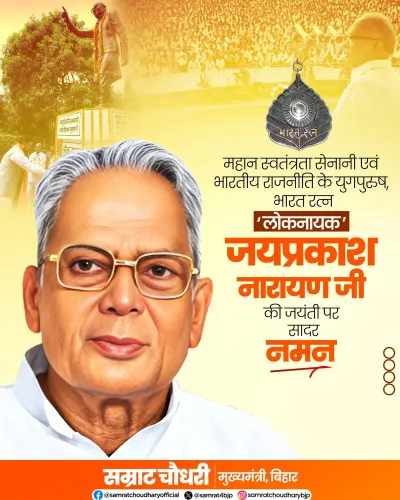
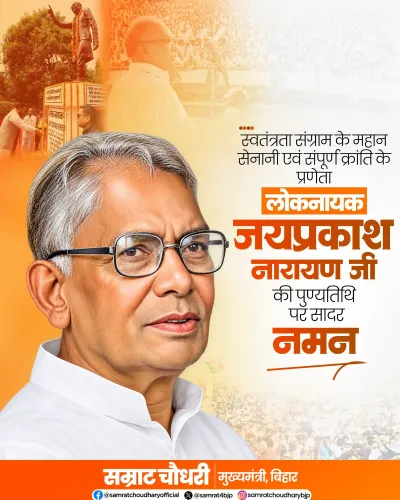
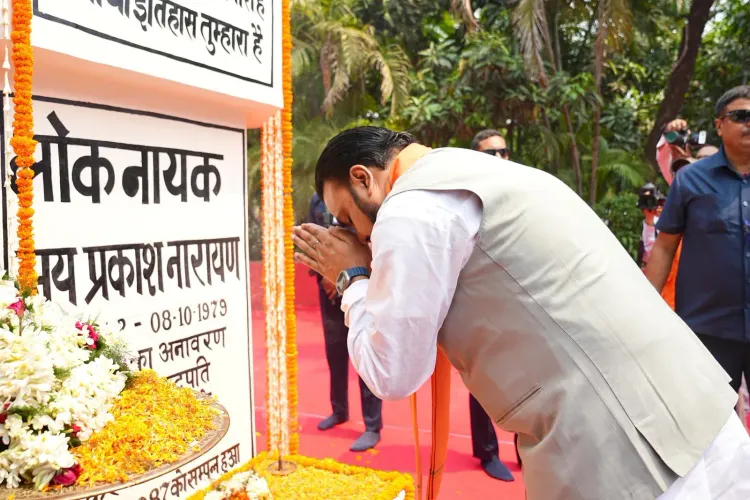
Bihar Chief Minister Samrat Choudhary paid floral tributes to Loknayak Jayaprakash Narayan on Sampoorna Kranti Divas, 5 June 2026, invoking JP's 1974 Total Revolution movement as a guiding ideal for good governance, social justice, and democratic values in Bihar.
Key Takeaways
Bihar CM Samrat Choudhary paid floral tributes at Jayaprakash Narayan's statue on 5 June 2026 , marking Sampoorna Kranti Divas .
Jayaprakash Narayan launched the Sampoorna Kranti (Total Revolution) movement on 5 June 1974 from Patna, Bihar .
The movement was directed against corruption, misgovernance, and the Congress government's policies, championing rights of backward classes, Dalits, and the poor .
JP's movement contributed to the formation of India's first non-Congress government, the Janata Party government of 1977 .
CM Choudhary described JP's ideals as a continuing inspiration for good governance, social justice, and democratic values .
Bihar BJP leaders regularly invoke JP's legacy to link contemporary governance with anti-corruption and social justice themes from the 1970s.
Bihar Chief Minister Samrat Choudhary paid floral tributes at the statue of Loknayak Jayaprakash Narayan on Sampoorna Kranti Divas, observed on 5 June 2026, honouring the legacy of the leader who launched the Total Revolution movement from Bihar's soil in 1974.
Context
In his post, CM Choudhary wrote: 'सम्पूर्ण क्रांति दिवस के अवसर पर आज लोकनायक जयप्रकाश नारायण जी की प्रतिमा पर पुष्पार्चन कर उन्हें श्रद्धापूर्वक नमन किया' [On the occasion of Sampoorna Kranti Divas, I paid floral tributes at the statue of Loknayak Jayaprakash Narayan and offered my respectful salutation]. He further noted that JP raised the call for Total Revolution from 'the sacred soil of this very Bihar' in defence of the rights of the backward classes, Dalits, the deprived, and the poor, and against corruption, misgovernance, and what he described as the anti-people policies of the Congress.
The Chief Minister added that JP's thoughts and ideals 'continue to inspire all of us for good governance, social justice, and democratic values' even today.
Policy Backdrop
Jayaprakash Narayan formally launched the Sampoorna Kranti (Total Revolution) movement on 5 June 1974 at a massive student rally in Patna, Bihar. The movement called for a complete transformation of political, social, and economic life, and was directed against the then Congress-led central government, which JP accused of corruption and authoritarian governance.
The movement drew participation from students, farmers, and opposition parties across the country, eventually contributing to the formation of the Janata Party government in 1977 — India's first non-Congress government at the Centre. The 1975 Emergency declared by the Congress government is widely seen as a direct response to the pressure generated by JP's movement.
Stakeholders and Impact
JP's movement centred on the rights of backward classes, Dalits, and economically marginalised communities, themes that remain central to Bihar's political discourse. BJP leaders in the state regularly invoke JP's legacy to anchor their governance narrative in the tradition of anti-corruption and social justice politics, even as JP himself was not affiliated with the BJP.
This cross-ideological referencing — citing a socialist icon within a BJP framework — reflects a broader pattern in Bihar where JP's legacy is claimed by multiple political formations, including the RJD and JD(U). Annual observances of Sampoorna Kranti Divas by state leaders serve to reinforce democratic and egalitarian values in public messaging.
What's Next
Reactions from opposition parties, including the RJD and Congress, to the Chief Minister's framing of JP's legacy are expected to follow, given both parties also claim a historical connection to the movement. Any linkage between the tribute and ongoing Bihar legislative assembly debates on social justice schemes or backward-class welfare policies will be watched closely in the coming days.
JP's legacy continues to serve as a touchstone for governance accountability and democratic values in Bihar, and annual observances by sitting governments signal that this ideological inheritance will remain a live element of state politics.
Point of View
Making JP's legacy a perpetually contested political resource in Bihar. The annual ritual ensures that accountability and democratic values remain part of the state's political vocabulary, even as rival parties dispute who genuinely carries JP's torch.
NationPress
21 Oct 2026
Frequently Asked Questions
What is Sampoorna Kranti Divas and why is it observed on 5 June?
Sampoorna Kranti Divas marks the anniversary of Loknayak Jayaprakash Narayan's launch of the Total Revolution movement on 5 June 1974 at a student rally in Patna, Bihar, calling for complete political, social, and economic transformation against the Congress government.
Who was Jayaprakash Narayan and what was his role in Indian politics?
Jayaprakash Narayan, known as Loknayak (People's Leader), was a freedom fighter and socialist leader who led the 1974 Sampoorna Kranti movement against corruption and authoritarianism, inspiring the 1977 Janata Party government — India's first non-Congress government at the Centre.
Why do Bihar BJP leaders pay tribute to JP, who was a socialist leader?
Bihar BJP leaders invoke JP's legacy to connect their governance narrative with anti-corruption and social justice themes from the 1970s, a pattern of cross-ideological referencing common in Bihar where JP is claimed by multiple parties including RJD, JD(U), and BJP.
What did CM Samrat Choudhary say about Jayaprakash Narayan on Sampoorna Kranti Divas 2026?
CM Samrat Choudhary said JP raised the call for Total Revolution from Bihar's soil in defence of backward classes, Dalits, the deprived, and the poor, and that JP's ideals continue to inspire good governance, social justice, and democratic values.
What was the outcome of Jayaprakash Narayan's Sampoorna Kranti movement?
The Sampoorna Kranti movement contributed to the formation of the Janata Party government in 1977, India's first non-Congress government at the Centre, after the Congress government declared the Emergency in 1975 partly in response to the pressure generated by JP's movement.