CM Samrat Choudhary calls for child-labour-free Bihar
Synopsis
Bihar Chief Minister Samrat Choudhary marked World Day Against Child Labour on 12 June 2026 by pledging quality education and safe childhoods for every child, calling for a child-labour-free Bihar as part of the broader Viksit Bharat vision.
Key Takeaways
Bihar CM Samrat Choudhary posted on 12 June 2026 , World Day Against Child Labour, calling for a collective societal pledge on child rights.
He specifically invoked the goal of a 'child-labour-free Bihar' linked to the national Viksit Bharat vision.
India's anti-child-labour framework includes the Child Labour (Prohibition and Regulation) Act, 1986 , amended in 2016 , and the Right to Education Act, 2009 .
The National Child Labour Project Scheme (1988) and Sarva Shiksha Abhiyan (2001) remain key rehabilitation and enrolment instruments in states like Bihar.
India's commitments align with UN SDG 8.7 , which targets the elimination of all forms of child labour.
Primary stakeholders are Bihar's low-income families and school-age children in districts with high informal labour concentration.
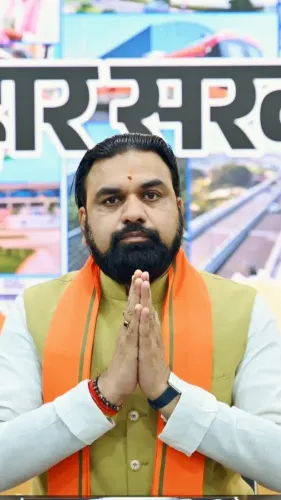
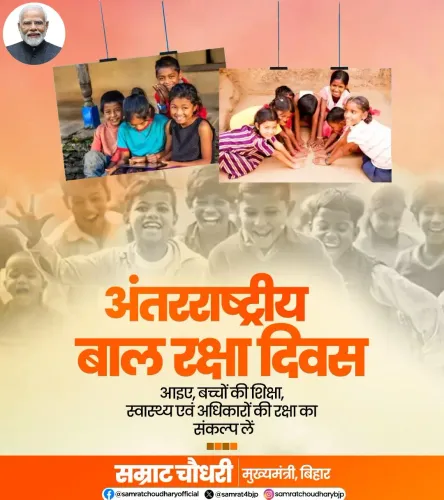
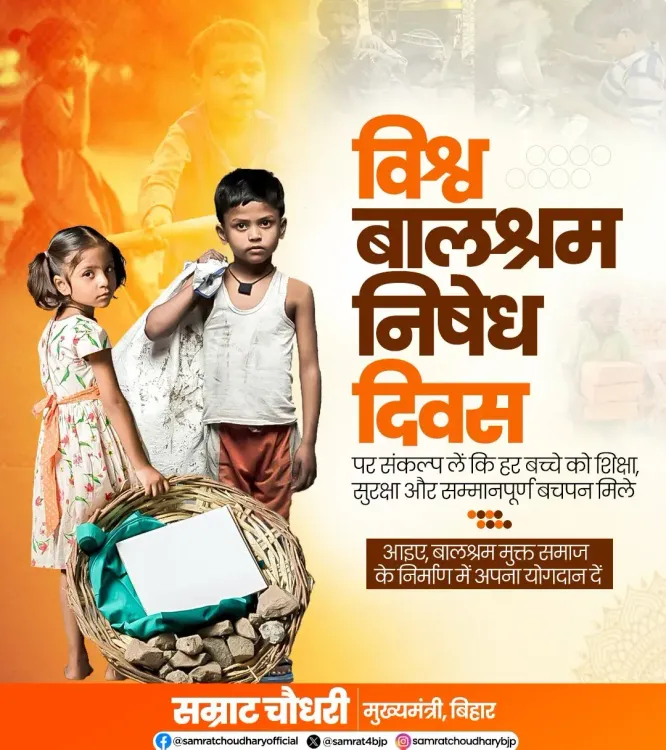
Bihar Chief Minister Samrat Choudhary on Friday, 12 June 2026, marked World Day Against Child Labour by calling on citizens to collectively pledge quality education, safe environments, and dignified childhoods for every child in the state and the country.
Posting in Hindi on the occasion of the global observance, CM Choudhary wrote: 'विश्व बालश्रम निषेध दिवस के अवसर पर आइए संकल्प लें' ('On the occasion of World Day Against Child Labour, let us take a pledge') that every child receives quality education, a safe environment, better opportunities, and a respectful childhood. He added that protecting children's rights is a collective responsibility of all of society.
The Chief Minister further called for building a society where no child is forced to labour out of compulsion, but instead receives education and opportunities to realise their dreams. He specifically invoked the twin goals of a 'child-labour-free Bihar' and a 'Viksit Bharat' (Developed India), urging active public participation in achieving both.
Context
World Day Against Child Labour is observed every year on 12 June under the framework of the International Labour Organization (ILO) to spotlight the scale of child labour globally and renew commitments to its elimination. India is a signatory to key ILO conventions and has embedded anti-child-labour provisions within its constitutional and legislative framework.
Statements from state leaders on this date have consistently linked school access to labour elimination, reflecting a long-standing policy consensus that education is the primary lever for removing children from the workforce.
Policy Backdrop
India's legislative architecture against child labour spans several decades. The Child Labour (Prohibition and Regulation) Act, 1986 banned the employment of children in hazardous occupations; a 2016 amendment extended protections further. The Right to Education Act, 2009 mandates free and compulsory education for all children aged 6 to 14, directly addressing the supply side of child labour.
On the rehabilitation front, the National Child Labour Project Scheme, introduced in 1988, provides for identification, withdrawal, and rehabilitation of child workers through education and vocational training. The Sarva Shiksha Abhiyan, launched in 2001, drove mass school enrolment as a structural counter to child labour across states including Bihar.
Bihar, as one of India's most populous states with significant concentrations of low-income households, has periodically been a focal point for national child labour eradication efforts aligned with the UN Sustainable Development Goal 8.7, which targets an end to all forms of child labour by 2025.
Stakeholders and Impact
The primary stakeholders are Bihar's school-age children and their families, particularly those in low-income and marginalised communities where economic pressure historically pushes minors into informal labour. Civil society organisations, district administration, and school authorities are the operational actors on the ground.
CM Choudhary's public pledge aligns state leadership messaging with both central government schemes and international commitments, signalling continued political prioritisation of child welfare as a governance theme in Bihar.
What's Next
Observers will watch for concrete follow-through in the form of state budget allocations for rehabilitation and education programmes, child labour survey data from Bihar's districts, and any fresh state-level policy announcements tied to this occasion. The broader national push under Viksit Bharat provides a framing that could see renewed central-state coordination on SDG 8.7 targets in the months ahead.
Point of View
He ties state welfare messaging to a measurable SDG benchmark, giving the statement more policy weight than a routine ceremonial post. This follows a pattern among BJP-governed states of using international observances to reinforce development credentials at the grassroots level. The real test will be whether the pledge translates into fresh budget lines or enforcement drives in Bihar's high-risk districts.
NationPress
26 Oct 2026
Frequently Asked Questions
What did Bihar CM Samrat Choudhary say on World Day Against Child Labour 2026?
CM Samrat Choudhary called on citizens to pledge quality education, safe environments, and dignified childhoods for every child, and urged collective action to build a child-labour-free Bihar as part of the Viksit Bharat vision.
When is World Day Against Child Labour observed?
World Day Against Child Labour is observed every year on 12 June under the framework of the International Labour Organization (ILO) to highlight child labour issues globally.
What laws protect children from child labour in India?
The Child Labour (Prohibition and Regulation) Act of 1986, amended in 2016, and the Right to Education Act of 2009 are the primary laws protecting children from labour and guaranteeing free schooling for ages 6 to 14.
What is the National Child Labour Project Scheme?
Introduced in 1988, the National Child Labour Project Scheme identifies, withdraws, and rehabilitates child workers by providing education and vocational training across India, including in Bihar.
What is India's commitment on child labour under the SDGs?
India is aligned with UN Sustainable Development Goal 8.7, which calls for the elimination of all forms of child labour, and successive state and central governments have framed anti-child-labour policies within this target.