CM Samrat Choudhary pledges child rights on Children's Day
Synopsis
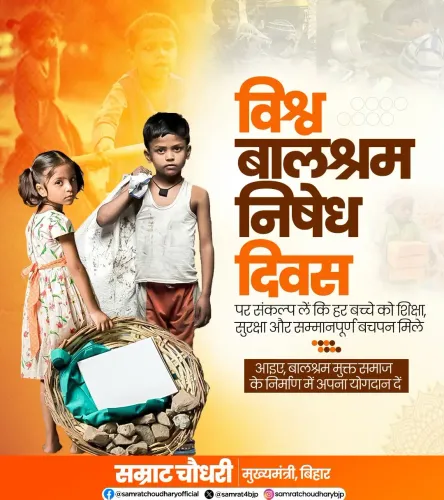
Bihar Chief Minister Samrat Choudhary marked International Children's Day on 1 June 2026 by calling for a collective resolve to protect children's education, health and rights, framing child development as the cornerstone of a developed India.
Key Takeaways
Bihar Chief Minister Samrat Choudhary posted on X on 1 June 2026 to mark International Children's Day .
He called for a public resolve to protect children's education, health and rights , describing children as the nation's future.
India ratified the UN Convention on the Rights of the Child in 1992 and has since built a framework of laws including the Right to Education Act, 2009 and POCSO, 2012 .
Key central schemes active in Bihar include ICDS (since 1975), POSHAN Abhiyaan (2018) and Beti Bachao Beti Padhao (2015).
The National Commission for Protection of Child Rights , set up in 2007 , provides statutory oversight of child rights across India.
Bihar's 2026-27 budget allocations for education and child health will be a key indicator of follow-through on these commitments.
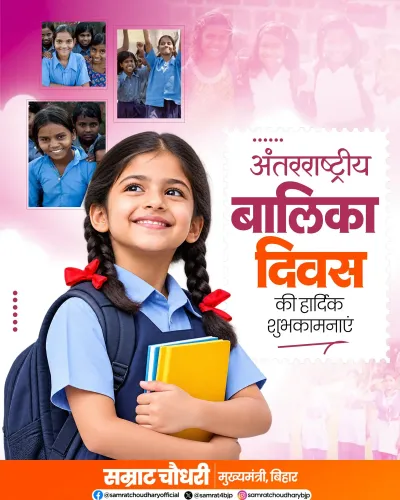
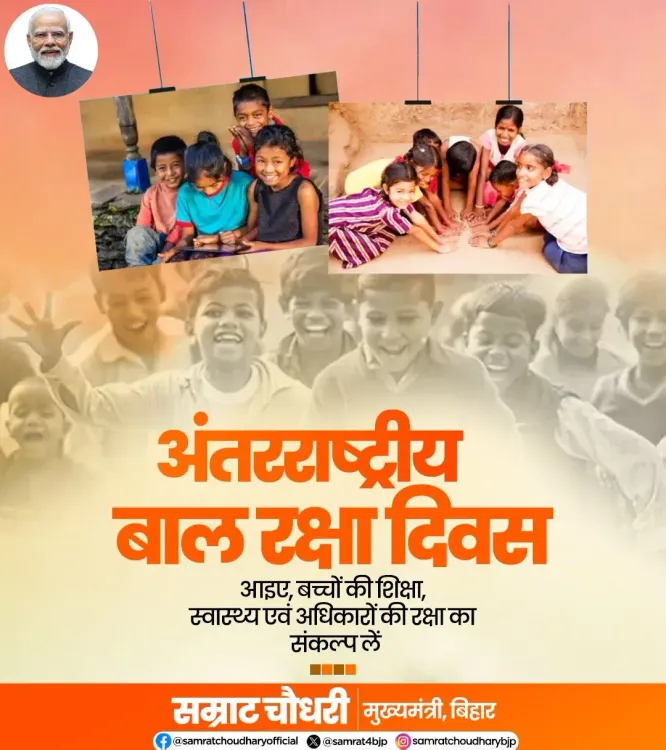
Bihar Chief Minister Samrat Choudhary on Monday, 1 June 2026 marked International Children's Day by calling on citizens to renew their commitment to the education, health, and rights of children, describing them as the foundation of a strong and prosperous India.
Posting in Hindi on X, the Chief Minister wrote: 'अंतरराष्ट्रीय बाल रक्षा दिवस पर आइए, बच्चों की शिक्षा, स्वास्थ्य एवं अधिकारों की रक्षा का संकल्प लें' ['On International Children's Day, let us resolve to protect the education, health and rights of children']. He added that children are the nation's future and their safe, healthy, and value-based development is the cornerstone of a 'capable, prosperous and developed India'.
Context
International Children's Day is observed on 1 June each year, rooted in the 1925 World Conference for the Well-being of Children in Geneva and later reinforced by the UN Convention on the Rights of the Child, which India ratified in 1992. The day is a global occasion for governments and civil society to reaffirm commitments on child welfare, protection from exploitation, and access to quality education and healthcare. Political leaders across India routinely use the occasion to highlight state and central programmes aimed at children.
Policy Backdrop
India's child-welfare architecture rests on several legislative and programmatic pillars. The Right of Children to Free and Compulsory Education Act, 2009 enshrined education as a fundamental right for children aged 6 to 14. The Protection of Children from Sexual Offences Act, 2012 introduced stringent provisions against child sexual abuse, while the Beti Bachao Beti Padhao scheme, launched in 2015, targeted improvement in the child sex ratio and promotion of girl-child education.
On the nutrition front, POSHAN Abhiyaan, rolled out in 2018, aims to reduce stunting, under-nutrition and anaemia among children. The Integrated Child Development Services scheme, operating since 1975, continues to provide nutrition support, health check-ups and preschool education to children under six. Oversight of these rights rests with the National Commission for Protection of Child Rights, a statutory body established in 2007.
In Bihar, these central programmes are layered with state-level initiatives under the Samagra Shiksha framework, as the state works to close persistent gaps in its human development indicators, particularly in rural districts.
Stakeholders and Impact
Bihar's school-going children and beneficiaries of the ICDS and POSHAN Abhiyaan networks are the primary stakeholders. Child welfare organisations operating in the state view such public messaging by senior political leaders as an opportunity to press for stronger implementation of existing schemes and faster grievance redressal through the National Commission for Protection of Child Rights.
Analysts note that Bihar, with one of India's youngest demographic profiles, stands to gain significantly from improvements in child health and learning outcomes — a direct contributor to the broader demographic dividend the country is seeking to harness over the coming decade.
What's Next
Attention will now turn to Bihar's 2026-27 budget allocations for education and child health, and whether the state advances any new measures for National Education Policy implementation at the school level. Civil society groups are expected to use the occasion to demand updated data on child nutrition and school enrolment rates in the state. The Chief Minister's message signals that child welfare will remain a visible political and governance priority in Bihar in the months ahead.
Point of View
Health and rights together, the statement signals an intent to be seen as a steward of Bihar's young demographic, which is both a political asset and a governance challenge. The post connects to a long policy arc stretching from the Right to Education Act through POSHAN Abhiyaan, suggesting continuity rather than new initiative. Whether the messaging translates into measurable budget commitments in Bihar's 2026-27 cycle will be the real test of its seriousness.
NationPress
15 Oct 2026
Frequently Asked Questions
Why is International Children's Day celebrated on 1 June?
International Children's Day is observed on 1 June each year, tracing its origins to the 1925 World Conference for the Well-being of Children in Geneva, and is used globally to highlight child welfare, protection and rights.
What did Bihar CM Samrat Choudhary say on Children's Day 2026?
Bihar CM Samrat Choudhary called on citizens to pledge protection of children's education, health and rights, saying children are the nation's future and their safe, healthy development is the foundation of a developed India.
What schemes does Bihar use to protect child rights?
Bihar implements central schemes including Integrated Child Development Services, POSHAN Abhiyaan, Beti Bachao Beti Padhao and Samagra Shiksha, alongside oversight by the National Commission for Protection of Child Rights.
What is the Right to Education Act in India?
The Right of Children to Free and Compulsory Education Act, 2009 guarantees free and compulsory education as a fundamental right to all children aged 6 to 14 in India.
What is POSHAN Abhiyaan?
POSHAN Abhiyaan, launched in 2018, is India's flagship nutrition mission aimed at reducing stunting, under-nutrition and anaemia among children, pregnant women and lactating mothers across the country.