CM Samrat Choudhary Greets Dairy Farmers on World Milk Day
Synopsis
Bihar Chief Minister Samrat Choudhary marked World Milk Day on 1 June 2026 by saluting dairy farmers nationwide, highlighting their role in strengthening nutrition, health, and the rural economy — a message that underscores the political and policy weight of India's dairy sector.
Key Takeaways
Bihar Chief Minister Samrat Choudhary posted World Milk Day greetings on 1 June 2026 , addressing all milk producers across the country.
He credited dairy farmers with 'strengthening the country's nutrition, health and rural economy' through their hard work and dedication.
World Milk Day is observed on 1 June every year, designated by the FAO in 2001 to highlight dairy's role in food security and rural livelihoods.
India became the world's largest milk producer following Operation Flood , launched by the NDDB in 1970 , which established the cooperative dairy model still in use today.
The dairy sector contributes roughly 4–5 per cent of India's GDP and supports millions of smallholder farmers, including those in rural Bihar .
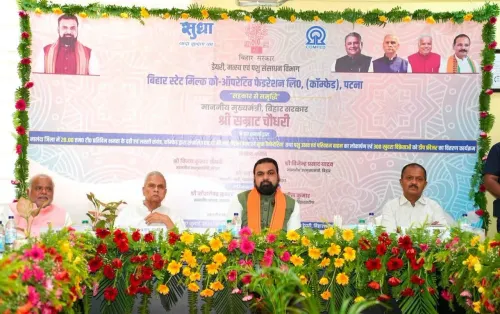
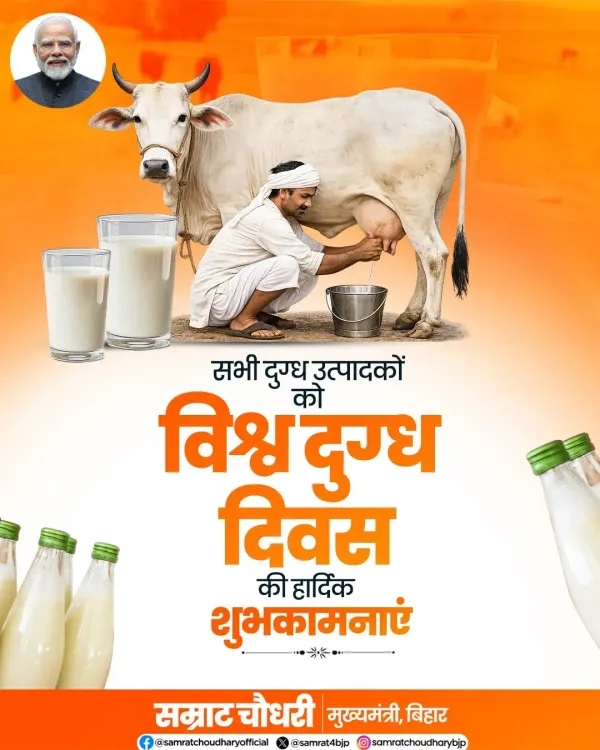
Bihar Chief Minister Samrat Choudhary on Sunday, 1 June 2026, extended greetings to dairy farmers across the country on World Milk Day, acknowledging their contribution to national nutrition, public health, and the rural economy.
Posting on X, the Chief Minister wrote in Hindi: 'सभी दुग्ध उत्पादकों को विश्व दुग्ध दिवस की हार्दिक शुभकामनाएं' ('Heartfelt greetings to all milk producers on World Milk Day'), adding that their 'hard work and dedication plays an important role in strengthening the country's nutrition, health and rural economy.'
Context
World Milk Day is observed every year on 1 June, a date designated by the Food and Agriculture Organisation (FAO) in 2001 to recognise the dairy sector's role in food security and rural livelihoods worldwide. The occasion is marked by governments, cooperatives, and civil society organisations to spotlight the economic and nutritional value of milk and dairy products.
For a state like Bihar — with a predominantly rural, agriculture-dependent population — dairy farming serves as a critical supplementary income source for smallholder households alongside crop cultivation.
Policy Backdrop
India's dairy sector traces its modern foundations to Operation Flood, launched in 1970 by the National Dairy Development Board (NDDB), which created the cooperative milk procurement model and propelled India to become the world's largest milk producer. The cooperative structure established under that programme continues to underpin state-level milk federations, including those operating in Bihar.
The dairy sector contributes roughly 4–5 per cent of India's GDP and provides livelihoods to millions of smallholders. National priorities around animal husbandry, cooperative strengthening, and nutrition security — including goals under the POSHAN initiative — have kept dairy firmly on the policy agenda at both the central and state levels.
Stakeholders and Impact
The Chief Minister's message directly addresses dairy farmers and rural households who depend on milk production as a source of income and nutrition. In Bihar, where a large share of the population lives in villages, dairy supplements farm earnings and provides protein-rich food at the household level.
State leaders marking World Milk Day publicly reinforces the political salience of the dairy constituency and signals continued government attention to cooperative dairy infrastructure, procurement pricing, and rural nutrition programmes.
What's Next
Observers will watch for any follow-up policy announcements from the Bihar government, including state budget allocations for dairy cooperatives, revisions to milk procurement prices, or utilisation of central funds under the Dairy Processing and Infrastructure Development Fund. Such steps would translate the ceremonial recognition of World Milk Day into concrete support for the state's dairy farmers.
Point of View
The message aligns with the broader BJP-led government's emphasis on cooperative dairy infrastructure and POSHAN-linked food security goals. It also keeps Bihar's political leadership visible on an issue where central schemes and state delivery mechanisms must work in tandem. Whether the sentiment translates into procurement-price revisions or infrastructure investment will be the real test of policy intent.
NationPress
15 Oct 2026
Frequently Asked Questions
What is World Milk Day and why is it celebrated on 1 June?
World Milk Day is an annual global observance on 1 June, designated by the Food and Agriculture Organisation (FAO) in 2001 to recognise the dairy sector's contribution to nutrition, food security, and rural livelihoods worldwide.
What did Bihar CM Samrat Choudhary say on World Milk Day 2026?
Bihar Chief Minister Samrat Choudhary extended greetings to all dairy farmers on 1 June 2026, saying their hard work and dedication plays an important role in strengthening the country's nutrition, health, and rural economy.
Why is dairy farming important for Bihar's rural economy?
Bihar has a predominantly rural, agriculture-dependent population for whom dairy farming provides critical supplementary income alongside crop cultivation, while also improving household nutrition through access to milk and dairy products.
What is Operation Flood and how did it shape India's dairy sector?
Operation Flood was a dairy development programme launched in 1970 by the National Dairy Development Board (NDDB) that created the cooperative milk procurement model and made India the world's largest milk producer — a position it has held since.
What policy steps could follow Bihar CM's World Milk Day message?
Analysts will watch for state budget allocations for dairy cooperatives, revisions to milk procurement prices, and utilisation of central funds under the Dairy Processing and Infrastructure Development Fund as concrete follow-through on the government's stated support for dairy farmers.