CM Samrat Choudhary Marks World Food Safety Day 2026
Synopsis
Bihar Chief Minister Samrat Choudhary marked World Food Safety Day on 7 June 2026 by urging citizens to adopt safe, nutritious and quality food. His message aligns with India's FSSAI-led regulatory framework, the POSHAN Abhiyaan, and global WHO-FAO efforts to reduce foodborne risks and advance public health.
Key Takeaways
Bihar Chief Minister Samrat Choudhary posted a World Food Safety Day message on 7 June 2026 .
He called for adoption of safe, nutritious, and quality food as the foundation of a healthy society and prosperous future.
World Food Safety Day has been observed globally on 7 June every year since 2019 , coordinated by WHO and FAO .
India's food safety framework is anchored in the Food Safety and Standards Act, 2006 and administered by FSSAI .
The POSHAN Abhiyaan (2018) links nutrition and food safety messaging at the state level, including in Bihar .
Key stakeholders include consumers, food processors, farmers, and state health departments responsible for enforcement.
Bihar Chief Minister Samrat Choudhary on Sunday, 7 June 2026 extended greetings on World Food Safety Day, calling on citizens to embrace safe, nutritious, and quality food as the foundation of a healthy society and a prosperous future.
Context
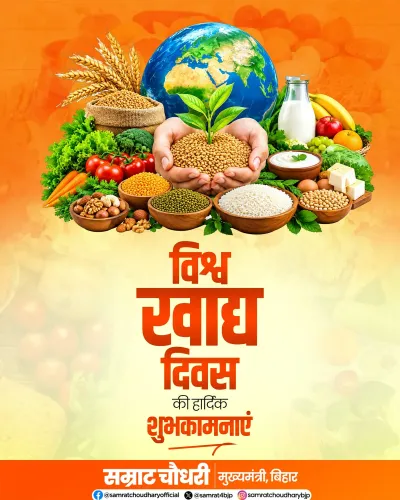
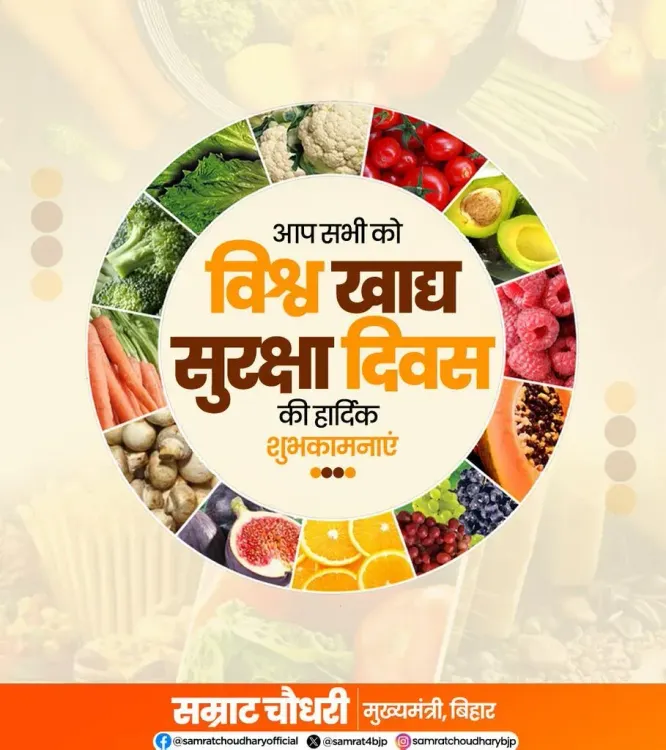
Posting in Hindi on the occasion of World Food Safety Day, CM Choudhary wrote: 'आइए, सुरक्षित, पौष्टिक और गुणवत्तापूर्ण भोजन को अपनाकर स्वस्थ समाज के निर्माण में अपना योगदान दें' ['Let us contribute to building a healthy society by adopting safe, nutritious and quality food']. He added that 'healthy food is the cornerstone of a healthy life and a prosperous future.' The message was accompanied by an image and a set of hashtags including #WorldFoodSafetyDay, #FoodSafety, and #स्वस्थ_भारत [Healthy India].
World Food Safety Day is observed globally on 7 June every year since 2019, coordinated by the World Health Organization (WHO) and the Food and Agriculture Organization (FAO) to draw attention to foodborne risks and promote safe food handling, production, and consumption.
Policy Backdrop
India's food safety architecture rests on the Food Safety and Standards Act, 2006, which established the Food Safety and Standards Authority of India (FSSAI) as the apex statutory regulator for food quality across the country. The National Food Security Act, 2013 further broadened access to subsidised food grains while incorporating baseline safety provisions for beneficiaries.
At the nutrition level, the POSHAN Abhiyaan, launched in 2018, integrated food safety messaging with state-level nutrition programmes, linking dietary quality to broader public health outcomes and India's commitments under the Sustainable Development Goals on zero hunger and good health. Bihar, as a large eastern state with significant dependence on staple crops such as rice, wheat, and milk, has been a key implementation ground for these central frameworks through its health and agriculture departments.
Stakeholders and Impact
The day's observance carries practical significance for a wide range of actors: consumers seeking reliable food quality, food processors and vendors subject to FSSAI regulations, farmers at the start of the supply chain, and state health departments responsible for inspection and enforcement. In states like Bihar, supply-chain hygiene for staples remains a priority area, with cold-chain infrastructure and laboratory testing capacity continuing to develop.
Messages from state chief ministers on occasions such as this reinforce public awareness of food safety norms and signal political commitment to nutrition-linked health goals — an alignment that feeds into national indices tracking child nutrition, anaemia reduction, and food adulteration rates.
What's Next
FSSAI's annual compliance report on state-level food safety enforcement is a key document to watch for Bihar's standing among Indian states. Any announcements by the Bihar government regarding new food testing laboratories or strengthened supply-chain inspection protocols in the current fiscal year would translate the day's messaging into on-ground action. Sustained progress on food safety in the state will also be reflected in future POSHAN Abhiyaan outcome data and national nutrition surveys.
Point of View
But such posts carry a secondary function: signalling state-level alignment with central regulatory priorities at a time when food adulteration and supply-chain hygiene remain live enforcement challenges for FSSAI. For Bihar, a state with historically high child malnutrition indicators, the framing of food safety as the 'cornerstone of a prosperous future' connects the day's message to longer-term development optics. The hashtag pairing of #WorldFoodSafetyDay with #स्वस्थ_भारत also positions the post within the broader BJP-government narrative around health and nutrition missions. Whether the messaging translates into state-level policy action — new testing infrastructure, stricter enforcement drives — will be the real measure of its significance.
NationPress
21 Oct 2026
Frequently Asked Questions
What is World Food Safety Day and when is it observed?
World Food Safety Day is a global observance held annually on 7 June , established in 2019 and coordinated by the WHO and FAO to promote safe food practices and raise awareness about foodborne risks.
What did Bihar CM Samrat Choudhary say on World Food Safety Day 2026?
CM Samrat Choudhary urged citizens to adopt safe, nutritious and quality food, calling it the cornerstone of a healthy life and a prosperous future, in a post on 7 June 2026 .
What is FSSAI and what role does it play in India's food safety?
FSSAI (Food Safety and Standards Authority of India) is the statutory regulator established under the Food Safety and Standards Act, 2006 , responsible for setting and enforcing food quality standards across the country.
How does Bihar implement food safety norms?
Bihar implements central food safety norms through its health and agriculture departments, with a focus on supply-chain hygiene for staples such as rice, wheat, and milk, in line with FSSAI regulations.
What is the POSHAN Abhiyaan and how does it relate to food safety?
POSHAN Abhiyaan , launched in 2018 , is a national nutrition mission that integrates food safety messaging at the state level, linking dietary quality to public health outcomes and India's SDG commitments on hunger and health.