CM Sawant Hails Jal Jeevan Mission's 85%+ Rural Coverage
Synopsis
Goa Chief Minister Pramod Sawant marked Independence Day eve by highlighting the Jal Jeevan Mission's reach of over 15 crore people and 85%+ rural tap-water coverage, framing PM Modi's 'Har Ghar Nal Se Jal' pledge as a promise being kept at scale.
Key Takeaways
Goa CM Pramod Sawant posted on August 14, 2026 , the eve of Independence Day, citing Jal Jeevan Mission progress.
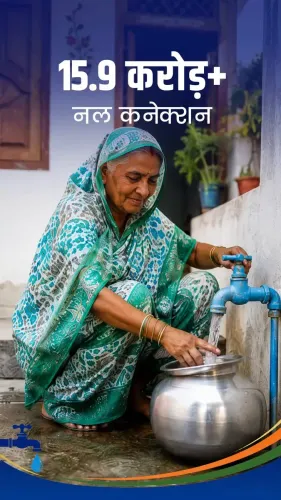
The mission claims to have reached over 15 crore people with piped tap-water connections.
Rural coverage stands at over 85% and is described as still growing.
The Jal Jeevan Mission was announced in the Union Budget of 2019 with a target of universal rural household coverage by 2024.
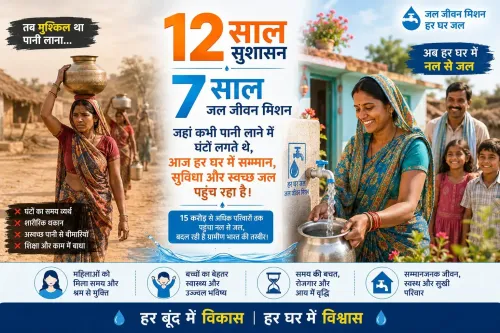
PM Narendra Modi's 'Har Ghar Nal Se Jal' is the scheme's flagship identity, aimed at ending the burden of water-fetching on rural women and children.
The remaining coverage gap involves the most remote and geographically difficult habitations — the hardest stretch of any last-mile programme.
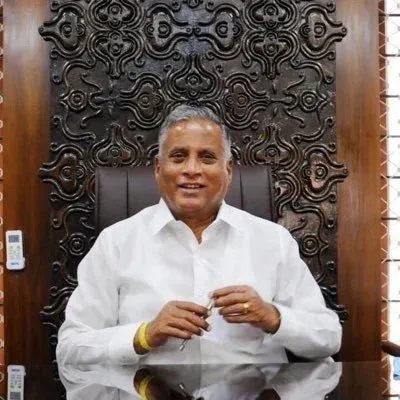
On the eve of Independence Day, Goa Chief Minister Pramod Sawant invoked one of the central government's most ambitious welfare promises — and declared it well on its way to being kept. Posting on August 14, 2026, Sawant cited the Jal Jeevan Mission's reach of over 15 crore people and a coverage rate crossing 85% as proof that the pledge of piped water to every rural home is no longer just a slogan.
A 2019 Promise, Measured in Taps
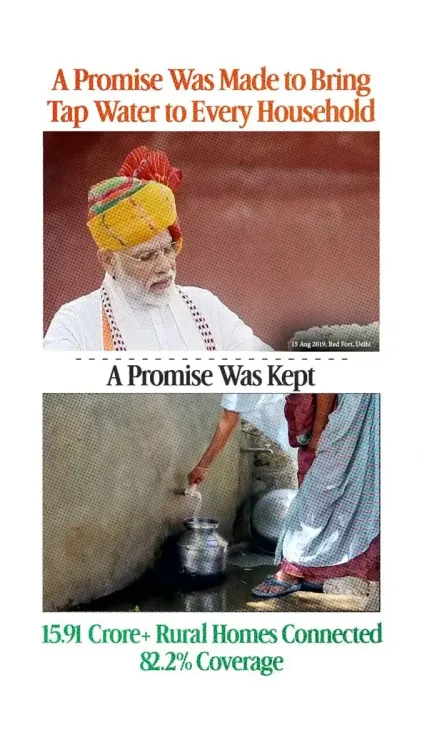
When the Union Budget of 2019 announced the Jal Jeevan Mission, the target was stark and time-bound: functional tap-water connections to every rural household by 2024. Prime Minister Narendra Modi framed it as a flagship welfare deliverable — 'Har Ghar Nal Se Jal' (tap water to every home) — a phrase that quickly became the programme's identity. Rural India, where women and children had long walked kilometres to fetch water, was the intended beneficiary.
Sawant's post quotes that phrase directly, then anchors it to scale: more than 15 crore people reached, coverage above 85% and still climbing. The framing is deliberate — a promise made, a promise kept, with numbers attached.
Why State Leaders Amplify National Figures
It is a well-established pattern in Indian politics: state BJP leaders cite aggregate national progress data on central schemes to signal both alignment with New Delhi and a share of the credit. For Sawant, posting this on the eve of Independence Day sharpens the symbolism — piped water as a freedom dividend, delivered at scale.
The Ministry of Jal Shakti has periodically updated coverage dashboards, and successive quarterly reports have tracked the mission's household-connection count as a headline metric. The broader pattern is one of rural infrastructure being repositioned not as charity but as a measurable, auditable government output.
What the Numbers Mean for Rural Households
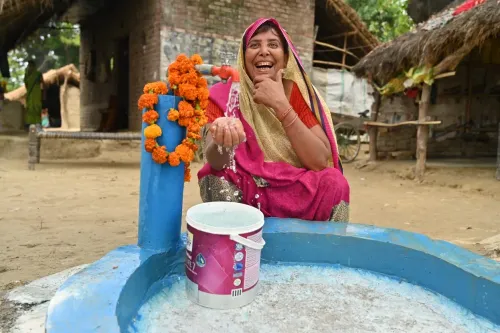
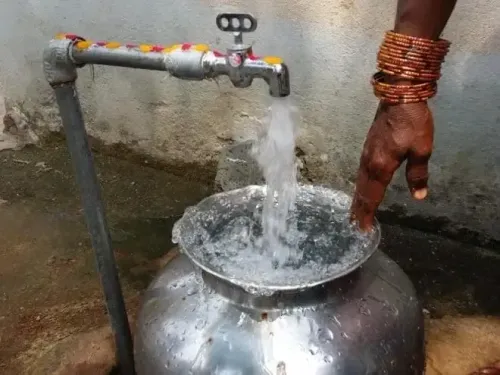
For the tens of millions of rural families now connected, a functional tap connection changes daily calculus in concrete ways: reduced waterborne illness, hours returned to women and girls who previously fetched water, and a foundation for sanitation infrastructure to follow. The mission's own monitoring framework tracks 'functional' connections — not just pipes laid, but water actually flowing.
The road from 85% to universal coverage will cover the most remote and geographically challenging habitations — precisely the hardest and costliest stretch of any last-mile programme.
Point of View
Attach the flagship slogan, and time it to a high-visibility moment like Independence Day. The Jal Jeevan Mission has become one of the BJP's most politically potent welfare metrics precisely because it is tangible and household-level — a tap is visible, a connection is countable. The push from 85% to universal coverage will test whether the programme's momentum holds through its most expensive and logistically difficult phase, and those next quarterly figures from the Ministry of Jal Shakti will be the real verdict.
NationPress
15 Aug 2026
Frequently Asked Questions
What is the Jal Jeevan Mission?
The Jal Jeevan Mission is a central government scheme launched in 2019 to provide functional tap-water connections to every rural household in India under the 'Har Ghar Nal Se Jal' initiative led by PM Narendra Modi.
How many people has Jal Jeevan Mission reached so far?
According to Goa CM Pramod Sawant's post on August 14, 2026, the mission has reached over 15 crore people, with rural coverage exceeding 85% and continuing to grow.
What was the original deadline for Jal Jeevan Mission?
The Jal Jeevan Mission was announced in the Union Budget of 2019 with a stated target of providing tap-water connections to all rural households by 2024.
Why did Pramod Sawant post about Jal Jeevan Mission on August 14?
Sawant posted on the eve of Independence Day, a symbolically significant moment, to highlight national progress on the drinking-water scheme and align with the central government's flagship welfare narrative.
Which ministry oversees Jal Jeevan Mission progress?
The Ministry of Jal Shakti oversees the Jal Jeevan Mission and periodically publishes coverage dashboards tracking household tap-water connections across rural India.