CM Sawant Launches Cancer Detection Drive in Sankhali
Synopsis
Goa Chief Minister Pramod Sawant launched the Cancer Detection Abhiyan and a Mobile Cancer Detection Van in Sankhali on October 10, 2026, offering mammography, Pap smear, tumour marker, and X-ray services to semi-urban communities through a partnership between Matoshri Padmini Educational Society, Goa Medical College, and the Directorate of Health Services.
Key Takeaways
Cancer Detection Abhiyan and Mobile Cancer Detection Van launched in Sankhali on October 10, 2026 .
Services include mammography, Pap smear testing, tumour marker tests , and X-ray , plus surgery, gynaecology, and dental outreach.
Organised by Matoshri Padmini Educational Society in partnership with Goa Medical College and Hospital and the Directorate of Health Services .
CM Sawant specifically appealed to women and senior citizens to avail the screening and complete recommended follow-up.
Sankhali is the headquarters of Bicholim taluka in North Goa, an area underserved by tertiary health facilities.
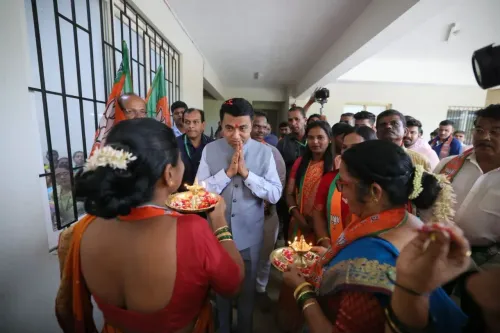
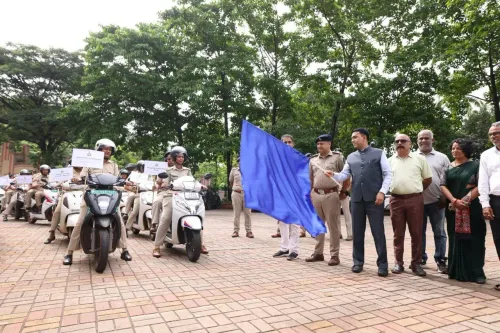
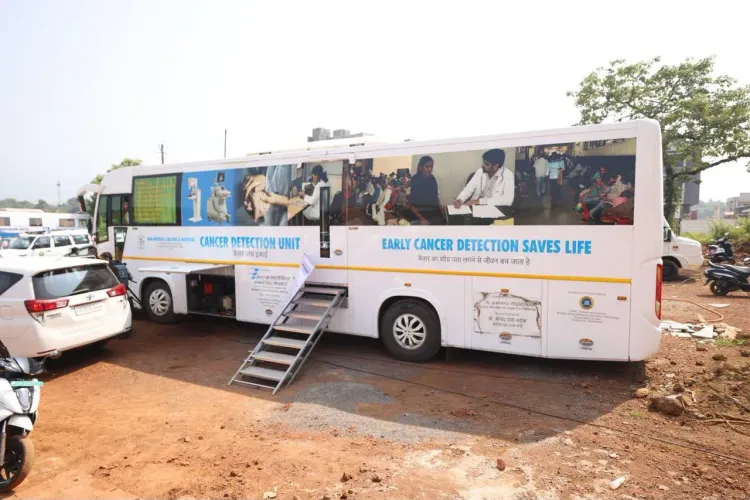
A mobile van rolled into Sankhali on Saturday, October 10, 2026, carrying something rarely this accessible in semi-urban Goa: a full suite of cancer screening services — mammography, Pap smear, tumour marker tests, X-ray — brought directly to the community's doorstep. Goa Chief Minister Pramod Sawant launched the Cancer Detection Abhiyan and the accompanying Mobile Cancer Detection Van, calling early detection the single most powerful tool citizens have against the disease.
What the mobile van actually offers
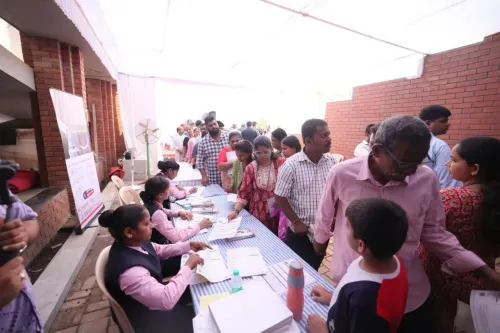
The initiative — organised by Matoshri Padmini Educational Society in collaboration with Goa Medical College and Hospital, the Directorate of Health Services, and other participating institutions — is designed to collapse the distance between specialist diagnostics and ordinary citizens. The screening menu is substantive: mammography for breast cancer detection, Pap smear testing for cervical health, tumour marker tests, and X-ray services, supplemented by outreach in surgery, gynaecology, and dental health.
That breadth matters. In a state where residents outside Panaji and Margao often travel significant distances for specialist consultations, a single van offering this range of diagnostics in Sankhali — in North Goa's interior — addresses a real gap.
CM Sawant's direct appeal to women and senior citizens
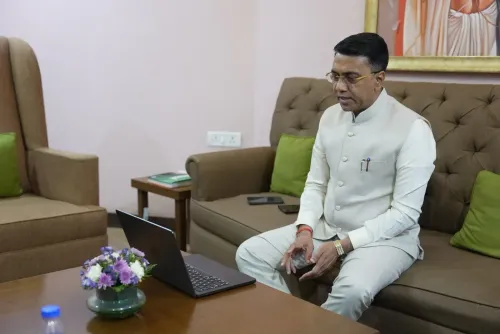
Chief Minister Sawant did not confine himself to the ceremonial launch. He issued a pointed public appeal — directed specifically at women and senior citizens — to use the screening facilities, seek timely medical advice, and complete any recommended follow-up. The emphasis on follow-through is deliberate: screening without subsequent care delivers incomplete outcomes, and that message is increasingly central to public-health campaigns nationwide.
'Early detection can save lives,' Sawant wrote, framing the Abhiyan not as a government programme but as a citizen responsibility — a subtle but important rhetorical shift that puts agency in the hands of the person being screened.
Why Sankhali, and why now
Sankhali, the administrative headquarters of Bicholim taluka, sits in a region that has historically been underserved by tertiary health infrastructure. Anchoring the launch here signals an intent to reach populations who might otherwise skip screening for want of proximity, cost, or awareness. The partnership model — a civil-society educational society co-ordinating with a government medical college and a state health directorate — suggests a replicable template that could be extended to other talukas.
The Cancer Detection Abhiyan joins a growing pattern of state-level mobile-health initiatives across India, where governments are increasingly partnering with NGOs and medical institutions to bring diagnostics to the periphery rather than waiting for patients to reach urban centres.
Point of View
Sawant's administration shares credit while widening reach, a model that is politically low-risk and administratively efficient. The explicit targeting of women and senior citizens also aligns with national public-health priorities on cervical and breast cancer, giving the state-level drive a policy anchor that can attract central co-ordination. Whether the van model translates into sustained screening infrastructure, rather than one-off events, will be the real test of impact.
NationPress
10 Oct 2026
Frequently Asked Questions
What is the Cancer Detection Abhiyan launched in Goa?
The Cancer Detection Abhiyan is a community outreach programme launched by Goa Chief Minister Pramod Sawant in Sankhali on October 10, 2026. It brings cancer screening services — including mammography, Pap smear, tumour marker tests, and X-ray — directly to citizens via a Mobile Cancer Detection Van, organised by Matoshri Padmini Educational Society with Goa Medical College and the Directorate of Health Services.
Where was the Mobile Cancer Detection Van launched in Goa?
The Mobile Cancer Detection Van was launched in Sankhali , the headquarters of Bicholim taluka in North Goa, on October 10, 2026 .
What services does the Mobile Cancer Detection Van in Goa offer?
The van offers mammography, X-ray, tumour marker tests, and Pap smear testing for cancer screening, along with medical services in surgery, gynaecology, and dental health.
Who organised the Cancer Detection Abhiyan in Sankhali?
The initiative was organised by Matoshri Padmini Educational Society in collaboration with Goa Medical College and Hospital , the Directorate of Health Services , and other participating institutions.
Why did CM Pramod Sawant appeal specifically to women and senior citizens?
CM Sawant directed his appeal at women and senior citizens because they are the demographic groups most at risk from cancers detectable through the van's screening services — particularly breast and cervical cancers — and are statistically less likely to seek proactive screening without targeted encouragement.