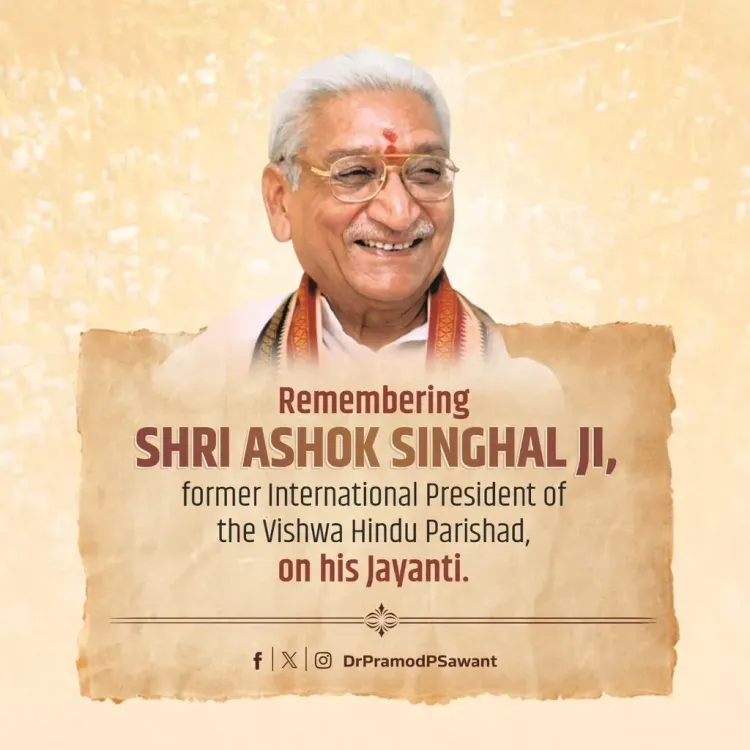
CM Sawant Remembers Ashok Singhal on His Jayanti
Synopsis
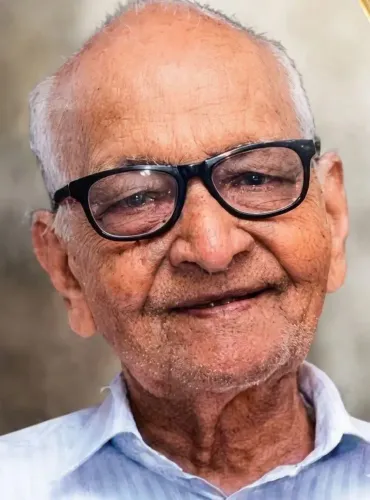
Goa Chief Minister Pramod Sawant honoured Ashok Singhal, former International President of the Vishwa Hindu Parishad, on his Jayanti, remembering him as a devoted organiser of the Shri Ram Janmabhoomi movement and a lifelong champion of Hindu cultural causes.
Key Takeaways
Goa CM Pramod Sawant posted a tribute to Ashok Singhal on his Jayanti on September 27, 2026 .
Singhal served as International President of the Vishwa Hindu Parishad , founded in 1964 .
He was a leading figure in the Shri Ram Janmabhoomi movement from the 1980s onward.
The movement culminated in the 2019 Supreme Court verdict clearing Ram temple construction at Ayodhya .
BJP leaders routinely mark anniversaries of VHP and RSS figures as part of a consistent pattern of cultural commemoration.
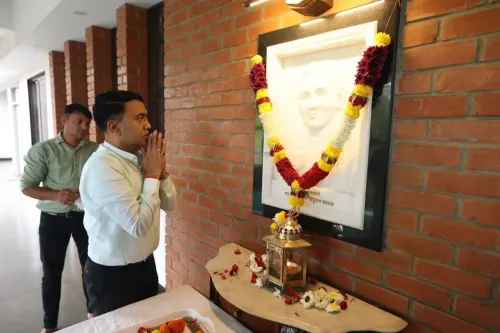
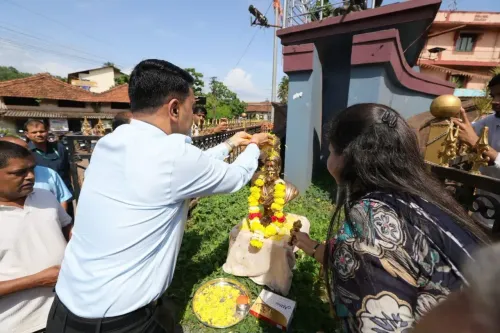
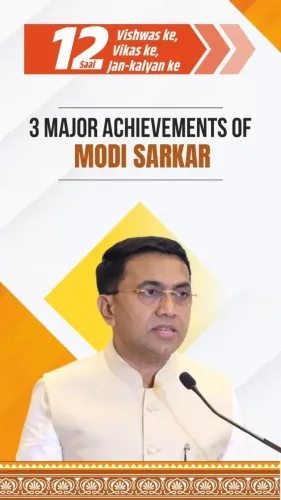
On the birth anniversary of one of modern India's most consequential Hindu nationalist organisers, Goa Chief Minister Pramod Sawant paid tribute to Ashok Singhal, former International President of the Vishwa Hindu Parishad, on Sunday, September 27, 2026 — honouring a man whose decades-long campaign for a Ram temple at Ayodhya shaped Indian political and cultural life long before the 2019 Supreme Court verdict finally settled the dispute.
The Man Behind the Movement
Ashok Singhal rose to the helm of the Vishwa Hindu Parishad, the Hindu nationalist organisation founded in 1964 to promote Hindu unity and cultural consolidation. He became the defining face of the Shri Ram Janmabhoomi movement from the 1980s onward — a prolonged, charged campaign to build a Ram temple at Ayodhya on the site believed by millions of Hindus to be the birthplace of Lord Ram. CM Sawant described him as 'a dedicated organiser and prominent figure in the Shri Ram Janmabhoomi movement' who 'devoted his life to social and cultural causes and remained committed to his ideals with great conviction.'
From Decades of Agitation to the Supreme Court's Gavel
The movement Singhal championed stretched across three turbulent decades, drawing millions of volunteers and reshaping electoral politics. The 2019 Supreme Court judgment — a unanimous five-judge bench verdict — cleared the legal path for Ram temple construction at Ayodhya, resolving what had been one of independent India's most contentious legal and social disputes. Singhal did not live to see the consecration of the temple, but his organisational groundwork was widely credited as foundational to the campaign's eventual outcome.
BJP's Pattern of Honouring the Hindutva Ecosystem
Sawant's tribute fits a well-established practice: BJP leaders at state and national levels consistently mark the birth and death anniversaries of VHP and RSS figures associated with the Ram Janmabhoomi cause. It is a form of institutional memory — keeping the movement's architects visible in public consciousness even after the temple has been built. Goa under BJP governance participates in these national commemorations alongside other BJP-ruled states, anchoring the party's cultural identity as much as its policy record.
For a generation that watched the Ayodhya dispute dominate headlines for three decades, Singhal's Jayanti is a reminder of just how long and how deeply that campaign was organised — and how central figures like him remain to the BJP's living mythology of cultural nationalism.
Point of View
State-level BJP leaders reinforce a cultural narrative that binds the party's past agitation politics to its present governance identity. The pattern holds across BJP-ruled states, suggesting a coordinated, calendar-driven exercise in ideological continuity. With the Ram temple now consecrated, the party benefits from keeping its movement architects in public memory as proof of long-term civilisational commitment.
NationPress
27 Sept 2026
Frequently Asked Questions
Who was Ashok Singhal?
Ashok Singhal was a prominent Hindu nationalist leader who served as International President of the Vishwa Hindu Parishad and was one of the most prominent organisers of the Shri Ram Janmabhoomi movement demanding a Ram temple at Ayodhya.
What is the Vishwa Hindu Parishad (VHP)?
The Vishwa Hindu Parishad is a Hindu nationalist organisation established in 1964 with the aim of promoting Hindu unity and cultural causes. It played a central role in the Ayodhya Ram temple campaign.
What was the Shri Ram Janmabhoomi movement?
The Shri Ram Janmabhoomi movement was a decades-long campaign, active from the 1980s onward, to construct a Ram temple at Ayodhya on the site believed to be Lord Ram's birthplace. It was resolved by the 2019 Supreme Court verdict that cleared the way for temple construction.
Why did Goa CM Pramod Sawant pay tribute to Ashok Singhal?
CM Sawant posted the tribute on Ashok Singhal's Jayanti (birth anniversary) on September 27, 2026 , recognising his role as a dedicated organiser of the VHP and the Ram Janmabhoomi movement, in line with a broader BJP practice of honouring Hindutva movement figures.
When was the Ayodhya Ram temple verdict?
The Supreme Court of India delivered its unanimous verdict on the Ayodhya land dispute in 2019 , clearing the legal path for the construction of the Ram temple at Ayodhya.