CM Bhajan Lal Sharma Welcomes Samrasata Kalash Yatra in Jaipur
Synopsis
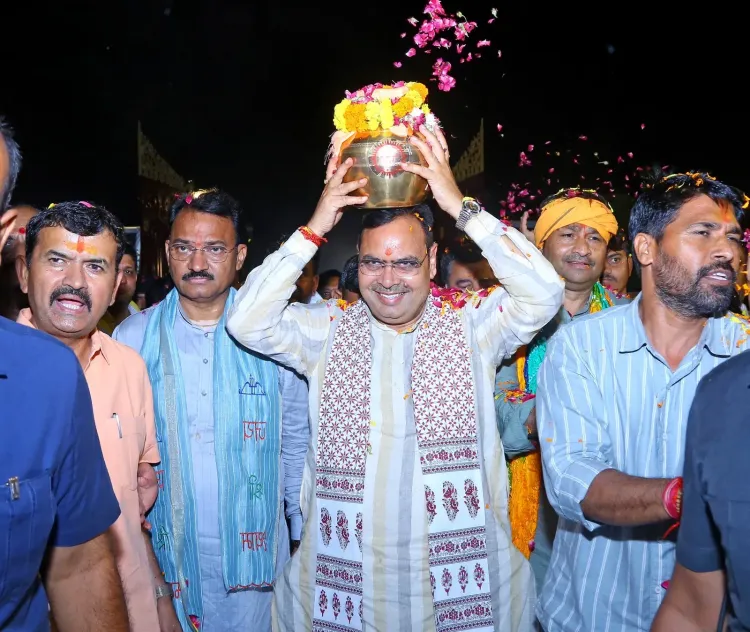
Rajasthan CM Bhajan Lal Sharma welcomed the Samrasata Kalash Yatra in Jaipur on July 30, 2026, carrying a sacred Kalash from Varanasi on his head as part of the Sant Ravidas Samrasata Sankalp Abhiyan marking the saint's 650th Jayanti year.
Key Takeaways
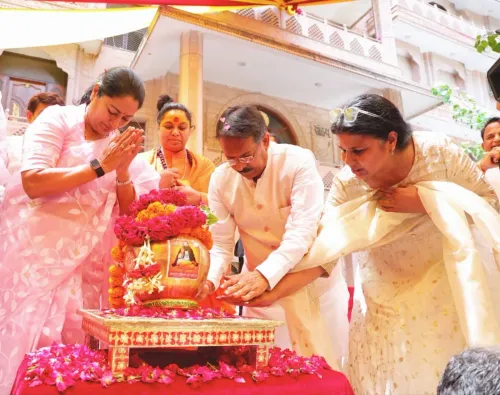
CM Bhajan Lal Sharma welcomed the Samrasata Kalash Yatra in Jaipur on July 30, 2026 , personally carrying the sacred Kalash on his head.
The Yatra is part of the Sant Ravidas Samrasata Sankalp Abhiyan , organised to mark the 650th Jayanti year of Sant Ravidas Ji Maharaj.
The sacred Kalash originated from Varanasi , the birthplace of Sant Ravidas, and will travel across Rajasthan's districts.
Prem Bairwa and state General Secretary (Organisation) Ajay Bhatnagar were among senior leaders present at the Jaipur event.
CM Sharma described bringing every section of society together in Sant Ravidas's footsteps as the government's 'highest priority'.
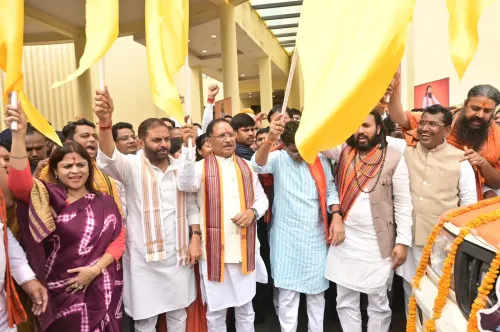
A sacred Kalash carried from the holy city of Varanasi arrived in Jaipur on Thursday, July 30, 2026 — and Rajasthan Chief Minister Bhajan Lal Sharma stepped forward to receive it on his own shoulders, marking the state's formal welcome of the Sant Ravidas Samrasata Sankalp Abhiyan.
A Kalash from Varanasi, a Message for Every Corner of Rajasthan
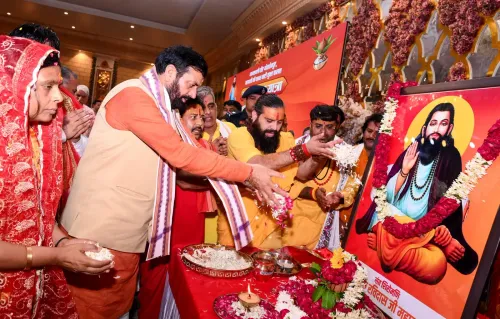
The Sant Ravidas Samrasata Sankalp Abhiyan — a campaign organised to mark the 650th Jayanti year of Sant Shiromani Ravidas Ji Maharaj — brought the Samrasata Kalash Yatra into Jaipur as part of a state-wide journey. CM Sharma received the sacred Kalash, carrying it on his head in a gesture of reverence, calling the moment a privilege. 'The message of social harmony, equality and brotherhood of Sant Ravidas Ji is a source of inspiration for all of us,' he said, adding that the campaign would serve as a powerful medium to carry the saint's ideals to every corner of the state. The Kalash traces its origin to Varanasi, the Uttar Pradesh city revered as the birthplace of Sant Ravidas — a 15th-16th century Bhakti poet whose verses dismantled caste hierarchies with the blunt force of devotion and verse. That the Yatra begins there is deliberate: it lends the procession a sacred geography, connecting Rajasthan's communities directly to the saint's roots.Senior Leadership Lines Up Behind the Yatra
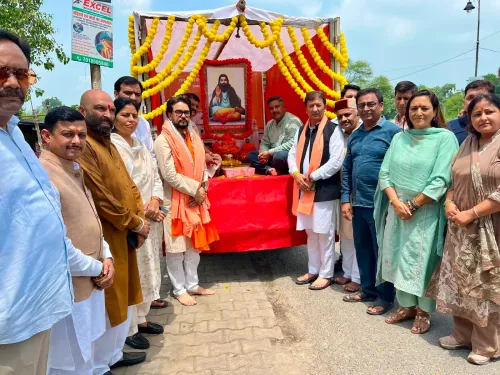
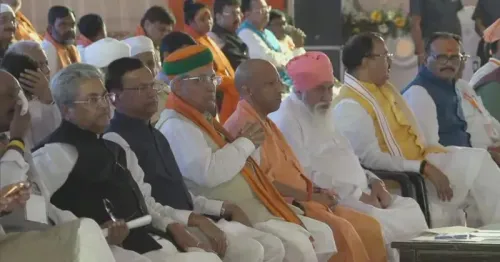
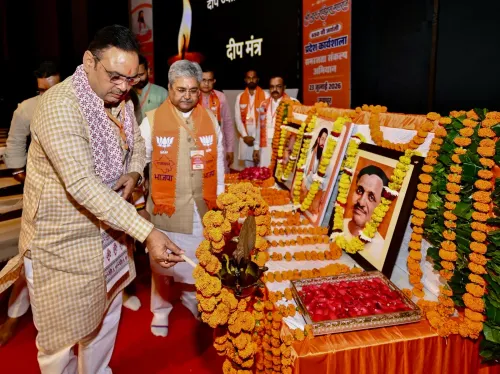
The Jaipur arrival drew significant political weight. Deputy Chief Minister Dr. Prem Bairwa, state General Secretary (Organisation) Ajay Bhatnagar, along with elected representatives, party office-bearers and workers were present at the event. The turnout of senior figures — from the CM down to ground-level workers — signals that the Abhiyan is being treated as a priority outreach exercise, not a routine ceremonial stop. BJP-governed states have increasingly used Bhakti saint-centred yatras and campaigns to project an image of social inclusion that cuts across caste lines. Carrying a sacred object from a site of national religious significance into a state capital, with the chief minister personally receiving it, is a well-understood symbolic grammar in Indian public life — one that speaks to communities who revere Sant Ravidas while also reinforcing the ruling party's cultural connect.Sant Ravidas: The Saint Whose Words Still Move Crowds
Sant Ravidas, born into a community considered low in the traditional caste hierarchy, rose to become one of the most celebrated voices of the Bhakti movement. His compositions — many of which found their way into the Guru Granth Sahib — preached a casteless, devotion-centred path to God. Millions across Rajasthan, Uttar Pradesh, Punjab and beyond count themselves among his followers. Marking the 650th Jayanti year with a state-level Abhiyan is both a cultural tribute and a statement about who the government sees as central to Rajasthan's social fabric. CM Sharma underlined the government's intent plainly: 'Walking in the footsteps of Sant Ravidas Ji and moving forward by bringing every section of society together is our highest priority.' The Samrasata Kalash Yatra will now travel through Rajasthan's districts — watch for linked welfare or cultural announcements at each stop as the Abhiyan builds toward its culmination.Point of View
Rajasthan's ruling establishment signals direct, embodied solidarity rather than delegated participation. The choice of Varanasi as the Kalash's origin point also reinforces the Uttar Pradesh-Rajasthan cultural corridor that BJP has cultivated. With the Yatra set to traverse the entire state, the Abhiyan doubles as a sustained organisational mobilisation exercise ahead of future electoral cycles.
NationPress
14 Sept 2026
Frequently Asked Questions
What is the Sant Ravidas Samrasata Sankalp Abhiyan?
The Sant Ravidas Samrasata Sankalp Abhiyan is a campaign organised to mark the 650th Jayanti year of Sant Shiromani Ravidas Ji Maharaj, aimed at spreading his message of social harmony, equality and brotherhood across Rajasthan.
Why did CM Bhajan Lal Sharma carry the Kalash on his head?
CM Sharma carried the sacred Kalash on his head as a gesture of reverence while welcoming the Samrasata Kalash Yatra to Jaipur, calling it a privilege to witness and participate in the procession.
Where did the Samrasata Kalash originate?
The sacred Kalash was brought from Varanasi in Uttar Pradesh, the city regarded as the birthplace of Sant Ravidas, lending the Yatra a direct spiritual connection to the saint's roots.
Who attended the Kalash Yatra welcome event in Jaipur?
Deputy Chief Minister Dr. Prem Bairwa, state General Secretary (Organisation) Ajay Bhatnagar, along with elected representatives, party office-bearers and workers attended the event alongside CM Bhajan Lal Sharma.
Who was Sant Ravidas and why is he significant?
Sant Ravidas was a 15th-16th century Bhakti saint and poet who preached social equality, brotherhood and casteless devotion. His compositions are included in the Guru Granth Sahib and he is revered by millions across northern India, particularly in Rajasthan, Uttar Pradesh and Punjab.