CM Sharma's DigiDukan to link Rajasthan traders to digital markets
Synopsis
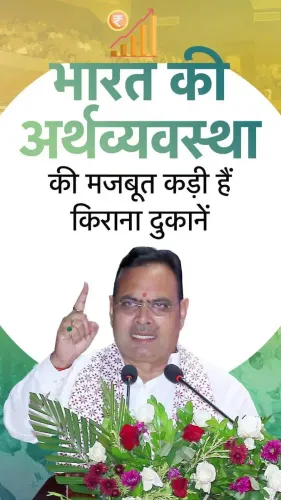
The Chief Minister's Office of Rajasthan announced DigiDukan on 20 June 2026, a state initiative attributed to CM Bhajan Lal Sharma that aims to connect the state's traders to digital marketplaces, supporting business expansion for Rajasthan's large MSME and traditional commerce community.
Key Takeaways
DigiDukan is a Rajasthan state initiative designed to connect local traders to digital marketplaces.
The announcement was made by the Chief Minister's Office on 20 June 2026 and attributed to CM Bhajan Lal Sharma .
The scheme targets Rajasthan 's large network of traditional traders and MSMEs , spanning textiles, handicrafts, gems, and retail.
DigiDukan builds on national frameworks including Digital India (2015) and the ONDC pilot (2022).
Pilot rollout timelines, platform integrations, and trader registration numbers remain to be announced.
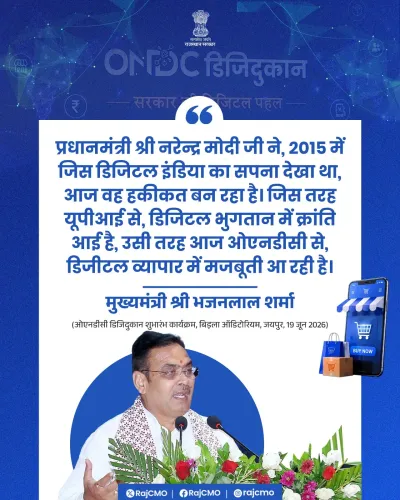
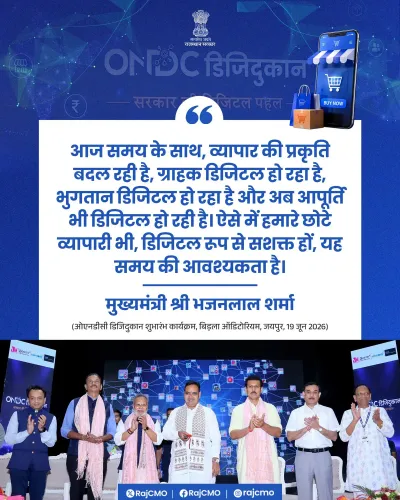
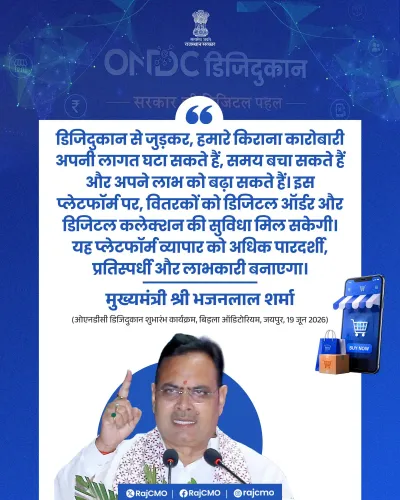
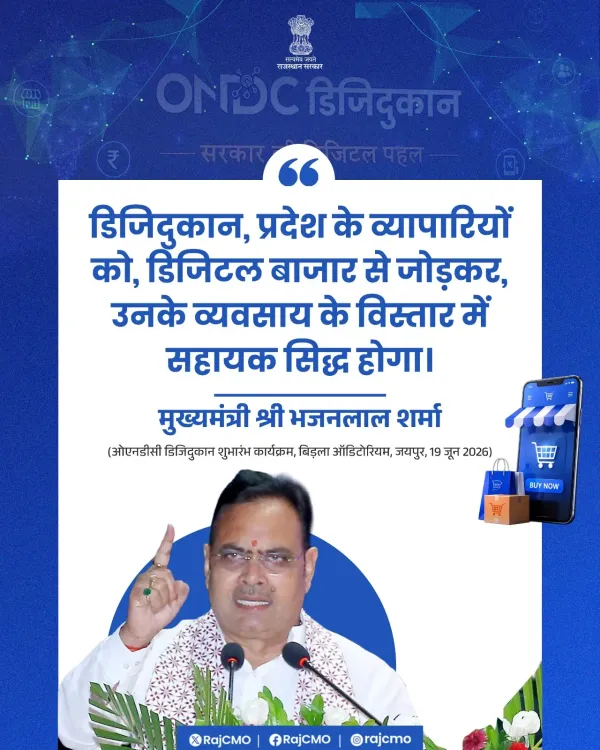
The Chief Minister's Office of Rajasthan announced on Saturday, 20 June 2026 that DigiDukan, a state initiative, will connect traders across Rajasthan to digital marketplaces and support the expansion of their businesses.
Context
The post by the Chief Minister's Office, attributed to Chief Minister Bhajan Lal Sharma, states: 'DigiDukan, pradesh ke vyapariyon ko, digital bazaar se jodkar, unke vyavsay ke vistar mein sahayak siddh hoga' — 'DigiDukan will prove helpful in expanding the businesses of the state's traders by connecting them to the digital marketplace.' The announcement was made under the hashtag #आपणो_अग्रणी_राजस्थान ('Our Leading Rajasthan'), a branding theme the BJP-led state government has used to highlight development milestones.
Rajasthan has a large and historically rooted network of traditional traders and micro, small and medium enterprises (MSMEs). Bringing this community onto digital commerce platforms has been a stated priority of the current administration since it took office in December 2023.
Policy Backdrop
DigiDukan sits within a broader national push for digital commerce inclusion. The Digital India programme, launched in 2015, laid the foundation for e-governance and digital empowerment across the country. More recently, the Open Network for Digital Commerce (ONDC), piloted in 2022, was designed specifically to democratise e-commerce access for small sellers who might otherwise be shut out of large private platforms.
State-level schemes such as DigiDukan complement these national frameworks by targeting the specific trader communities and local business ecosystems within a given state. The Rajasthan government's focus on MSME competitiveness through technology adoption mirrors similar initiatives rolled out by state administrations across India in recent years.
Stakeholders and Impact
The primary beneficiaries of DigiDukan are Rajasthan's traditional traders and MSME operators — a constituency that spans handicrafts, textiles, gems and jewellery, and general retail, sectors in which the state holds significant national standing. Digital marketplace access can reduce dependence on local foot traffic and open sellers to buyers across India and potentially abroad.
For traders with limited digital literacy or infrastructure, state-backed onboarding programmes are often the decisive factor in whether such schemes achieve meaningful adoption. The success of DigiDukan will depend on how effectively the government facilitates registration, training, and integration with existing commerce platforms.
What's Next
Observers will watch for details on the pilot rollout timeline, the platforms DigiDukan integrates with — including whether it connects to ONDC or private marketplaces — and early trader registration numbers. The government's ability to translate this announcement into measurable participation will be the true test of the scheme's reach.
If DigiDukan achieves scale, it could position Rajasthan as a model for other states seeking to digitise their traditional commerce sectors, reinforcing the administration's 'leading Rajasthan' narrative ahead of future electoral cycles.
Point of View
A constituency that has historically shaped electoral outcomes in the state. By framing the scheme under the 'Aapno Agrani Rajasthan' banner, the government is consciously building a development narrative ahead of future electoral cycles. The initiative also aligns the state with the Centre's ONDC and Digital India priorities, allowing the BJP-led government to claim credit at both state and national levels. However, the gap between announcement and adoption — a recurring challenge for digital commerce schemes targeting traditional traders — will determine whether DigiDukan becomes a genuine policy achievement or a symbolic gesture.
NationPress
20 Jun 2026
Frequently Asked Questions
What is DigiDukan in Rajasthan?
DigiDukan is a Rajasthan state government initiative announced in June 2026 to connect local traders and MSMEs to digital marketplaces, helping them expand their businesses beyond traditional local markets.
Who announced DigiDukan?
The Chief Minister's Office of Rajasthan announced DigiDukan, with the post attributed to Chief Minister Bhajan Lal Sharma, on 20 June 2026.
How does DigiDukan relate to ONDC?
DigiDukan is a state-level scheme that complements the national Open Network for Digital Commerce (ONDC), which was piloted in 2022 to give small sellers access to e-commerce. Integration details between DigiDukan and ONDC or private platforms are yet to be officially announced.
Who will benefit from DigiDukan in Rajasthan?
Rajasthan's traditional traders and MSME operators — including those in handicrafts, textiles, gems and jewellery, and general retail — are the primary intended beneficiaries of the DigiDukan scheme.
What is 'Aapno Agrani Rajasthan'?
'Aapno Agrani Rajasthan' translates to 'Our Leading Rajasthan' and is a branding theme used by the BJP-led Rajasthan government to highlight its development and governance milestones since taking office in December 2023.