CM Shivakumar Inaugurates Jashn-e-Urdu, Presents 2025 Awards
Synopsis
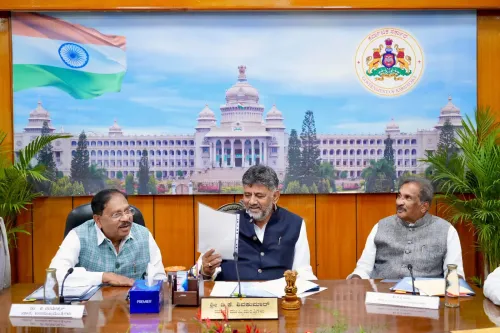
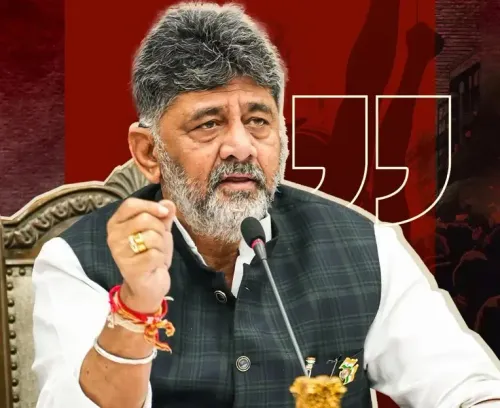
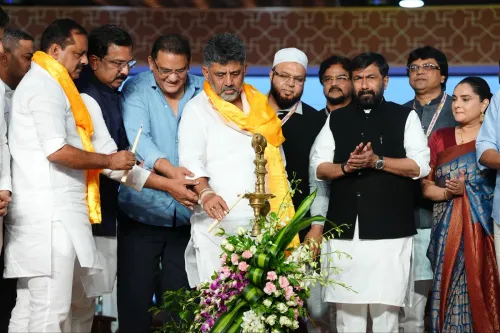
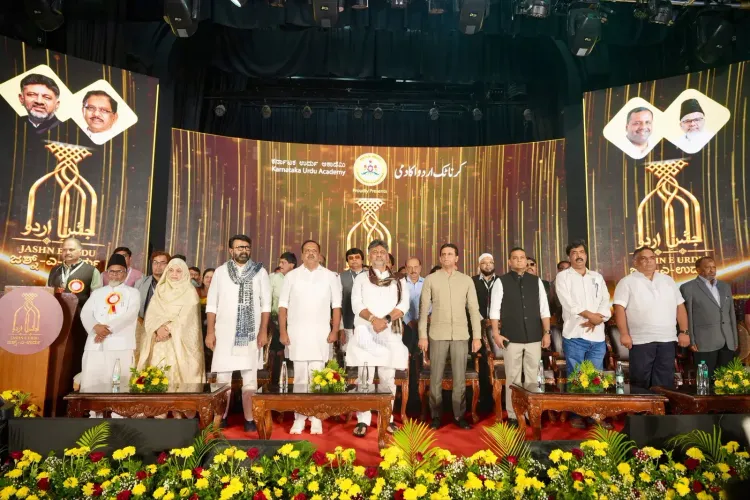
Karnataka CM D.K. Shivakumar on 9 November 2026 inaugurated the Urdu Academy's annual awards ceremony, a book launch, and the Jashn-e-Urdu cultural festival at Bengaluru's Town Hall, with key ministers and officials in attendance.
Key Takeaways
Shivakumar presided over the 2025 Karnataka Urdu Academy annual awards at Bengaluru Town Hall on 9 November 2026 .
The event was co-organised by the Minority Welfare, Haj and Waqf Department and the Karnataka Urdu Academy .
The ceremony included a book launch and the inauguration of the cultural festival Jashn-e-Urdu .
Khadar and Rizwan Arshad , Rajya Sabha MP Mansoor Ali Khan , and BDA Chairman N.A.
Harris were among the dignitaries present.
The Karnataka Urdu Academy has conducted similar annual ceremonies and cultural festivals in previous years to recognise contributions to Urdu language and literature.
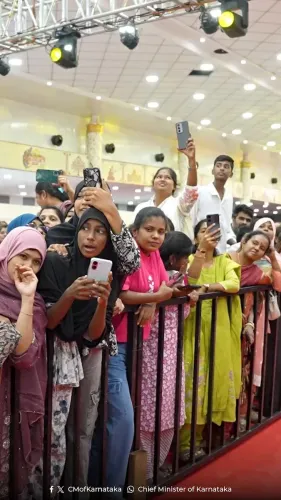
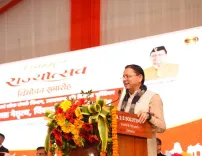
At Bangalore's Town Hall on Monday, 9 November 2026, Karnataka Chief Minister D.K. Shivakumar presided over a triple celebration of Urdu language and minority welfare — opening the Karnataka Urdu Academy's annual awards ceremony, launching a set of new books, and inaugurating the cultural festival Jashn-e-Urdu (Festival of Urdu). The event, organised jointly by the Minority Welfare, Haj and Waqf Department and the Karnataka Urdu Academy, brought together the state's minority-affairs leadership under one roof to honour achievers in Urdu literature and culture.
Who was on the dais at Town Hall
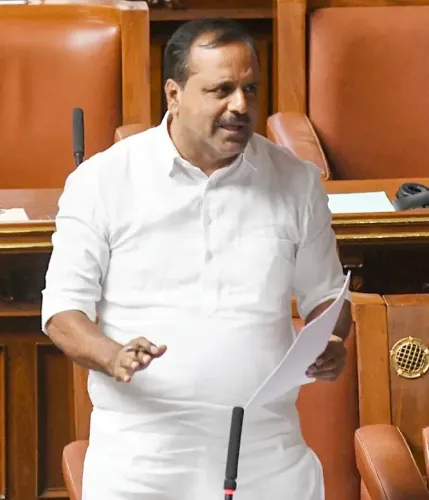
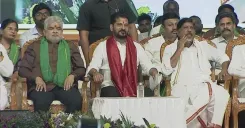
The ceremony drew a notable cross-section of Karnataka's political establishment. Ministers U.T. Khadar and Rizwan Arshad, both closely associated with minority affairs portfolios, shared the stage with Rajya Sabha MP Mansoor Ali Khan and BDA Chairman N.A. Harris. MLA Yasir Ahmed Khan Pathan, Minority Commission Chairman U. Nisar Ahmed, and Karnataka Urdu Academy President Mohammed Ali Khazi were also present, underscoring the government's intent to signal institutional weight behind the event.
What the Urdu Academy's annual awards represent
The Karnataka Urdu Academy has for several years organised Jashn-e-Urdu and annual awards to recognise writers, poets, and scholars who have advanced the language. The Minority Welfare, Haj and Waqf Department anchors the broader administrative framework — covering scholarship schemes, Haj facilitation, and Waqf property administration — within which the Academy operates. Awards ceremonies of this kind function as the state's most visible annual gesture toward Karnataka's Urdu-speaking communities, who are spread across districts including Bengaluru, Kalaburagi, Bidar, and Belagavi.
Karnataka's sustained bet on minority cultural institutions
Karnataka has maintained a network of language academies and minority-welfare structures across successive governments. The state funds separate academies for Urdu, Telugu, Tamil, Tulu, Konkani, and other linguistic communities alongside the broader Minority Welfare Department, which administers pre-matric and post-matric scholarships, Haj subsidies, and Waqf board oversight. For the Congress government, events like Jashn-e-Urdu serve a dual purpose: affirming the state's constitutional commitment to linguistic minorities and reinforcing political outreach to the community ahead of future electoral cycles.
Point of View
With two ministers and a Rajya Sabha MP on the dais, reads as more than a routine academy ceremony. It reflects the party's deliberate effort to consolidate its minority voter base in a state where assembly arithmetic remains tight. The continued investment in bodies like the Urdu Academy and the Minority Welfare Department also speaks to Karnataka's model of pluralist cultural governance, which has historically enjoyed cross-party continuity. Whether the 2025 award recipients and the books launched at this ceremony catalyse broader Urdu literary discourse will be the event's longer-term measure.
NationPress
9 Nov 2026
Frequently Asked Questions
What is Jashn-e-Urdu in Karnataka?
Jashn-e-Urdu is an annual cultural festival organised by the Karnataka Urdu Academy to celebrate Urdu language, literature, and culture. It is typically held alongside the academy's annual awards ceremony.
What does the Karnataka Urdu Academy do?
The Karnataka Urdu Academy is a state government body that promotes the Urdu language, literature, and culture in Karnataka through awards, book publications, scholarships, and cultural events like Jashn-e-Urdu.
Who is U.T. Khadar in Karnataka government?
U.T. Khadar is a Karnataka Cabinet minister associated with minority welfare portfolios in the current Congress-led government.
What is the Minority Welfare, Haj and Waqf Department of Karnataka?
It is the Karnataka government department responsible for welfare schemes, Haj facilitation, and Waqf property administration for minority communities in the state.
Is DK Shivakumar the Chief Minister of Karnataka?
According to the official Chief Minister's Office of Karnataka's post on 9 November 2026, D.K. Shivakumar is referred to as the Chief Minister of Karnataka.