CM Siddaramaiah Chairs Congress Strategy Meet for Karnataka Council Polls
Synopsis
Karnataka Chief Minister Siddaramaiah on June 18, 2026, chaired a joint strategy session of Congress ministers and MLAs ahead of the Karnataka Legislative Council elections, focusing on coordinated vote management to secure victory for all party candidates in the indirect polls.
Key Takeaways
CM Siddaramaiah convened a closed-door meeting of Congress ministers and all MLAs on June 18, 2026 , ahead of the Karnataka Legislative Council elections.
The meeting focused on finalising the electoral strategy to ensure victory for all Congress candidates in the Council polls.
The Karnataka Legislative Council has 75 members elected indirectly by elected representatives, local bodies, and graduates.
Council elections are decided by a small, defined electorate, making internal party discipline and MLA coordination the critical variable.
The Congress government is seeking to strengthen its position in the upper house after winning the 2023 Karnataka assembly elections .
Formal candidate announcements and the official polling schedule from the Election Commission of Karnataka are the next expected developments.
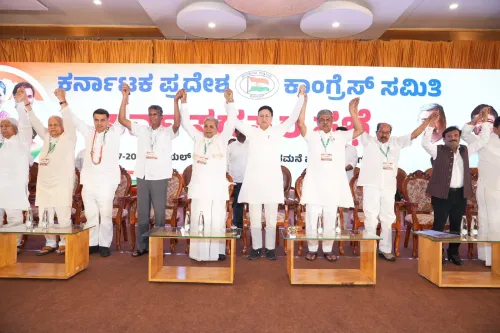
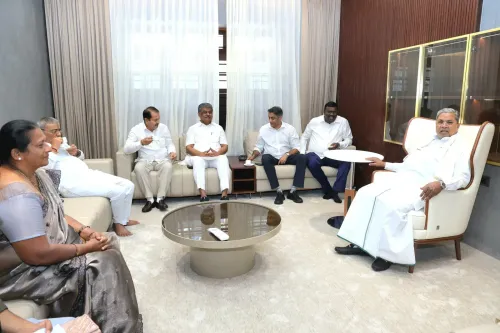
Karnataka Chief Minister Siddaramaiah on Thursday, June 18, 2026, convened a closed-door strategy meeting of the ruling Indian National Congress, bringing together ministers and legislators to plan the party's campaign for the upcoming Karnataka Legislative Council elections.
Posting in Kannada on X, the Chief Minister stated: 'ವಿಧಾನ ಪರಿಷತ್ ಚುನಾವಣೆ ಸಂಬಂಧ ಇಂದು ಮುಖ್ಯಮಂತ್ರಿಗಳು, ಸಚಿವರು ಹಾಗೂ ಶಾಸಕರೆಲ್ಲರೂ ಸಭೆ ಸೇರಿ...' — translating to: 'Regarding the Legislative Council elections, today the Chief Minister, ministers and all legislators gathered and deliberated on the strategy to be followed for the victory of all our candidates.'
Context
The Karnataka Legislative Council is the upper house of the state's bicameral legislature, comprising 75 members elected indirectly through elected representatives, local bodies, and graduates' constituencies. These polls follow a constitutional schedule under which one-third of seats come up for election every two years. The Congress government, which came to power in the 2023 Karnataka assembly elections under Siddaramaiah's leadership, is now seeking to consolidate its position in the upper house.
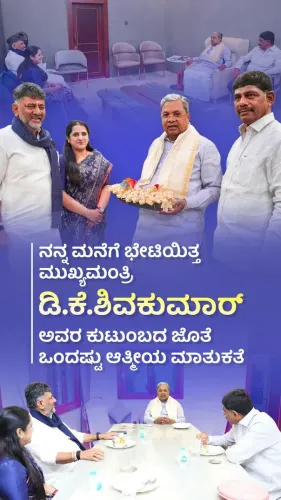
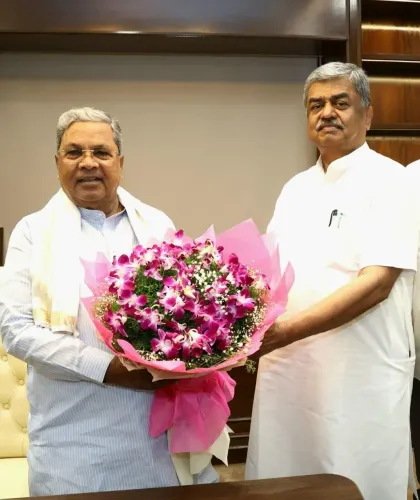
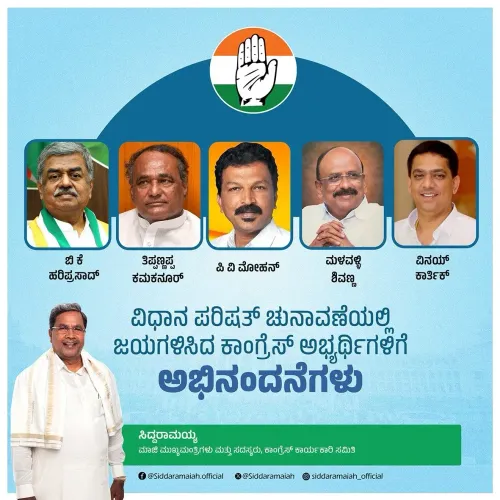
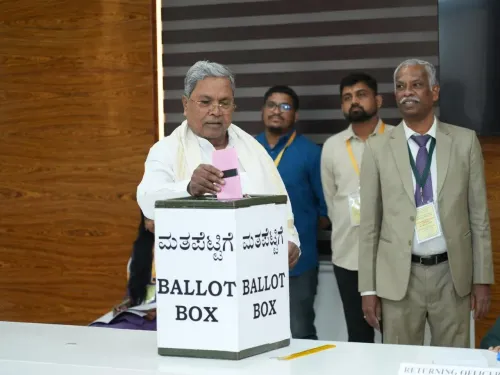
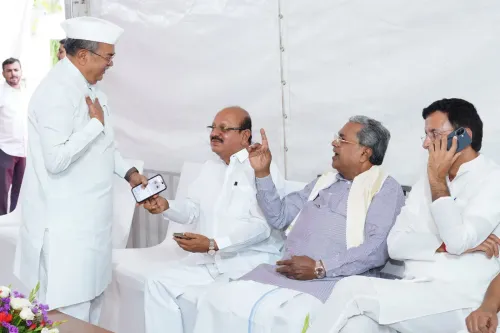
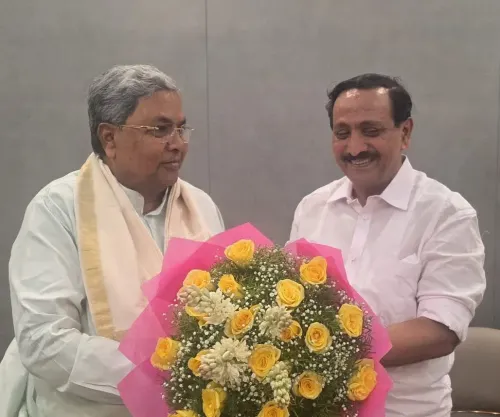
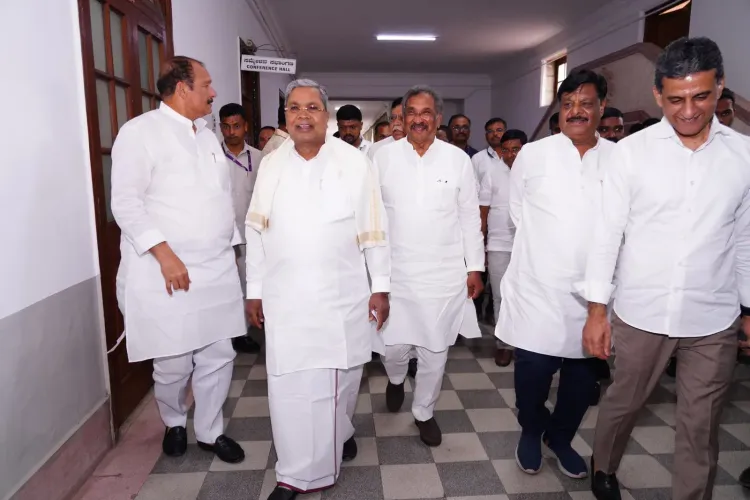
Siddaramaiah's post, accompanied by four photographs from the meeting, signals that the party is treating the Council polls as a significant political priority rather than a routine exercise.
Policy Backdrop
Legislative Council elections in Karnataka carry strategic weight because the upper house can delay or scrutinise legislation passed by the assembly. A stronger Congress presence in the Council would give the ruling party greater legislative leverage and reduce the risk of bills being stalled. Karnataka had previously held biennial Council elections in 2024 in line with the constitutional schedule.
Unlike direct elections, Council polls are decided by a smaller electorate of elected representatives and local body members, making internal party coordination and legislator management the decisive factor. Closed-door strategy sessions of this kind — bringing the Chief Minister, cabinet, and all MLAs into one room — are standard practice for parties seeking to maximise their tally in such indirect contests.
Stakeholders and Impact
The primary stakeholders are Congress MLAs, who form the core voting bloc in the MLA-quota seats, and the party's Council candidates, whose electoral fortunes depend directly on disciplined legislator support. A united show at this strategy session reduces the risk of cross-voting, which has historically undermined ruling-party candidates in upper house polls across Indian states.
Opposition parties — particularly the Bharatiya Janata Party and the Janata Dal (Secular) — will be watching the Congress's candidate list and vote-management closely, as any fracture in the ruling party's ranks could allow them to secure additional seats.
What's Next
The immediate next step is the formal announcement of Congress candidates for the notified Council seats, followed by the polling schedule to be managed by the Election Commission of Karnataka. The outcome of these elections will shape the legislative arithmetic in Bengaluru and determine how smoothly the Siddaramaiah government can push its agenda through both houses of the state legislature.
Point of View
Expanding its upper house footprint would reduce legislative friction and reinforce the Chief Minister's authority within the party. The public display of unity — with photographs released on X — also serves an internal signalling purpose, projecting discipline ahead of what could be a tightly contested round of indirect elections. How well the Congress manages its MLA bloc will be a visible test of Siddaramaiah's grip on the party machinery.
NationPress
19 Sept 2026
Frequently Asked Questions
What are the Karnataka Legislative Council elections?
The Karnataka Legislative Council elections are indirect polls to fill seats in the upper house of the state legislature. Members are elected by MLAs, local body representatives, and graduates rather than by the general public, making them distinct from direct assembly elections.
Why did CM Siddaramaiah hold a strategy meeting for Council elections?
Siddaramaiah convened the meeting to align Congress ministers and MLAs on a coordinated vote-management plan, since Legislative Council results depend directly on disciplined support from the party's elected representatives.
When did Siddaramaiah post about the Council election meeting?
Siddaramaiah posted about the strategy meeting on Thursday, June 18, 2026 , sharing four photographs from the session on X.
How many members does the Karnataka Legislative Council have?
The Karnataka Legislative Council has 75 members , with one-third of seats coming up for election every two years under the constitutional biennial schedule.
What happens after the Congress strategy meeting for Karnataka Council polls?
The next steps are the formal announcement of Congress candidates for the notified seats and the release of the polling schedule by the Election Commission of Karnataka.