CM Siddaramaiah presents Khadri Shamanna Journalism Award
Synopsis
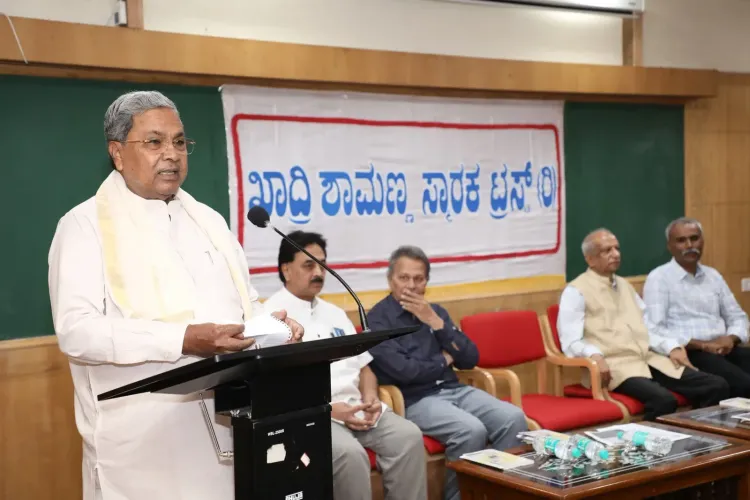
Karnataka CM Siddaramaiah presented the Khadri Shamanna Journalism Award to retired Prajavani assistant editor Udaykumar at Bengaluru's Sheshadripuram College, delivering a strong defence of press freedom, constitutional values, and media's duty to fight inequality.
Key Takeaways
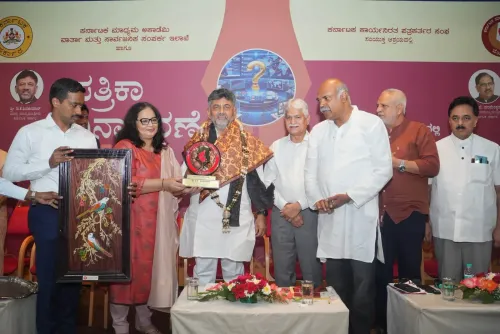
Udaykumar , retired assistant editor of Prajavani , received the annual Khadri Shamanna Journalism Award from the Khadri Shamanna Trust.
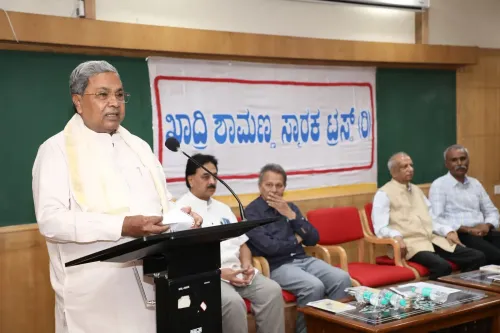
The ceremony was held at Sheshadripuram College's conference hall in Bengaluru on August 8, 2026 .
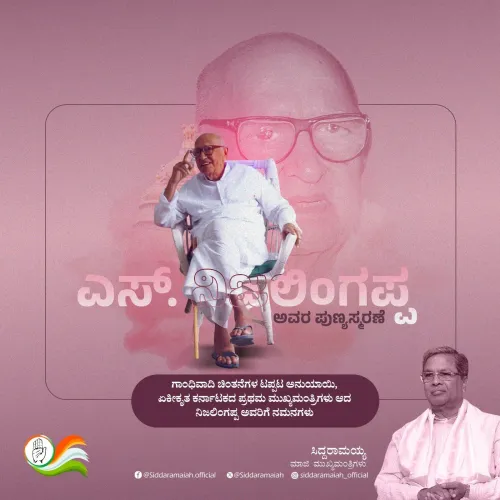
CM Siddaramaiah described Khadri Shamanna as a freedom fighter, socialist, and former editor of Kannada Prabha known for simple, impactful editorials.
Siddaramaiah warned that some media organisations are 'failing to uphold journalism's values' and called on the press to work impartially and secularly against caste and inequality.
The CM pledged he has never called a journalist or media house over critical coverage and never will, citing his commitment to press freedom.
He urged all journalists, especially the young, to understand and use their constitutional freedoms responsibly as the foundation of democracy.
Bengaluru, August 8: At a ceremony inside Sheshadripuram College's conference hall, Karnataka Chief Minister Siddaramaiah handed the annual Khadri Shamanna Journalism Award to Udaykumar, retired assistant editor of Prajavani, honouring a career built on upholding press values — and used the occasion to deliver a pointed defence of press freedom and a sharp critique of journalism that serves the powerful over the public.
Udaykumar's recognition and what it stands for
The Khadri Shamanna Trust presents the award annually in the name of the late freedom fighter and Kannada Prabha editor Khadri Shamanna. This year's selection of Udaykumar was made in recognition of his 'unique service to journalism and his work in upholding the values and dharma of the press,' as Siddaramaiah described it. Udaykumar spent his career at Prajavani, one of Karnataka's most widely read Kannada-language dailies.
Siddaramaiah spoke warmly of the legacy the award carries. 'Khadri Shamanna worked to uphold the dignity and values of journalism,' he said. 'His editorials were written in the simplest language, even on the gravest subjects — and because of that, they reached people quickly.'
A socialist editor Siddaramaiah knew personally
The Chief Minister recalled a close personal familiarity with Khadri Shamanna. 'I knew him very well. He was a socialist — and because of that, I used to meet him often on various matters,' Siddaramaiah said. He described Shamanna as a freedom fighter rather than a politician, a man of deep democratic conviction and 'immense commitment to the Constitution.' He was not a partisan figure; he was a principled one. That distinction matters.
Siddaramaiah reflected that had Shamanna been alive today, he would have continued to champion constitutional values and press integrity. 'There is the strength of journalism in his name,' he said. 'He was a model journalist and a guide.'
Journalism as democracy's lifeblood — and its current failures
The CM's address turned pointed when he moved to the state of contemporary media. 'Journalism is very important — it is the lifeblood of democracy,' he said. 'But in recent years, the path of journalism is changing. Some journalism institutions have failed to uphold its values.'
His critique was specific: newspapers must place real, impartial facts before the public, not work to make the already-wealthy even wealthier. 'Media must not promote divisive content or false news,' he said, adding that superstition and blind belief — which he argued entrench caste hierarchies and inequality — must not be amplified. 'If we want to eliminate the caste system, journalists must work in a secular manner.'
Siddaramaiah's personal pledge on press freedom
The sharpest moment came when Siddaramaiah turned the lens on himself. He noted that declining youth interest in journalism poses a structural challenge to the profession's future. But he also made a personal commitment: 'I give great importance to press freedom. For this reason, no matter what anyone writes about my party or even about me personally — criticism included — I have never called a single media organisation or journalist to this day, and I never will.'
It is a pledge that carries weight in a media environment where political pressure on newsrooms is a documented concern across India. He called on every journalist — especially the young — to understand the Constitution deeply: 'The Constitution has given you freedom. Using that freedom on the right path is absolutely essential. Without it, the aspirations of democracy cannot be fulfilled.'
The award ceremony at Sheshadripuram College was, in the end, more than a felicitation. It was a reminder — delivered by the state's most powerful elected official — that journalism's oldest duty is to the powerless, not the powerful. Whether that reminder lands is now journalism's own test.
Point of View
Economic inequality, and superstition to media failures, he positions the Congress-led government as a defender of egalitarian press values — while implicitly critiquing media organisations seen as aligned with corporate or majoritarian interests. The speech is also a soft signal to Karnataka's journalism community ahead of any future media policy discussions the state government may undertake.
NationPress
8 Aug 2026
Frequently Asked Questions
Who won the Khadri Shamanna Journalism Award in 2026?
Udaykumar , retired assistant editor of the Kannada daily Prajavani , was selected for the Khadri Shamanna Journalism Award by the Khadri Shamanna Trust in 2026, in recognition of his distinguished service to press values.
Who was Khadri Shamanna?
Khadri Shamanna was a freedom fighter, socialist thinker, and former editor of the Kannada newspaper Kannada Prabha , known for writing on complex subjects in simple, accessible language and for his deep commitment to constitutional values and democracy.
What did CM Siddaramaiah say about press freedom at the award ceremony?
CM Siddaramaiah said journalism is 'the lifeblood of democracy' and pledged that he has never called a journalist or media organisation over critical coverage and never will. He also criticised media organisations that fail to uphold impartiality and warned against promoting divisive content or superstition.
Where was the Khadri Shamanna Journalism Award ceremony held?
The ceremony was held at the conference hall of Sheshadripuram College in Bengaluru , organised by the Khadri Shamanna Trust .
What is the Khadri Shamanna Trust?
The Khadri Shamanna Trust is an organisation that annually presents a journalism award in the name of the late editor and freedom fighter Khadri Shamanna , honouring journalists who uphold the values and integrity of the press.