CM Hemant Soren Directs Hazaribag DC to Act Immediately

Synopsis
Jharkhand Chief Minister Hemant Soren publicly directed the Hazaribag Deputy Commissioner on 20 July 2026 to take immediate cognisance of an unspecified matter, tagging the official on X. The directive reflects the Soren government's practice of using social media to enforce administrative accountability at the district level.
Key Takeaways
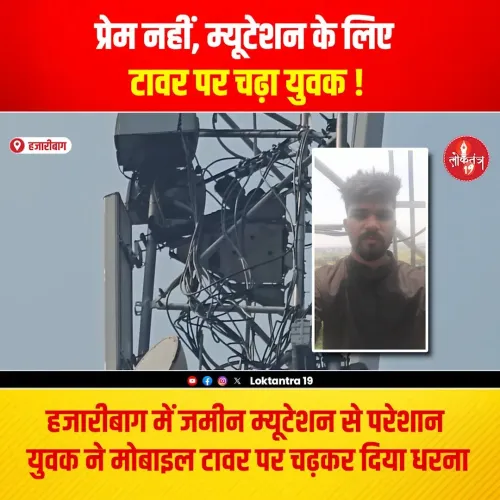
Chief Minister Hemant Soren posted on X on 20 July 2026 , tagging @DC_Hazaribag with the instruction to take 'immediate cognisance.' The post contained two videos , which likely detail the specific grievance or incident prompting the directive.
The specific matter prompting the directive has not been publicly identified by the Chief Minister's office.
Hazaribag is a northern Jharkhand district with a history of coal-belt governance pressures and land-related disputes.
The Soren administration has since 2019 emphasised time-bound grievance redressal through district collectors.
Public social-media tagging of bureaucrats by the CM creates a transparent, time-stamped accountability record that typically triggers rapid internal escalation in the district collectorate.
Jharkhand Chief Minister Hemant Soren on Monday, 20 July 2026, publicly directed the Deputy Commissioner of Hazaribag to take immediate cognisance of an unspecified matter, tagging the district official's handle on X. The terse directive — 'tatkaal sanjgyan lein' ('take immediate cognisance') — signals urgency and places the district administration on notice through a public, time-stamped record.
Context
Hazaribag, a district in northern Jharkhand, sits at the intersection of coal-belt governance pressures, land-related grievances, and welfare delivery challenges. The Deputy Commissioner is the senior-most IAS officer in the district, responsible for law and order, revenue administration, and implementation of state government schemes. Chief Minister Soren's post — brief by design — does not name the specific issue prompting the directive, but the public tag itself constitutes an official instruction that the district administration is expected to act on without delay.
Policy Backdrop
Since 2019, the Jharkhand government has emphasised time-bound redressal of public grievances through district collectors, institutionalising accountability at the local administrative level. Chief Minister Soren has a documented pattern of using X (formerly Twitter) to directly tag bureaucrats — district collectors, departmental secretaries, and municipal officials — when he wants to signal urgency or respond to constituent complaints that have reached his attention. This approach bypasses slower formal channels while creating a transparent, time-stamped record of the directive.
The practice is not unique to Jharkhand. Across Indian states, chief ministers have increasingly used social media to publicly direct district officials, particularly on matters ranging from law-and-order incidents to stalled scheme implementation. In Jharkhand's context, such directives have frequently intersected with mining-related disputes, tribal land rights, and welfare entitlement delivery — all of which are recurring pressure points in Hazaribag and surrounding districts.
Stakeholders and Impact
The most immediate stakeholder is the Hazaribag district administration, which now faces a publicly visible instruction from the Chief Minister's office. A public tag of this nature typically triggers rapid internal escalation within the collectorate, with officials expected to identify the matter, document action taken, and often respond through official channels. Hazaribag residents whose grievances may have prompted the directive stand to benefit if the administration responds with speed and transparency.
For the broader Jharkhand governance ecosystem, the post reinforces the Soren administration's posture of visible, responsive administration — particularly important in districts where public trust in local institutions has historically been uneven. The two videos attached to the post, whose contents are not described in available information, likely provide the evidentiary basis for the directive and may detail the specific complaint or incident brought to the Chief Minister's notice.
What's Next
All eyes are now on the Deputy Commissioner, Hazaribag, to publicly acknowledge the directive and initiate visible action. In previous instances of similar social-media directives by Chief Minister Soren, district officials have responded within hours, either through official statements or by tagging the Chief Minister's handle with an update. Any inquiry, inspection, or administrative order issued by the Hazaribag collectorate in the coming days will likely be read in direct connection with this post. The state government may also follow up with a formal communication if the matter remains unresolved.
Point of View
But public enough to guarantee administrative urgency. The use of X as an accountability mechanism has become a defining feature of the Soren administration's style, turning social media posts into de facto official orders that carry reputational consequences for district officials who delay. This pattern speaks to a broader tension in Indian district governance: formal redressal channels are often too slow for politically sensitive local issues, so CMs increasingly use public platforms to accelerate bureaucratic response. The two attached videos suggest the directive is evidence-backed, which raises the stakes for the Hazaribag administration to respond with substance rather than a perfunctory acknowledgement.
NationPress
20 Oct 2026
Frequently Asked Questions
Why did Hemant Soren tag the Hazaribag DC on X?
Chief Minister Hemant Soren tagged the Hazaribag Deputy Commissioner on X on 20 July 2026 to direct the official to take immediate cognisance of a matter, the specific details of which have not been publicly disclosed. The post included two videos that likely provide the evidentiary basis for the directive.
What does 'tatkaal sanjgyan lein' mean in the context of Hemant Soren's post?
'Tatkaal sanjgyan lein' is a Hindi phrase meaning 'take immediate cognisance.' When used by a chief minister publicly tagging a district official, it is an urgent administrative instruction to acknowledge and act on a matter without delay.
Who is the Deputy Commissioner of Hazaribag and what is their role?
The Deputy Commissioner of Hazaribag is the senior-most IAS officer in the district, responsible for law and order, revenue administration, and implementation of state government schemes across the Hazaribag district of Jharkhand.
Has Hemant Soren done this before — tagging officials on social media?
Yes. Chief Minister Hemant Soren has a documented pattern of using X to publicly tag district collectors, departmental secretaries, and other officials when he wants to signal urgency or respond to constituent complaints. The Jharkhand government has since 2019 emphasised time-bound grievance redressal through district-level administration.
What is significant about Hazaribag district in Jharkhand?
Hazaribag is a district in northern Jharkhand known for significant coal mining operations, a wildlife sanctuary, and a history of local administrative, land-related, and welfare delivery grievances — making it a recurring focal point for governance directives from the state government.