CM Hemant Soren Meets Delegation from Odisha's Mayurbhanj, Sundargarh
Synopsis
Chief Minister Hemant Soren formally met a delegation from Odisha's Mayurbhanj and Sundargarh districts on 30 May 2026. The meeting, announced by the Jharkhand CMO, reflects ongoing inter-state engagement over shared tribal and border concerns between the two neighbouring states.
Key Takeaways
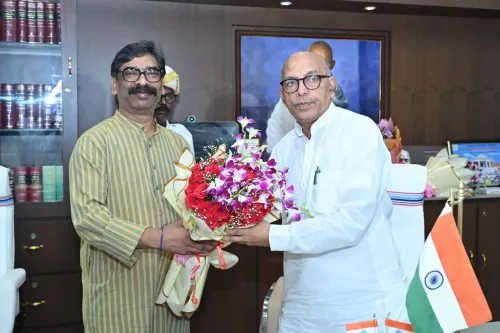
Chief Minister Hemant Soren formally received a delegation from Mayurbhanj and Sundargarh districts of Odisha on 30 May 2026 .
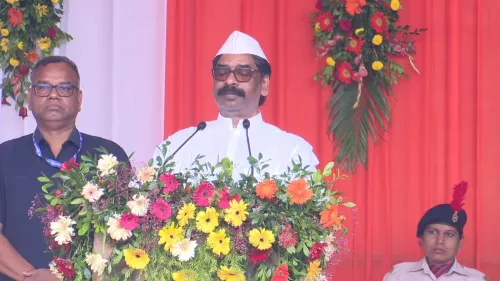
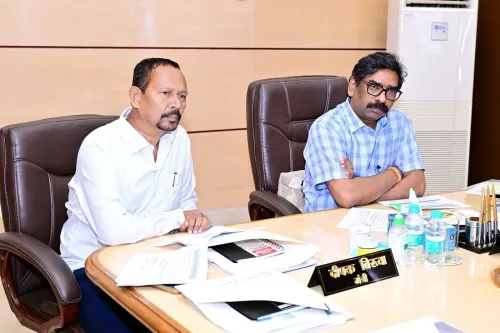
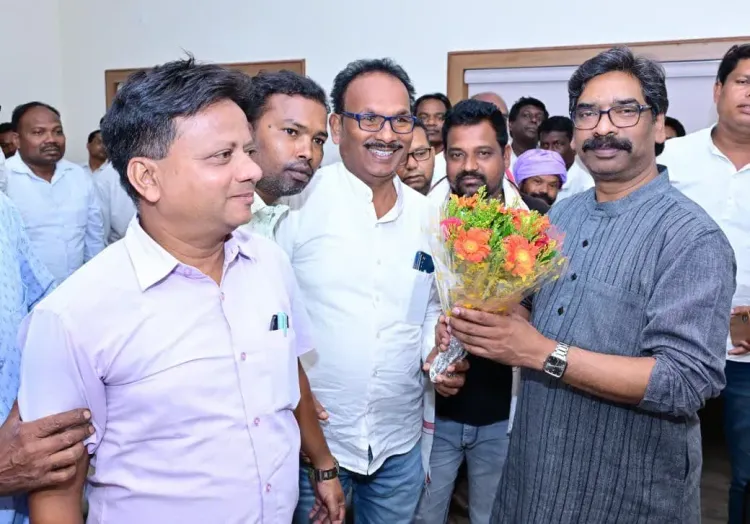
The meeting was announced by the official Jharkhand Chief Minister's Office account on X, accompanied by four photographs .
Mayurbhanj and Sundargarh are Odisha districts bordering Jharkhand with significant Adivasi populations.
No formal agenda or outcomes were disclosed in the official post.
The meeting is part of a broader pattern of periodic inter-state coordination between Jharkhand and Odisha on tribal and border issues.
The Chief Minister's Office of Jharkhand announced on Saturday, 30 May 2026 that Chief Minister Hemant Soren received a formal delegation from Mayurbhanj and Sundargarh districts of neighbouring Odisha at his office.
Context
The CMO posted in Hindi: 'मुख्यमंत्री श्री Hemant Soren से ओडिशा के म्यूरभंज एवं सुंदरगढ़ से आये प्रतिनिधिमंडल ने औपचारिक मुलाकात की' — translated: 'A delegation from Mayurbhanj and Sundargarh in Odisha formally met Chief Minister Hemant Soren.' The post was accompanied by four photographs from the meeting, though the specific agenda or composition of the delegation was not disclosed.
Mayurbhanj is a northern Odisha district that shares a border with Jharkhand and is home to a significant Santhal and Adivasi population. Sundargarh, also contiguous to Jharkhand, is a mineral-rich district with large tribal communities and active industrial zones.
Policy Backdrop
Cross-border engagement between Jharkhand and Odisha has a well-established pattern, driven by shared geography, overlapping tribal demographics, and common resource landscapes. Both states sit atop mineral-rich terrain and host substantial Adivasi populations whose livelihoods, migration patterns, and administrative concerns frequently straddle state lines.
Chief Minister Soren, affiliated with the Jharkhand Mukti Morcha (JMM), has consistently positioned tribal welfare and regional coordination as central planks of his administration. Delegation-level meetings of this kind form part of routine inter-state coordination, even in the absence of formal bilateral treaties or memoranda.
Stakeholders and Impact
The communities most directly affected by such inter-state dialogue are the tribal and border residents of contiguous districts — populations that often share cultural identities, languages, and economic dependencies across the Jharkhand–Odisha boundary. Issues that typically animate such meetings include access to forest resources, cross-border migration for employment, and district-level administrative coordination.
Industrial activity in Sundargarh — including steel and mining operations — also creates labour and environmental questions that can have downstream implications for adjoining Jharkhand districts, making periodic dialogue between representatives of both states practically significant.
What's Next
While no formal outcomes or follow-up commitments were announced in the post, such delegation visits conventionally serve as a precursor to more structured discussions between state-level officials. Observers of eastern India's inter-state dynamics will watch for any subsequent engagement between the Jharkhand and Odisha governments on shared district-level concerns. The meeting reinforces the importance of direct, people-level channels of communication alongside formal governmental mechanisms in managing the complex cross-border realities of the tribal belt.
Point of View
Whose political identity is closely tied to Adivasi welfare, such meetings carry symbolic weight beyond routine inter-state protocol — signalling accessibility to tribal communities that straddle administrative boundaries. The choice of Mayurbhanj and Sundargarh is notable: both districts represent the densest zone of Jharkhand–Odisha tribal overlap, and any coordination there has direct implications for forest rights, labour migration, and mineral governance. Whether this meeting translates into concrete policy alignment will depend on follow-up at the bureaucratic level, but the optics reinforce Soren's positioning as a regional anchor for eastern India's tribal belt.
NationPress
21 Oct 2026
Frequently Asked Questions
Why did an Odisha delegation meet Jharkhand CM Hemant Soren?
A delegation from Odisha's Mayurbhanj and Sundargarh districts formally met Chief Minister Hemant Soren on 30 May 2026. The specific agenda was not disclosed, but such meetings typically address cross-border tribal, administrative, and resource-related concerns shared by contiguous districts of the two states.
Where are Mayurbhanj and Sundargarh located?
Mayurbhanj and Sundargarh are districts in northern Odisha that share a border with Jharkhand. Both have large Adivasi populations and are part of the mineral-rich eastern Indian tribal belt.
What issues do Jharkhand and Odisha coordinate on?
The two states periodically engage on cross-border matters including tribal welfare, forest resource access, labour migration, and district-level administration. Mineral governance and industrial activity in border districts also feature in inter-state discussions.
Who is Hemant Soren?
Hemant Soren is the Chief Minister of Jharkhand and a leader of the Jharkhand Mukti Morcha (JMM). His administration has focused on tribal rights, regional development, and inter-state coordination in eastern India.
What is the significance of Sundargarh for Jharkhand?
Sundargarh is a mineral-rich Odisha district adjacent to Jharkhand with significant steel and mining activity. Cross-border labour movement and environmental concerns from its industrial zones can directly affect neighbouring Jharkhand districts, making it a key focus of inter-state dialogue.