CM Hemant Soren Administers Oath to New Jharkhand Police Recruits
Synopsis
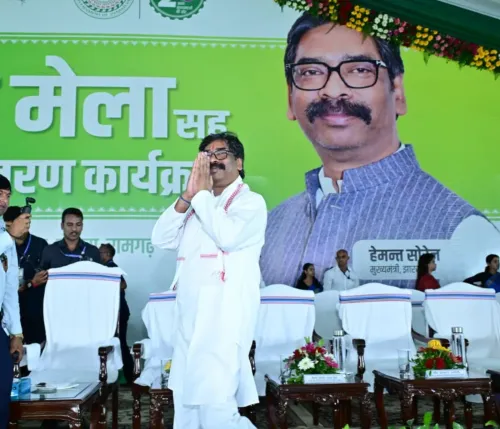
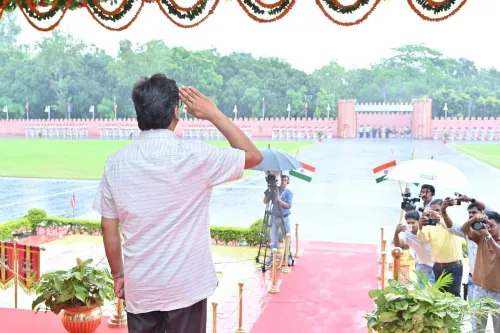
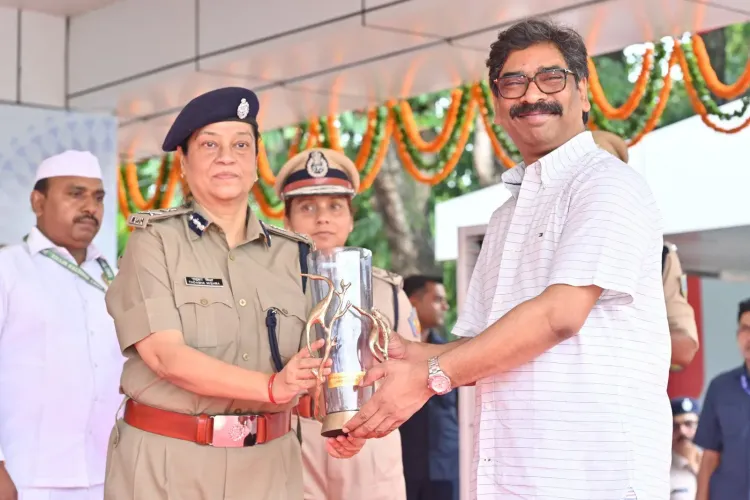
Jharkhand Chief Minister Hemant Soren on June 25, 2026, presided over a rain-soaked oath ceremony for newly trained police recruits, calling the pledge a solemn responsibility toward crores of citizens and specially honouring inductees who are children of police martyrs.
Key Takeaways
Jharkhand CM Hemant Soren administered the constitutional oath to a fresh batch of trained police personnel on June 25, 2026 .
The ceremony was held in the rain, and recruits pledged allegiance to the Constitution, duty, and public service.
Soren gave special recognition to recruits who are family members of police personnel killed in the line of duty, entrusting them with continuing their kin's unfinished mission.
The CM expressed confidence that the recruits' training in knowledge, discipline, and skills would help strengthen law and order across Jharkhand .
The induction is part of Jharkhand 's periodic efforts to bolster its police force amid ongoing internal security challenges, including left-wing extremism in rural districts.
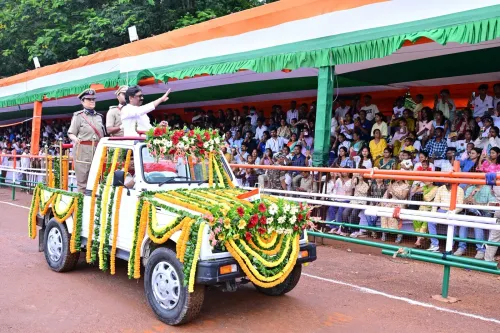
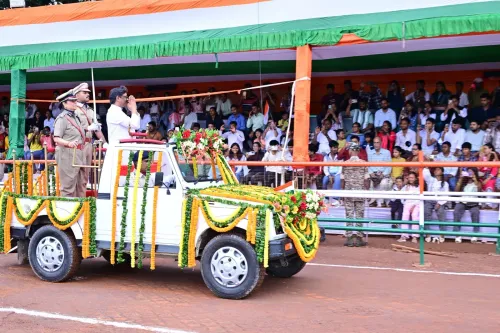
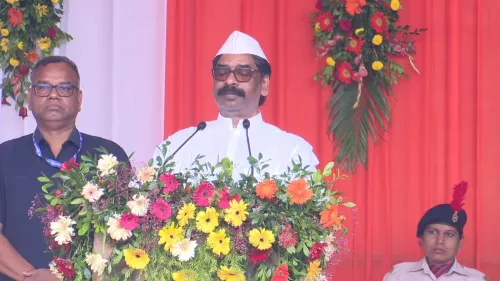
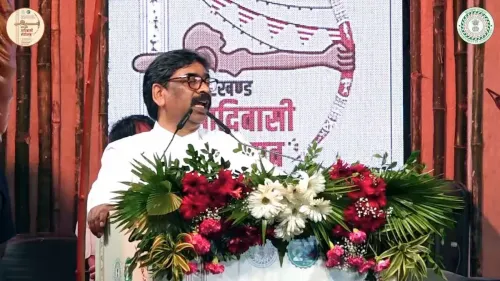
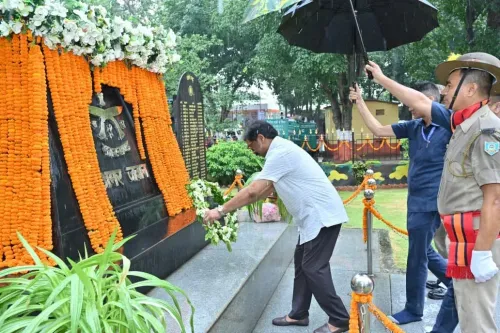
Jharkhand Chief Minister Hemant Soren on Thursday, June 25, 2026, presided over a passing-out oath ceremony for newly trained police personnel, where recruits pledged allegiance to the Constitution, their duty, and public service — even as rain fell during the event. The ceremony carried special weight for recruits who are kin of police personnel who laid down their lives in the line of duty, with Soren formally entrusting them with the responsibility of carrying forward the unfinished mission of their fallen family members.
Context
Posting on X in Hindi, CM Soren described the oath as far more than a formal declaration: 'यह शपथ केवल कुछ शब्दों का औपचारिक संकल्प नहीं' ('This oath is not merely a formal resolve of a few words'), but rather a responsibility toward the safety, trust, and dignity of crores of citizens of the state. He specifically acknowledged recruits whose family members had sacrificed their lives while serving on this very path of duty.
The event was attended by both newly trained constables and officers. The inclusion of wards of martyred police personnel gave the ceremony a distinctly emotional and symbolic dimension, underscoring the generational continuity of service that Soren invoked in his address.
Policy Backdrop
Jharkhand, carved out as a separate state in 2000, has faced persistent internal security challenges, particularly from left-wing extremism in its rural and tribal hinterlands. Successive state governments have conducted periodic police induction drives to fill vacancies and bolster the force's operational capacity in these sensitive areas.
Oath-taking ceremonies are a standard component of police induction protocols across Indian states, symbolising a recruit's formal transition from trainee to sworn officer bound by constitutional obligations. For a state where the police force operates in difficult terrain — including Naxal-affected districts — the professionalisation of new inductees carries direct public-safety implications for Jharkhand's 3.8 crore-plus population.
Stakeholders and Impact
The most immediate beneficiaries are the newly inducted personnel themselves and the communities they will serve across Jharkhand's districts. For families of police martyrs whose children have now joined the force, the ceremony represents both personal fulfilment and institutional recognition of their sacrifice.
CM Soren expressed confidence that the knowledge, discipline, and skills acquired during training would enable the new recruits to play a significant role in strengthening law and order. The Jharkhand Mukti Morcha-led government has positioned such inductions as part of its broader commitment to responsive, community-rooted policing — particularly relevant given the state's tribal demographic profile.
What's Next
The deployment of this fresh batch of officers across Jharkhand's districts will be closely watched, especially in areas with ongoing security sensitivities. Observers will track whether the state follows up with budget allocations for training infrastructure upgrades, equipment modernisation, and welfare provisions for police families.
Future recruitment cycles and the state's approach to filling remaining vacancies in the police establishment will indicate whether this induction is part of a sustained expansion drive or a one-off exercise. The government's policy on preferential recruitment for martyrs' kin may also draw attention as a model for other states.
Point of View
CM Soren is doing more than routine governance — he is weaving a narrative of duty-as-inheritance that resonates strongly in a state where security personnel have paid a heavy price against left-wing extremism. The symbolic inclusion of martyrs' kin as recruits signals a welfare-oriented approach to policing that the JMM government can leverage politically while also serving a genuine institutional purpose. This event fits a broader pattern of eastern Indian states attempting to professionalise and humanise their police forces amid persistent rural security challenges. How the new batch is deployed and resourced will be the real test of whether the ceremony's idealism translates into operational impact.
NationPress
24 Sept 2026
Frequently Asked Questions
Why did Hemant Soren hold a police oath ceremony on June 25, 2026?
Jharkhand CM Hemant Soren administered the constitutional oath to a newly trained batch of police recruits as part of the state's standard induction protocol, marking their formal entry into service with a pledge to uphold the Constitution and serve the public.
Who are the special recruits honoured at the Jharkhand police oath ceremony?
Among the inductees were recruits who are family members of police personnel who died in the line of duty. CM Soren specifically acknowledged them and said the government has entrusted them with continuing the unfinished mission of their fallen kin.
What did Hemant Soren say about the police oath?
Soren said the oath is not merely a formal declaration of a few words, but a responsibility toward the safety, trust, and dignity of crores of citizens of Jharkhand, and expressed confidence that recruits' training would help strengthen law and order.
Why does Jharkhand conduct periodic police recruitment drives?
Jharkhand faces persistent internal security challenges, including left-wing extremism in rural and tribal districts. Successive governments have inducted trained personnel to fill vacancies and expand the force's capacity to maintain law and order.
What is the Jharkhand Mukti Morcha's role in the state's police policy?
The Jharkhand Mukti Morcha, led by CM Hemant Soren, heads the state government and oversees police administration. The JMM government has positioned police inductions as part of its commitment to community-rooted, responsive policing in a state with significant tribal demographics.