CM Sukhu: HP borrowed Rs 5,543 cr less than BJP era
Synopsis
HP CM Sukhu claims his Congress government borrowed Rs 37,718 cr — Rs 5,543 cr less than the previous BJP administration — while absorbing the central government's discontinuation of a 77-year-old Rs 10,000 crore Revenue Deficit Grant protected under Article 275(2).
Key Takeaways
BJP government (2017–2022) under CM Jairam Thakur raised loans of Rs 43,261 crore during its tenure, according to CM Sukhu.
The current Congress administration borrowed Rs 37,718 crore from 2023-24 to 22 October 2026 , approximately Rs 5,543 crore less .
The Revenue Deficit Grant (RDG) — worth approximately Rs 10,000 crore annually — was discontinued after the Congress government assumed office, ending a provision that had existed for nearly 77 years .
The RDG was constitutionally grounded in Article 275(2) , designed to bridge state revenue-expenditure gaps, particularly for special-category states like Himachal Pradesh.
The 15th Finance Commission had recommended RDGs for Himachal Pradesh for the period 2021–26 .
The 16th Finance Commission recommendations will determine whether Himachal Pradesh receives renewed revenue deficit support in future budgets.
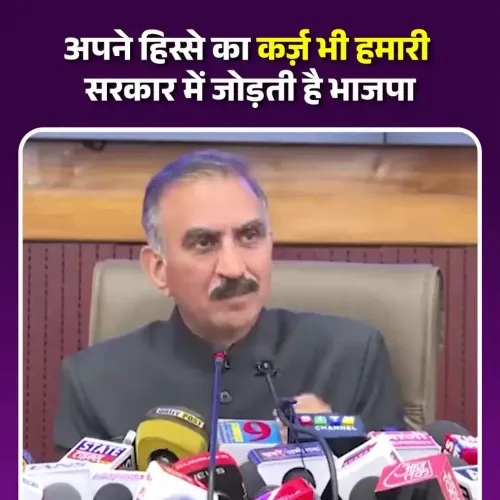
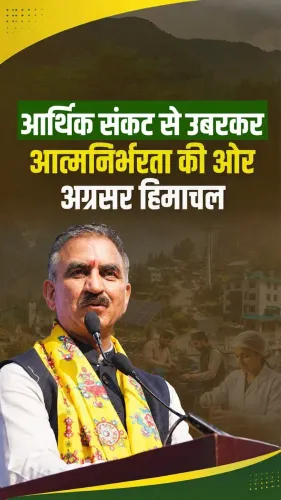
A hill state government fighting on two fiscal fronts — lower borrowings than its predecessor and a decade-old central grant axed mid-term — is making its case in public. Himachal Pradesh Chief Minister Sukhvinder Singh Sukhu posted a pointed fiscal comparison on Friday, 23 October 2026, arguing that his Congress administration has borrowed substantially less than the previous BJP government while simultaneously absorbing the loss of a Revenue Deficit Grant (RDG) that the state had received for nearly 77 years.
The borrowing gap Sukhu is flagging
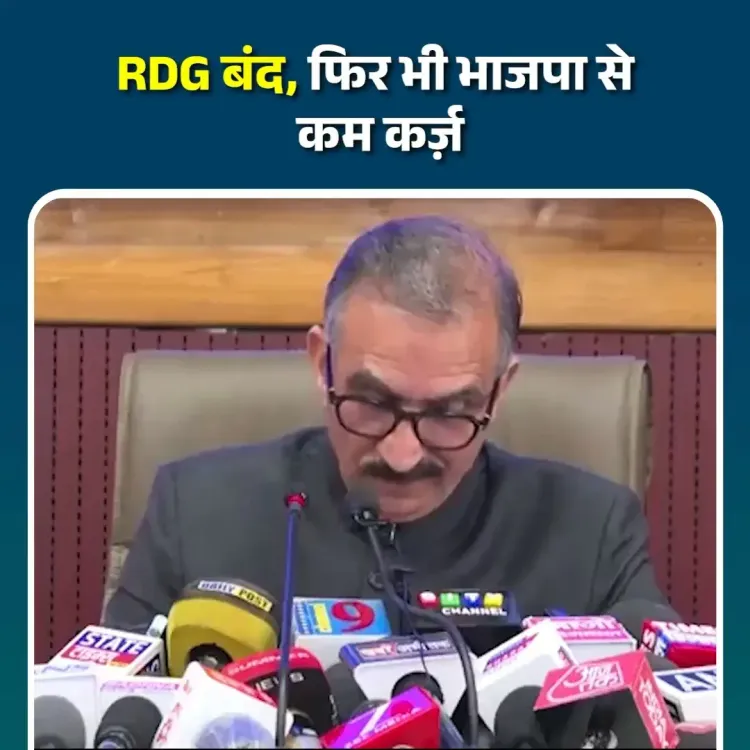
The numbers CM Sukhu puts forward are stark. The previous BJP government, which held office from 2017 to 2022 under Chief Minister Jairam Thakur, raised loans totalling Rs 43,261 crore during its tenure. The current Congress administration, Sukhu says, borrowed a cumulative Rs 37,718 crore from 2023-24 through 22 October 2026 — a difference of roughly Rs 5,543 crore. He frames this as proof of tighter fiscal management even under adverse conditions.
The post, written in Hindi, states: 'Hamari sarkar aane ke baad se lagbhag 77 varshon se mil rahi 10,000 crore rupaye ki RDG band kar di gayi' — 'Since our government came to power, the Rs 10,000 crore RDG that had been received for nearly 77 years has been stopped.' That is the second front, and arguably the sharper one.
What the RDG was — and why its closure stings
The Revenue Deficit Grant is a constitutional instrument. Article 275(2) of the Indian Constitution empowers Parliament to make grants-in-aid to states to bridge the gap between their expenditure and revenue — a lifeline designed specifically for states that structurally cannot balance their own books. Himachal Pradesh, a special-category hill state with limited industrial revenue and high terrain-linked administrative costs, has depended on this provision since shortly after Independence.
The 15th Finance Commission had recommended RDGs for eligible states, including Himachal Pradesh, for the period 2021–26. Sukhu's post implies the grant was discontinued by the central government after his party assumed office in December 2022 — a withdrawal he publicly attributes to the Union government's decision, not to any state-level policy failure. The loss of a grant of this magnitude, accumulated over decades into an annual expectation of approximately Rs 10,000 crore, represents a significant structural hole in state finances.
The centre-state fiscal blame game — and what's at stake next
This is a well-worn arena of Indian federalism. Opposition-ruled states routinely publicise comparisons of borrowing levels and central grant flows to highlight what they characterise as fiscal pressure from a Union government controlled by a rival party. Himachal Pradesh, which oscillates between Congress and BJP administrations, has long been unusually dependent on central transfers given its special-category status and thin own-tax base.
What sharpens the debate here is the constitutional grounding Sukhu invokes. By citing Article 275(2) explicitly, he is not merely making a political complaint — he is making a legal-fiscal argument that the RDG was a constitutionally mandated safety net, not a discretionary favour. Whether that framing gains traction will likely depend on the recommendations of the 16th Finance Commission, whose award will govern central-state transfers for the next five-year cycle and determine whether Himachal gets its revenue deficit covered going forward.
For now, Sukhu's message to the state's 7.5 million residents is clear: the Congress government is managing a sharper fiscal squeeze than its BJP predecessor faced, borrowing less, and still claiming to push development forward. The 2027-28 state budget will be the first hard test of whether those claims hold up on paper.
Point of View
His administration is laying groundwork for a constitutional-fiscal negotiation ahead of the 16th Finance Commission cycle. The timing, roughly three years into the Congress tenure and ahead of the next budget season, suggests this is as much about setting a narrative for the 2027-28 budget debate as it is about the numbers themselves. Whether voters and bond markets read the debt trajectory as discipline or distress will depend heavily on Himachal's development delivery record between now and the next assembly election.
NationPress
23 Oct 2026
Frequently Asked Questions
What is the Revenue Deficit Grant (RDG) that Himachal Pradesh lost?
The Revenue Deficit Grant is central assistance provided to states under Finance Commission recommendations and Article 275(2) of the Constitution to cover the gap between a state's revenue and expenditure. Himachal Pradesh had been receiving this grant for nearly 77 years; CM Sukhu says the Centre discontinued it after the Congress government took office in December 2022, ending an entitlement worth approximately Rs 10,000 crore.
How much has the Himachal Pradesh government borrowed compared to the previous BJP government?
According to CM Sukhu's post, the previous BJP government (2017–2022) raised loans totalling Rs 43,261 crore, while his Congress administration borrowed Rs 37,718 crore from 2023-24 to 22 October 2026 — a difference of roughly Rs 5,543 crore.
What is Article 275(2) of the Indian Constitution?
Article 275(2) empowers Parliament to make grants-in-aid to states to bridge the gap between their expenditure and their own revenue. It has historically been used to support special-category states like Himachal Pradesh that have structural revenue shortfalls due to geographic or developmental constraints.
Why does Himachal Pradesh depend heavily on central grants?
Himachal Pradesh is a special-category hill state with a limited industrial base, high terrain-linked administrative costs, and relatively low own-tax revenues. This makes it structurally dependent on central transfers, including Finance Commission grants and RDGs, to fund its expenditure.
What happens next for Himachal Pradesh's finances?
The recommendations of the 16th Finance Commission will be critical for Himachal Pradesh, as they will determine whether the state receives renewed revenue deficit support and what its borrowing limits will be. The state's 2027-28 budget will also be a key test of its fiscal trajectory under the current Congress government.