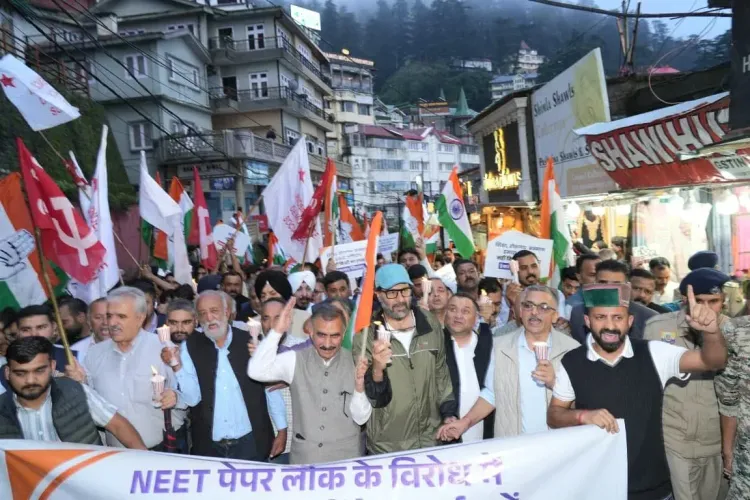
CM Sukhu leads candle march in Shimla over NEET deaths, lathi charge
Synopsis
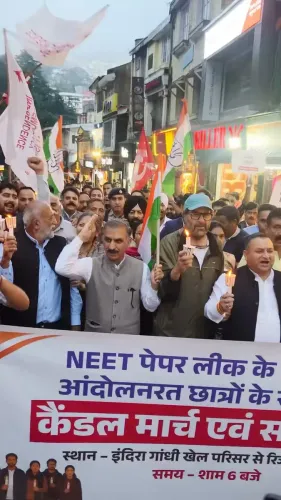
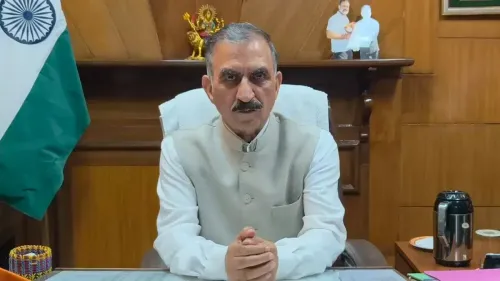
Himachal Pradesh Chief Minister Sukhvinder Singh Sukhu led a candle march and satyagraha in Shimla on 25 July 2026, honouring students who died amid the NEET controversy and condemning the lathi charge on student protesters at Jantar Mantar in New Delhi.
Key Takeaways
Chief Minister Sukhvinder Singh Sukhu led a candle march and satyagraha in Shimla on 25 July 2026 .
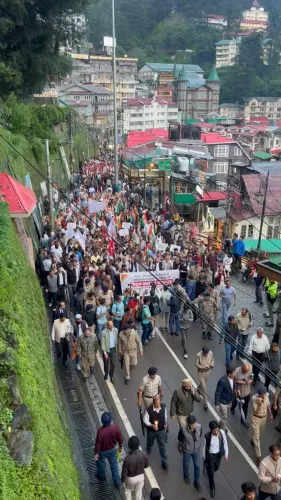
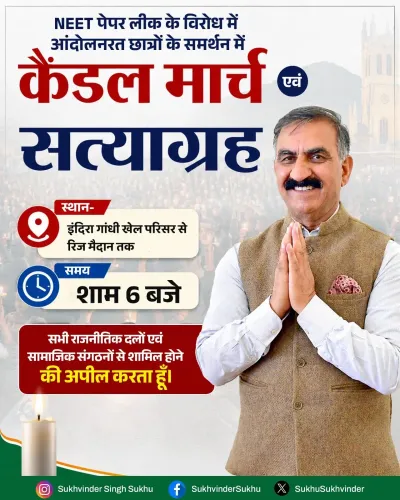
The march ran from Indira Gandhi Sports Complex to the Mahatma Gandhi statue at Ridge Maidan .
The event paid tribute to students who died in connection with the NEET controversy and protested the lathi charge on student demonstrators at Jantar Mantar , New Delhi.
Sukhu had called upon all political parties and social organisations in Himachal Pradesh the previous day to participate, and multiple groups responded.
The Chief Minister stated that Himachal Pradesh will continue to stand against injustice, arrogance, and authoritarianism in defence of democratic values.
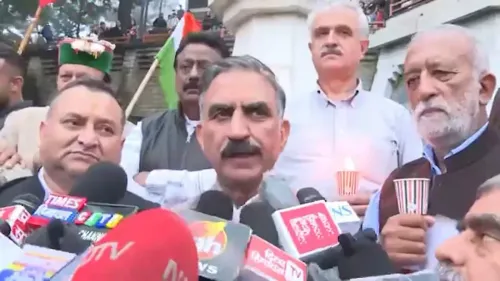
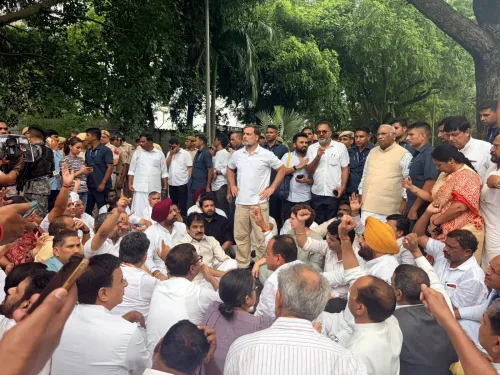
Himachal Pradesh Chief Minister Sukhvinder Singh Sukhu led a candle march and satyagraha in Shimla on Saturday, 25 July 2026, paying tribute to students who died in connection with the NEET controversy and protesting the lathi charge on students demonstrating at Jantar Mantar in New Delhi for their rights.
Context
The march began at the Indira Gandhi Sports Complex and concluded at the statue of Mahatma Gandhi at Ridge Maidan, Shimla. Sukhu had called upon all political parties, social organisations, and citizens of Himachal Pradesh the previous day to join the demonstration, stating that the state — which he described as a land of democratic conscience — 'moun nahin reh sakti' (cannot remain silent) when students are passing through pain and struggle.
In his post, the Chief Minister noted that multiple political parties, social organisations, and residents of the state responded to his appeal and participated unitedly, offering tributes to the deceased students and raising their voices against what he termed injustice toward students.
Policy Backdrop
NEET, the National Eligibility cum Entrance Test, has been the sole national entrance examination for undergraduate medical admissions in India since its phased implementation beginning 2013, replacing state-level examinations. The examination has periodically faced allegations of irregularities, triggering widespread protests by aspirants and their families across the country.
Students gathered at Jantar Mantar — New Delhi's designated protest site — to demand reforms and accountability. A police lathi charge on those protesters drew sharp condemnation from opposition leaders and student groups, providing the immediate trigger for Sukhu's solidarity action in Shimla.
Stakeholders and Impact
The event drew participation from across the political spectrum in Himachal Pradesh, with the Chief Minister emphasising cross-party unity in support of student grievances. NEET aspirants, medical students, and their families remain the primary stakeholders, as the controversy directly affects access to medical education for hundreds of thousands of candidates annually.
Sukhu declared that Himachal Pradesh has always stood against injustice, arrogance, and authoritarianism — 'anyay, ahankaar aur tanashahi ke viruddh' — and will continue to raise its voice in defence of justice, compassion, and democratic values. The symbolic choice of Mahatma Gandhi's statue as the endpoint of the march underscored the satyagraha framing of the protest.
What's Next
Opposition-ruled states staging solidarity demonstrations over centralised examination controversies is a recurring pattern, and similar actions in other states cannot be ruled out as student protests continue. Attention will now turn to whether the central government or the National Testing Agency (NTA) announces concrete reforms to NEET's examination protocols in upcoming parliamentary sessions or official communications.
For Himachal Pradesh, the Chief Minister's public commitment to continuing to speak out on student issues signals that this solidarity posture is likely to remain a feature of the state government's political positioning on national education policy.
Point of View
CM Sukhu is deliberately invoking Gandhian protest symbolism to connect Himachal Pradesh's state-level politics to a nationally charged student grievance. The cross-party participation he highlighted strengthens the optics of civic consensus rather than partisan point-scoring. This fits a broader pattern of Congress-governed states using symbolic solidarity actions to pressure the Centre on education policy — keeping the NEET controversy alive in public discourse between parliamentary sessions. Whether the gesture translates into legislative or administrative outcomes depends on how the central government responds to sustained opposition pressure on NTA reforms.
NationPress
24 Oct 2026
Frequently Asked Questions
Why did CM Sukhu hold a candle march in Shimla?
CM Sukhu organised the candle march and satyagraha on 25 July 2026 to pay tribute to students who died amid the NEET controversy and to protest the lathi charge on students demonstrating at Jantar Mantar in New Delhi for their rights.
Where did the Shimla candle march start and end?
The march began at the Indira Gandhi Sports Complex in Shimla and concluded at the statue of Mahatma Gandhi at Ridge Maidan.
What is the NEET controversy about?
NEET is India's single national entrance examination for undergraduate medical admissions. It has periodically faced allegations of irregularities, triggering protests by students and families demanding reforms and accountability from the National Testing Agency.
Who participated in the Shimla NEET solidarity march?
According to CM Sukhu, multiple political parties, social organisations, and residents of Himachal Pradesh joined the event after he appealed to all sections of society the previous day.
What did the lathi charge at Jantar Mantar involve?
Students had gathered at Jantar Mantar in New Delhi to demand their rights in connection with NEET grievances, and a police lathi charge on those protesters prompted condemnation from opposition leaders including CM Sukhu.